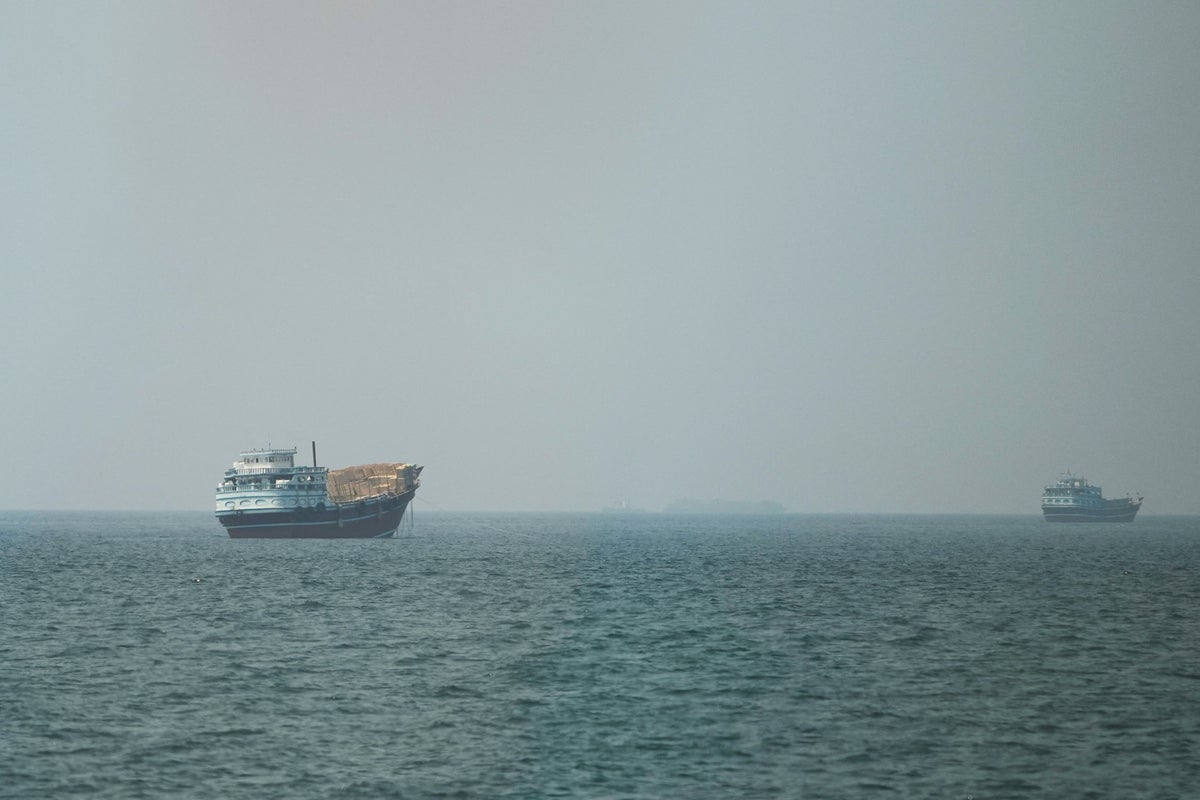
The steel hull of a container ship vibrates with a low, bone-deep hum that never stops. For the crew aboard a commercial vessel cutting through the Gulf of Oman, that vibration is the only constant sound, paired with the relentless sloshing of saltwater against metal. But lately, another sound has hijacked the silence of the bridge. The crackle of a high-frequency radio. A warning.
A shadow moves on the horizon. Fast.
To the average consumer waiting for a smartphone delivery or a morning coffee, the Strait of Hormuz is an abstract line on a map. To a merchant mariner, it is a 21-mile-wide choke point where the geopolitical anxieties of the world condense into a terrifyingly narrow strip of water. It is a corridor where drones hover, naval patrols loom, and naval mines remain a silent, subterranean threat. One wrong move, or one sudden flare-up between regional powers, and twenty percent of the world's petroleum grinds to a halt.
For decades, the global economy accepted this vulnerability as an unalterable tax on progress. If you wanted to move goods out of the Persian Gulf, you paid the toll of geopolitical anxiety. You held your breath, sailed through the strait, and hoped the insurance premiums wouldn’t skyrocket before you reached open water.
Now, the United Arab Emirates is rewriting the map entirely. They are betting billions that the future of trade belongs to those who can bypass the world's most dangerous bottleneck.
The Choke Point
Consider the geometry of risk. The Strait of Hormuz is a geographic throat. On one side lies the Arabian Peninsula; on the other, Iran. Every vessel bound for the open ocean from Kuwait, Qatar, Bahrain, or the major ports of the UAE must squeeze through this passage.
When tension spikes, the maritime insurance market reacts instantly. Underwriters sitting in quiet London offices adjust their risk matrices, and suddenly, the cost of moving a single cargo container spikes by thousands of dollars. It is a invisible tax paid by everyone, everywhere, reflected in the price of fuel, electronics, and food.
But the real crisis isn't just financial. It's human. Imagine being a captain responsible for a vessel worth two hundred million dollars and the lives of twenty crew members. You are sailing through waters where commercial ships have been targeted by drones, seized by paramilitary forces, or damaged by unexplained explosions. The tension on the bridge is thick enough to taste.
The UAE’s response to this perpetual vulnerability is an engineering project of staggering ambition. Instead of trying to fix the politics of the strait, they are simply building a way around it.
Moving the Mountain
The strategy hinges on Fujairah. Located on the eastern coast of the UAE, Fujairah sits safely outside the Persian Gulf, looking directly out at the Gulf of Oman and the wide expanse of the Indian Ocean. It is already a major bunkering hub, a place where ships stop to refuel. But transforming it into a full-scale alternative gateway for global container traffic requires a massive infrastructure pivot.
The plan involves a complex network of new overland transport corridors, high-capacity rail lines, and expanded port facilities designed to move millions of tons of cargo across the desert peninsula, bypassing the strait entirely.
Think of it as an economic bypass surgery.
Instead of a ship entering the Persian Gulf, unloading in Dubai, and risking the return journey through Hormuz, goods can be discharged at the new eastern hubs. From there, the cargo moves via the Etihad Rail network or advanced trucking corridors across the rugged Hajar Mountains straight to the commercial heartlands. The time saved is measured in days. The risk saved is immeasurable.
This isn’t just a construction project; it’s a psychological shift for global logistics. For the last half-century, Dubai's Jebel Ali port has been the undisputed king of regional trade. It is a sprawling marvel of automation. But Jebel Ali sits deep inside the Gulf, behind the very choke point currently under threat. By shifting the operational weight to the eastern coast, the UAE is hedging against its own geography.
The New Math of Risk
Skeptics point to the immense cost. Building deep-water berths, leveling mountain passes for rail lines, and re-routing established shipping lanes requires capital that would bankrupt smaller nations.
But the math of inaction is far more expensive.
When a single incident in the strait can halt shipping for days, the ripple effects roll through global supply chains like a shockwave. Factories in Europe run out of parts. Refineries in Asia face supply crunches. The vulnerability is systemic. By providing a reliable, guaranteed alternative, the UAE is positioning itself not just as a trading hub, but as an insurance policy for the global economy.
The transition won't happen overnight. Shipping lines are notoriously conservative, tied to legacy routes and long-term contracts. Jebel Ali will remain a colossus. Yet, the gravity of trade is shifting toward predictability. In an era defined by unpredictable disruptions, certainty is the ultimate premium product.
The Empty Horizon
On the bridge of a container ship navigating the new routes, the atmosphere is entirely different. The radio chatter is routine. The horizon is wide, empty, and peaceful. The Hajar Mountains rise in the distance, a rocky barrier that now serves as a shield against the volatile waters of the inner gulf.
The true measure of this geopolitical pivot isn't found in the press releases or the economic forecasts. It is found in the quiet relief of a crew looking out at an open sea, knowing that the most dangerous bottleneck in the world is now safely behind them, bypassed by a trail of steel and concrete cutting through the desert.