A single spark in a faraway desert doesn’t just burn sand. It travels. It creeps through subsea pipelines, hums along the flickering screens of commodity traders in Singapore, and eventually, it settles right into the palm of your hand at a gas station in Ohio. You feel it in the weight of your wallet. You see it in the digit that ticks upward on the pump, relentless and indifferent.
For Donald Trump, this isn't just about economics. It is a haunting.
The ghost is the price of oil.
History shows that American presidents don't usually lose elections because of foreign policy nuances or abstract ideology. They lose because the price of a gallon of regular unleaded climbed fifty cents too high in October. Tehran knows this. They have studied the American psyche with the precision of a surgeon, and they are currently holding the scalpel.
The Invisible Tripwire
Tehran is playing a game of chicken where they don't even need to stay on the road to win. Their strategy is a masterclass in asymmetric psychological warfare. They understand that Trump’s primary mandate from his base is a return to "Drill, Baby, Drill" and the restoration of American pocketbook dominance. To break that promise, Iran doesn't need to win a war. They just need to create enough chaos to make the markets nervous.
Markets are not rational. They are terrified, caffeinated animals.
When a drone strikes a facility or a tanker is harassed in the Strait of Hormuz, the "risk premium" gets slapped onto every barrel of Brent Crude. This isn't a physical shortage of oil. It is the fear of a shortage. Iran is currently a master of manufacturing fear. They are baiting the administration into a cycle of escalation that could send prices screaming toward $100 a barrel.
If Trump bites, he enters the trap. If he strikes back too hard, the supply chain chokes. If he does nothing, he looks weak. Either way, the price at the pump becomes a silent campaign ad for his detractors.
The Fiction of Energy Independence
We like to tell ourselves a story about American energy independence. It’s a comforting tale. We produce more crude than any nation in history. We have the Permian Basin, a geological miracle that pumps millions of barrels a day. But here is the cold, hard truth that politicians rarely whisper: oil is a global fungible commodity.
It does not matter if the oil was sucked out of the ground in West Texas or the dunes of Saudi Arabia. If the Middle East catches fire, the price of Texas tea goes up along with everything else.
Consider a small-scale trucker named Elias. He doesn't care about the geopolitics of the Islamic Revolutionary Guard Corps. He cares that his rig takes 300 gallons to fill. When the global price of oil jumps because of a "trap" set five thousand miles away, Elias’s profit margin evaporates. He has to raise his rates. The grocery store has to raise the price of milk to cover the shipping.
Suddenly, a skirmish in the Persian Gulf is why a mother in Des Moines can’t afford the good eggs. That is the "human element" of the oil trap. It is a slow-motion tax on the working class, levied by an adversary that knows exactly where it hurts most.
The Ghost of 1979
Tehran is betting on a repeat of the Jimmy Carter nightmare. They remember the long lines at the gas stations and the crushing weight of stagflation. They know that an angry voter is a voter who feels the sting of inflation every time they start their car.
Trump’s strategy has always been one of "Maximum Pressure." He wants to choke Iran’s economy until they have no choice but to negotiate a new, stricter deal. But pressure creates heat. Iran’s counter-move is to reflect that pressure back onto the American consumer.
The trap is elegant in its simplicity. Iran can absorb a lot of pain. They have been under sanctions for decades; their people are practiced in the art of the squeeze. The American consumer, however, is not. We are used to cheap energy. We have built our entire suburban geography around the assumption that moving from point A to point B will always be affordable.
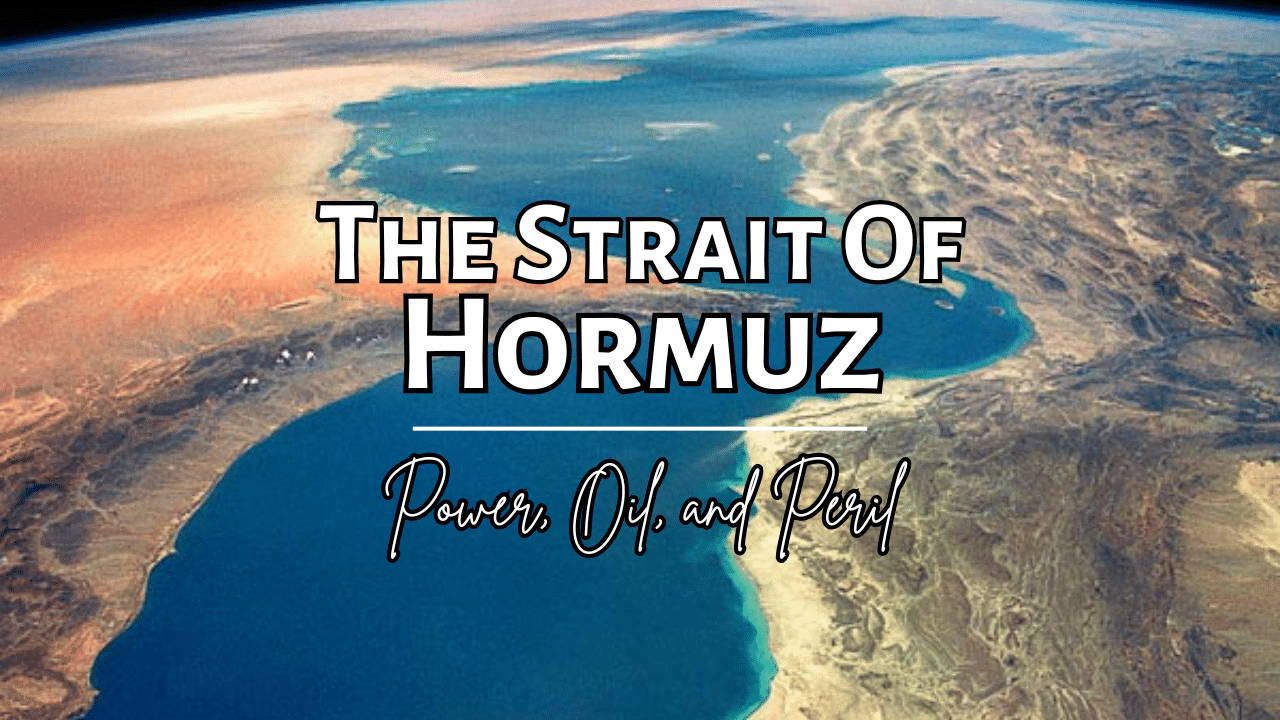
When Iran threatens to close the Strait of Hormuz—a narrow waterway through which 20% of the world’s oil flows—they aren't just threatening a waterway. They are threatening the American commute.
The Fragile Balance of the Barrel
To understand the stakes, you have to look at the math of a barrel.
$$Price = \frac{Supply}{Demand} + Fear$$
Currently, the "Fear" variable is the only one Iran can truly control. They cannot out-produce the U.S., and they cannot stifle global demand. But they can maximize the numerator of that equation through theater. Every time a speedboat buzzes a destroyer or a proxy group launches a rocket, the "Fear" number spikes.
Trump prides himself on being a dealmaker, a man who understands the leverage of the "big stick." But in the oil market, the stick is made of glass. If you swing it too hard, it shatters, and the shards end up in the tires of every Ford F-150 in the Midwest.
The administration is currently walking a tightrope over a pit of Brent Crude. To avoid the trap, they have to project strength without triggering a price shock. They have to convince the markets that the supply is safe, even as they trade barbs with a regime that wants nothing more than to see the global economy stumble.
The Neighborhood Bully and the Global Cop
Imagine a neighborhood where one person owns the only water well, but someone else owns the only road leading to it. The person who owns the well is the U.S. and its allies. The person who owns the road is Iran.
The owner of the well can shout all they want about how much water they have. They can brag about their new pumps and their high-tech filtration. But if the road owner decides to park a junker in the middle of the street, nobody gets a drink.
Iran is the road owner. They don't need to own the oil to control the price. They just need to be able to make the journey dangerous.
The real danger for the current administration isn't a direct military defeat. It is the realization that the "America First" energy policy is still tethered to a part of the world that remains fundamentally unstable. We are part of an ecosystem, whether we like it or not. The ghost of the $100 barrel is always hovering, waiting for the right moment of tension to manifest.
The Silent Ledger
Walk into any diner in Pennsylvania and listen. They aren't talking about the Joint Comprehensive Plan of Action. They aren't debating the intricacies of uranium enrichment levels.
They are talking about the fact that it cost $75 to fill up the SUV this morning.
That is the ledger that matters. That is the scoreboard Iran is watching. They are waiting for the moment when the political cost of high oil prices outweighs the political benefit of a "tough on Iran" stance. They are waiting for the pivot.
The trap isn't made of steel or explosives. It’s made of expectations. It’s built on the hope that the American public will eventually tire of the volatility and demand a return to stability, regardless of the geopolitical cost.
Trump’s challenge is to prove them wrong without setting the world’s gas tank on fire. He has to find a way to silence the ghost without burning down the house. It is a delicate, dangerous dance, performed on a floor slick with the very substance that built the modern world.
The sun sets over the Persian Gulf, casting long, golden shadows over the tankers. Each one carries a cargo that could sway an election, break a budget, or start a war. In Washington, the lights stay on late. The calculators are running. The charts are being updated. But out on the water, the tide just keeps coming in, indifferent to the men who think they can control it.
The price is what it is. And the trap is still open, waiting for a single, heavy footfall.