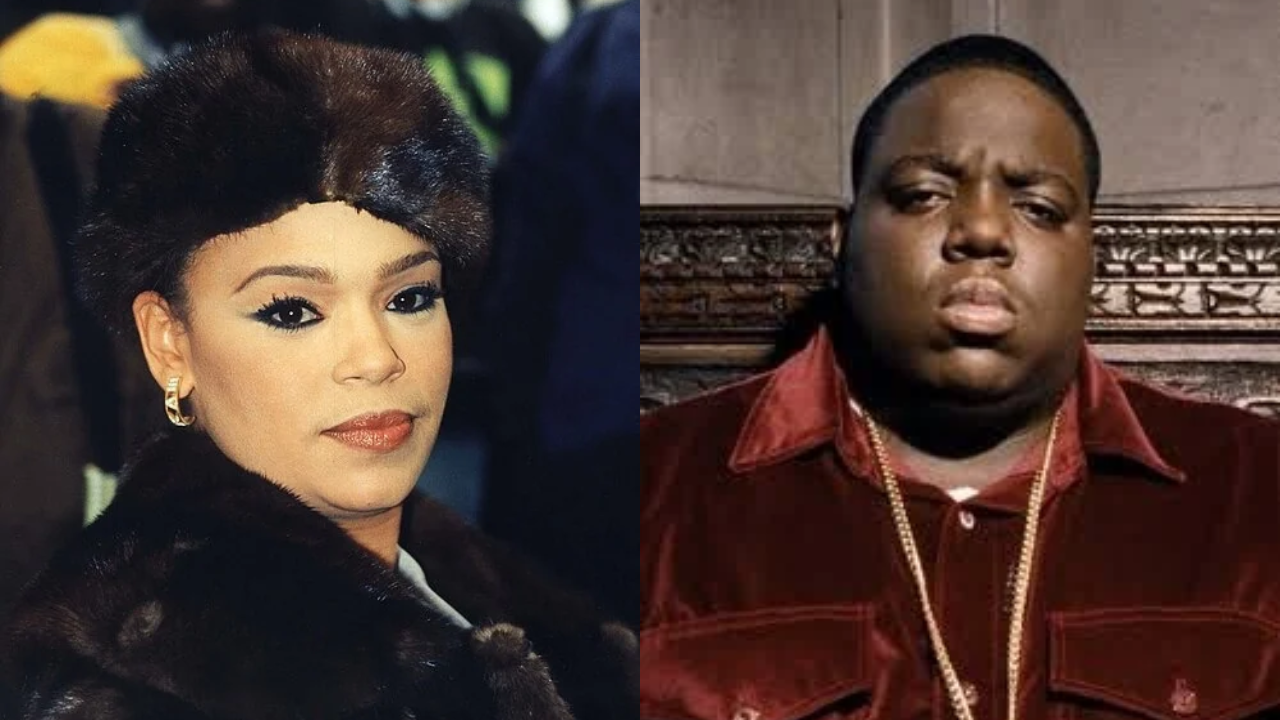
A $12.5 million court judgment against Faith Evans exposes the structural fragility of unliquidated intellectual property estates when personal liabilities collide with corporate governance. Most entertainment coverage treats this ruling as celebrity gossip, missing the underlying legal and financial mechanics: a breakdown in fiduciary separation, unsecured debt instruments, and the valuation friction inherent in posthumous music catalogs.
When Christopher Wallace—the Notorious B.I.G.—died intestate in 1997, his estate became a complex web of publishing rights, master recordings, and publicity licenses managed primarily through Notorious B.I.G. LLC and related corporate entities. Over nearly three decades, the asset base appreciated substantially, culminating in high-value catalog transactions and licensing deals. Yet asset appreciation does not insulate a stakeholder from personal balance-sheet insolvency when credit facilities or settlement obligations are guaranteed against future distributions.
The Structural Anatomy of the Dispute
To understand how a primary beneficiary faces an eight-figure judgment, one must separate the corporate entity holding the intellectual property from the individual equity holders receiving distributions.
The Corporate Veil vs. Personal Guarantees
An estate-holding LLC protects its underlying assets—master recordings, publishing splits, trademarked likenesses—from the personal creditors of its members. However, that protection vanishes the moment a member signs a personal guarantee, executes a promissory note, or pledges future cash distributions to secure third-party capital or settle an external claim. Once a court enters a money judgment against an individual member, creditors bypass the corporate shield by obtaining a charging order against the member's economic interest in the LLC.Liquidity Mismatch in Catalog Assets
Music catalogs generate lumpy, cyclical cash flows driven by synchronization licenses, mechanical royalties, and periodic catalog divestitures. When an equity holder incurs fixed, high-interest debt obligations or enters into structured settlement agreements predicated on projected royalty streams, any delay in distribution or dispute over accounting creates an immediate liquidity shortfall. Default triggers acceleration clauses, compounding principal with statutory interest and legal fees until the liability reaches $12.5 million.Governance Friction Among Co-Beneficiaries
Posthumous estates rarely operate under a single unified mandate. With multiple stakeholders—including surviving spouses, children, and estate administrators—capital allocation requires consensus. If one member faces an external judgment, the remaining members and managers have a fiduciary duty to protect the operating entity from forced liquidation. This creates an internal deadlock: the debtor-member needs immediate liquidity to satisfy the court order, while the entity must restrict distributions to preserve working capital and prevent creditor interference.
The Mechanics of Charging Orders and Judgment Enforcement
A $12.5 million judgment is not an automatic transfer of cash; it is a legal authorization to attach assets. In jurisdictions governing entertainment holding companies—typically Delaware, New York, or California—judgment enforcement follows a strict statutory hierarchy.
First, the creditor domesticates the judgment in the state where the debtor resides or holds bank accounts. Next, the creditor serves writs of garnishment on financial institutions and royalty collection agencies, such as SoundExchange, ASCAP, or BMI, intercepting direct writer-share distributions before they reach the debtor's personal accounts.
The second enforcement mechanism targets the estate entity directly through a charging order. Under standard LLC statutes, a judgment creditor cannot seize the underlying copyrights held by Notorious B.I.G. LLC, nor can the creditor step into the shoes of a managing member to vote on licensing deals. Instead, the charging order acts as a lien on the debtor's distributional interest. Whenever the LLC declares a dividend or distributes net royalty proceeds to its members, the portion allocated to the debtor must be diverted directly to the creditor until the $12.5 million principal plus statutory post-judgment interest is satisfied.
This creates a severe operational bottleneck for the debtor. In many states, if a creditor holds a charging order, the debtor remains liable for the pass-through tax obligations on the LLC's allocated income—known as "phantom income"—even though the actual cash goes straight to the creditor.
Valuation Friction and the Posthumous Catalog Market
The timing of an eight-figure legal enforcement coincides with unprecedented institutional capital flowing into legacy hip-hop catalogs. Private equity funds and music rights
The $12.5 Million Estate Liability Facing Faith Evans and the Mechanics of Intestate Celebrity Debt
business, celebs
A $12.5 million court order against Faith Evans in connection with the estate of Christopher Wallace, known professionally as The Notorious B.I.G., demonstrates how catastrophic legal liabilities emerge when high-value intellectual property is managed without formal corporate ring-fencing or a valid will. Rather than viewing this judgment as a conventional celebrity gossip headline, estate planners and entertainment valuation analysts must examine it through the lens of fiduciary exposure, intestate succession law, and the compounding cost of unresolved creditor claims across multi-decade catalog lifecycles.
When a recording artist dies without a testamentary instrument, the resulting legal vacuum forces surviving spouses and administrators into dual roles as both emotional stewards and personal guarantors of complex commercial enterprises. In the case of Christopher Wallace, who died intestate in March 1997, the absence of a pre-death trust structure meant that every subsequent licensing deal, publishing renegotiation, and name-image-likeness (NIL) monetization occurred under the direct oversight of probate courts and co-administrators. Over nearly three decades, as the valuation of hip-hop catalogs appreciated exponentially, the friction between legacy obligations, third-party partnership agreements, and administrative accounting created the exact conditions required for a eight-figure judgment.
The Structural Vulnerability of Intestate Intellectual Property
To understand how an estate dispute escalates into a $12.5 million personal or administrative liability, one must separate the underlying assets from the legal vehicles holding them. In standard corporate finance, limited liability shields executives and shareholders from personal exposure when a venture incurs debt or loses litigation. Probate administration of an intestate estate operates under fundamentally different rules.
Under California probate statutes—where Wallace's estate has historically been administered—the death of an individual without a will triggers statutory distribution formulas. While the surviving spouse and children inherit defined percentages of separate and community property, the administrative mechanism required to manage ongoing royalties is cumbersome. Unlike a Delaware LLC or an irrevocable grantor trust, an estate in prolonged administration lacks the agility to compartmentalize risk.
The Three Failure Modes of Unstructured Legacy Estates
- Commingling of Personal and Estate Guarantees: Surviving spouses frequently sign personal guarantees or individual representations to secure advances, settlement agreements, or joint venture financing when third-party counterparties refuse to rely solely on a contested probate estate. If the underlying venture underperforms or a contractual dispute arises, plaintiffs bypass the estate's asset shield and target the individual signatory directly.
- Retroactive Accounting Discrepancies: Music publishing and master recording royalties flow through fragmented global collection societies, sub-publishers, and legacy label contracts signed decades earlier. When an administrator distributes funds or settles claims before final tax and creditor clearances are executed, subsequent audits can trigger surcharge actions or breach-of-fiduciary-duty judgments requiring personal repayment.
- Asymmetric Legal Fee Accumulation: Prolonged estate litigation creates a negative-sum cash flow dynamic. When multiple stakeholders—such as a surviving spouse, a surviving parent, and outside business partners—contest control over brand rights, legal fees compound annually. If a court determines that an administrator acted outside statutory authority or delayed a mandated distribution, fee-shifting statutes allow the prevailing party to convert decades of legal expenses into a lump-sum money judgment.
Deconstructing the $12.5 Million Judgment Mechanism
While specific sealed filings and confidential settlement schedules often obscure the line-by-line ledger of high-profile entertainment litigation, civil judgments of this magnitude in estate disputes follow predictable mathematical and legal architectures. A $12.5 million order does not materialize spontaneously; it is the product of principal liability, statutory pre-judgment interest, and contractual damages.
In jurisdictions like California, statutory pre-judgment interest on liquidated breach-of-contract claims runs at 10% per annum under Civil Code Section 3289. When a disputed obligation remains unresolved for seven to ten years—a standard timeline for complex entertainment litigation—accrued interest alone can nearly double the original principal claim.
- Principal Valuation Base: The core claim in legacy artist disputes typically stems from one of three sources: unpaid profit participations from catalog exploitation, defaulted loan or advance agreements backed by future royalty streams, or breach of settlement terms negotiated during earlier phases of estate administration.
- The Multiplier of Statutory Interest: A $6.5 million disputed obligation left unresolved across an eight-year litigation cycle accrues approximately $5.2 million in simple statutory interest at 10% annually, pushing the total exposure past $11.7 million before attorney fees and court costs are factored in.
- Joint and Several Liability Exposure: When an individual signs agreements both as an estate representative and in an individual capacity—a common requirement imposed by sophisticated commercial lenders and licensing partners—creditors gain the right to enforce the entire $12.5 million judgment against whichever entity holds the most liquid assets.
This distinction explains why headlines focus on Faith Evans individually rather than exclusively on the corporate entities holding The Notorious B.I.G.'s trademarks. In enforcement proceedings, judgment creditors follow the path of least resistance. Freezing an individual's personal bank accounts, garnishing active touring or recording royalties, or placing liens on real property executes faster than untangling multi-party intellectual property trusts.
The Friction Between Co-Administrators and Commercial Partners
The Wallace estate has historically operated under a bifurcated governance model, balancing the interests of his widow, Faith Evans, his mother, Voletta Wallace, and his children, T'yanna and Christopher Wallace Jr. While collaborative governance preserves family consensus on artistic integrity, it introduces severe operational bottlenecks during commercial negotiations.
When an estate requires unanimous or supermajority consent among co-administrators to execute licensing agreements, third-party partners demand strict indemnification clauses. Commercial counterparties—whether apparel brands, streaming platforms, or catalog acquirers—refuse to bear the risk of internal family litigation derailing a licensed campaign.
The Indemnification Trap
To close commercial deals under split governance, individual administrators often execute broad indemnification covenants. Under these clauses, the signing party personally warrants that no competing claims exist and agrees to reimburse the counterparty for all legal defenses and damages if a dispute arises.
If a subsequent conflict emerges—either between co-administrators, former business managers, or third-party claimants asserting historical rights to the artist's likeness or masters—the indemnification clause activates immediately. The commercial partner steps back, and the individual administrator absorbs the full cost of defending and satisfying the claim. Over multiple licensing cycles, unhedged indemnification obligations accumulate like off-balance-sheet debt until a single adverse ruling crystallizes the entire liability into an enforceable court order.
Catalog Appreciation as a Litigation Catalyst
A critical economic variable driving late-stage estate disputes is the dramatic surge in hip-hop catalog valuations over the past decade. In 1997, the financial projections for a deceased hip-hop artist's estate were constrained by physical CD sales, limited terrestrial radio airplay, and nascent merchandise distribution. Estate settlements and administrative frameworks built in the late 1990s and early 2000s were calibrated for declining or plateauing revenue curves.
The transition to global digital streaming, algorithmic playlisting, and high-margin brand collaborations fundamentally altered the discounted cash flow (DCF) models for foundational 1990s hip-hop catalogs. Masters and publishing rights that once generated modest annual annuities suddenly commanded valuation multiples between 15x and 25x net publisher's share (NPS) or net label share (NLS).
This valuation expansion creates three immediate structural pressures on legacy estates:
- Retroactive Claim Resurrection: Former associates, producers, photographers, and business managers who ignored minor contractual ambiguities when the estate generated $500,000 per year aggressively litigate those exact ambiguities when the estate generates tens of millions in licensing revenue.
- Collateralized Debt Overreach: Rising catalog valuations allow administrators and beneficiaries to borrow against future royalty streams at higher advance levels. When interest rates rise or projected catalog liquidity events—such as a partial catalog sale—are delayed by probate disputes, debt service covenants default, triggering immediate acceleration of the full principal balance.
- Fiduciary Scrutiny Escalation: Probate courts and opposing litigants apply far stricter accounting standards to nine-figure enterprises than to modest family estates. Informal bookkeeping practices tolerated during lean years become grounds for punitive surcharges once the enterprise reaches institutional scale.
Step-by-Step Protocol for Isolating Personal Wealth from Estate Liabilities
For high-net-worth individuals, surviving spouses, and estate administrators managing complex intellectual property, preventing a corporate or estate dispute from piercing personal asset shields requires strict operational discipline. Relying on informal family agreements or standard probate protections leaves personal net worth exposed to eight-figure judgments.
1. Bifurcate Fiduciary Roles from Personal Capacity
Never execute a commercial contract, loan agreement, or settlement document in both a representative capacity ("as Administrator of the Estate") and an individual capacity ("Individually"). Counterparties routinely slip dual-capacity signature blocks into final execution drafts. Counsel must strip individual signature lines prior to execution, restricting creditor recourse strictly to designated estate accounts.
2. Transition Assets from Probate into Special Purpose Vehicles (SPVs)
Prolonged probate administration is an operational hazard. As soon as statutory creditor periods expire, administrators should petition the court to distribute intellectual property rights into segregated Delaware Limited Liability Companies or statutory trusts. Each distinct asset class—master recordings, publishing copyrights, and NIL trademarks—should reside in a separate entity so that litigation targeting one vertical cannot freeze cash flows in another.
3. Eliminate Personal Indemnification Covenants
When licensing intellectual property to third parties, cap indemnification liability strictly at the total fees actually paid to the estate under that specific contract. Never allow an indemnification clause to extend to consequential damages, uncapped legal fees, or personal assets outside the licensing entity.
4. Ring-Fence Active Personal Income Streams
Surviving spouses who maintain independent careers—such as Faith Evans's own recording, touring, and publishing catalog—must maintain absolute accounting separation between their independent earnings and estate distributions. Personal royalties should flow into an independent corporate loan-out entity, never into personal checking accounts or joint accounts that have previously received estate funds.
5. Deploy Representation and Warranty Insurance (RWI) on Major Transactions
When executing high-value catalog sales, brand partnerships, or litigation settlements exceeding $5 million, utilize transactional risk insurance rather than personal guarantees. While RWI premiums add upfront transaction costs—typically 2.5% to 4% of the coverage limit—they transfer the risk of unknown historical claims and accounting errors to an institutional insurer, protecting the administrator's personal balance sheet from catastrophic court orders.
Operational Limitations and Enforcement Realities
Implementing corporate ring-fencing and strict fiduciary boundaries provides robust forward-looking protection, but these mechanisms carry distinct legal limitations once a dispute has already matured into litigation.
First, corporate entities cannot be used retroactively to shield assets from existing creditors. Under the Uniform Voidable Transactions Act (UVTA), transferring personal real estate, cash, or independent royalty streams into an LLC or irrevocable trust after a legal claim has arisen—or when an adverse judgment is reasonably foreseeable—constitutes a fraudulent conveyance. Courts routinely unwind such transfers and impose additional sanctions on the debtor.
Second, probate courts retain broad equitable jurisdiction over estate administrators. If a court finds that a fiduciary committed willful misconduct, self-dealing, or gross negligence in managing estate assets, statutory surcharge rules allow the judge to hold the administrator personally liable regardless of the corporate structures surrounding the estate. Fiduciary liability insurance (errors and omissions coverage for trustees and executors) mitigates ordinary negligence claims, but policies universally exclude intentional breaches or unapproved self-dealing.
Third, when an individual has already executed personal guarantees on prior debt or settlement agreements, asset protection shifts from structural prevention to judgment negotiation. Once a $12.5 million order is entered, the debtor faces immediate judgment-enforcement mechanisms, including debtor examinations, asset freezes, and charging orders against LLC distributions.
Strategic Path Forward for Legacy Estate Governance
The $12.5 million order involving Faith Evans illustrates that the most dangerous phase of celebrity estate management occurs not immediately after an artist's death, but decades later when appreciated intellectual property collides with legacy governance flaws. Surviving stakeholders in intestate or fragmented estates cannot afford to treat estate administration as a passive royalty-collection exercise.
Administrators and beneficiaries facing escalating legal friction or legacy debt obligations must immediately audit every active contract, loan covenant, and settlement agreement for personal guarantees and uncapped indemnification clauses. Where personal exposure exists, counsel must negotiate global restructuring agreements that exchange equity participation or dedicated future royalty tranches from the intellectual property entities for the immediate release of personal liability. Moving forward, all high-value artist estates must replace informal family co-administration with institutional trust governance, separating emotional legacy stewardship from the cold, ring-fenced mechanics of commercial asset management.