Water has a memory. It carries the weight of everything it has touched, every pipe it has traversed, every life it has sustained.
In the late 1980s, the city of Orlando was drowning in its own growth. Tourists poured into the theme parks by the millions. Subdivisions sprouted over orange groves with dizzying speed. Every single one of those people took showers, washed dishes, and flushed toilets. Beneath the surface of the gleaming sunshine and vacation magic, a quiet crisis was brewing. Where do you put millions of gallons of wastewater every single day without choking the fragile ecosystems that made Florida worth living in in the first place?
The traditional engineering answer was loud and expensive. Build bigger concrete plants. Pump it miles out into the ocean. Pay an exorbitant environmental toll.
Instead, planners looked at a map and saw a swamp.
The Blueprint of the Marsh
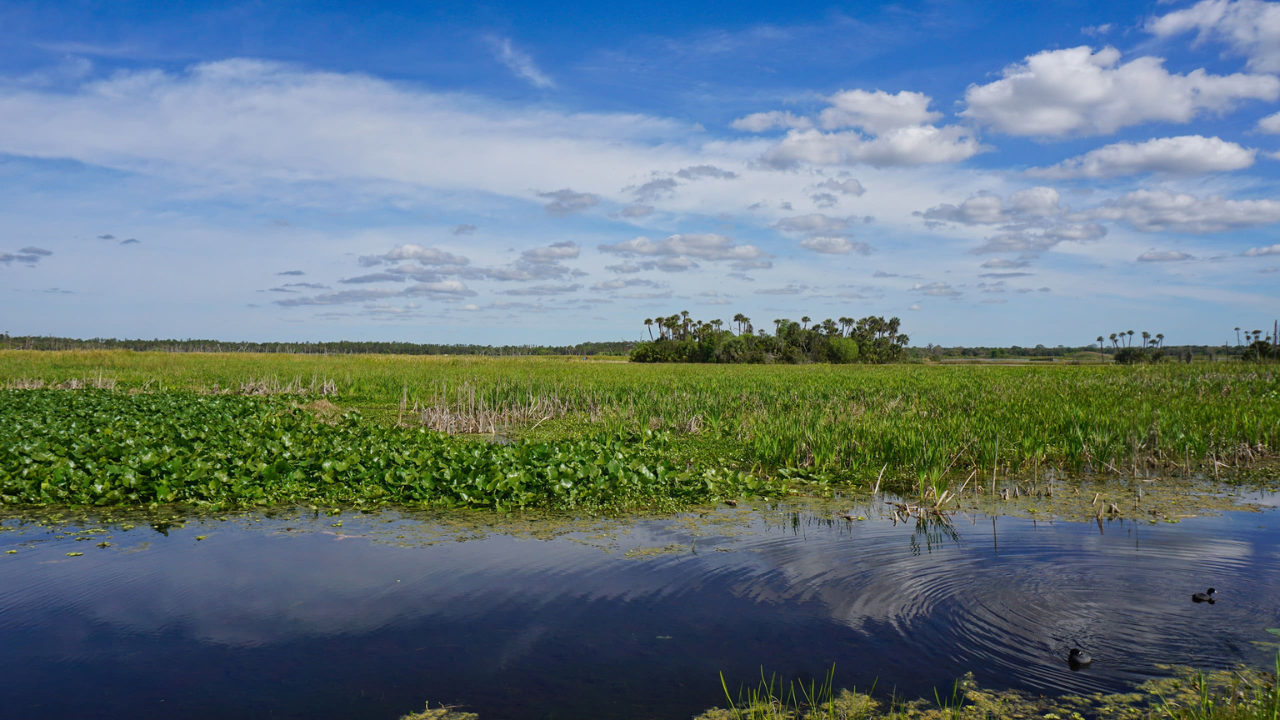
Picture a concrete drainage ditch carrying treated municipal effluent. It looks sterile. It smells faintly of chlorine and municipal decay. Now, strip away the concrete. Imagine a massive, engineered shallow basin spanning 1,200 acres, choked deliberately with cattails, bulrushes, and water hyacinths.
This was the birth of the Orlando Easterly Wetland in 1987.
When city officials first pitched the idea of turning 1,200 acres of pasture and timberland in Wedgefield into a massive natural filtration system, locals were skeptical. It sounded like an excuse to turn Central Florida into a dumping ground. Why trust nature to clean up industrial-scale urban filth?
Water flows slowly here. That is the secret. Drop by drop, day by day, millions of gallons of reclaimed water are pumped into the upper cells of the wetland. The water spreads out, shallow and wide, moving at a pace so sluggish you can barely tell it is advancing.
In this deliberate crawl, physics and biology go to work.
- Stems and leaves block the current, forcing suspended particles to settle into the sediment.
- Microscopic organisms clinging to root systems consume excess nitrogen and phosphorus.
- Sunlight breaks down remaining organic compounds.
By the time that water reaches the lower end of the property weeks later, it has transformed. It is clear. It is balanced. It is clean enough to support wading birds, alligators, and native fish populations without missing a beat.
What the Numbers Do Not Tell You
Dry statistics tell us that the project handles millions of gallons daily and removes vast percentages of nutrients that would otherwise suffocate the nearby St. Johns River basin. Those numbers matter. They satisfy the engineers and the regulators sitting in air-conditioned offices downtown.
Numbers do not capture the sound of a great blue heron launching from the water at dawn.
Stand on one of the earthen berms separating the wetland cells on a November morning. The humidity clings to your skin. The air smells of wet earth, decaying vegetation, and the sharp, clean scent of open water. A pair of sandhill cranes calls out in the distance, their rattling bugle echoing across the marsh.
It is easy to forget that this landscape is entirely artificial.
Human hands designed the topography. Heavy machinery carved the paths. Surveyors drove stakes into the mud. Yet, nature moved in almost immediately, reclaiming the engineering project and turning it into a sanctuary.
I remember walking these trails for the first time years ago, expecting the sterile vibe of a municipal utility plant disguised with a few bushes. What I found instead was a thriving wilderness. Bicycles hummed quietly along the perimeter trails. Photographers with heavy telephoto lenses waited motionless for hours to catch a glimpse of a bald eagle.
The infrastructure is invisible. You do not see pipes or heavy machinery. You only see green.
The Economics of Letting Go
Cities love hard infrastructure. Steel and rebar look good on balance sheets. They project power and control. But hard infrastructure breaks. It rusts. It demands millions of dollars in upgrades every few decades.
Orlando made a radical bet on soft infrastructure.
By utilizing biological systems, the city avoided billions of dollars in advanced mechanical treatment plant expansions. Plants wear out. Wetlands grow. Every year, the root systems expand. The microbial communities adapt. The ecosystem thickens and strengthens itself.
Consider what happens next when a major hurricane sweeps through Central Florida. Concrete walls crack under pressure. Pumps flood and fail. A wetland absorbs the blow. It spreads the water out, dampens the storm surge, and holds the line against erosion.
We spent the better part of the twentieth century trying to conquer nature, paving over every wetland we could find to make room for strip malls and parking lots. We treated water as a disposable nuisance.
Orlando looked at that historical failure and reversed the equation.
The Long View
Decades have passed since the first pumps pushed treated water into those 1,200 acres. The pine flatwoods and cypress domes have settled into their routine.
Walk the trails today and you will see families teaching children how to identify wildflowers. You will see researchers taking water samples, measuring parts per million, quietly confirming that the natural filters are still doing their work, year after year, decade after decade.
The water keeps moving. It slips past the roots of the reeds, quiet and steady, carrying yesterday's waste into tomorrow's life.