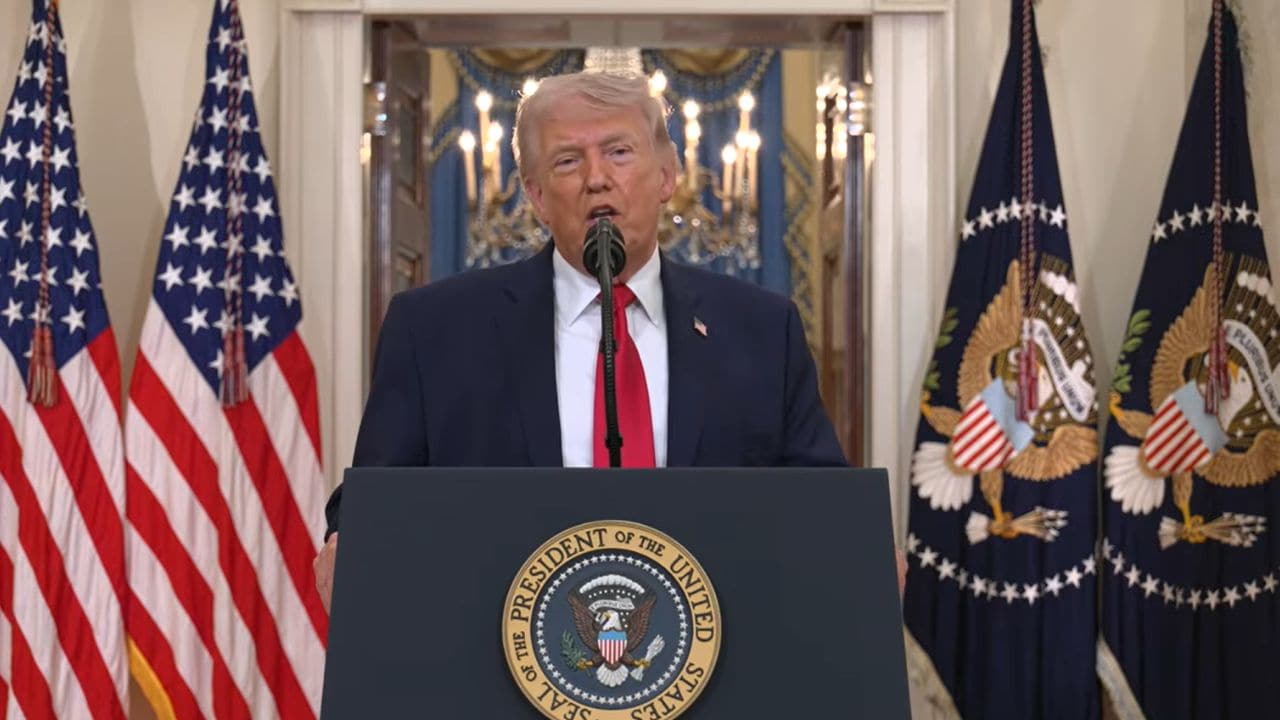
The headlines are screaming about a $160 billion "repayment" like it’s a foregone conclusion. Trump is railing against a court decision he claims sabotages national security. The media is hyperventilating over a potential massive drain on the Treasury.
They are all missing the point. You might also find this similar story insightful: The High Cost of Intelligence Operations in Mexico.
This isn’t about a "court ruling" versus "presidential power." It’s about the fundamental failure of using Section 301 as a permanent economic weapon without understanding the basic plumbing of global trade law. If the U.S. government has to pay back $160 billion in tariffs, it isn’t because a "rogue judge" stepped in. It’s because the administration treated the U.S. Court of International Trade (CIT) like a rubber stamp for a policy that was legally porous from day one.
The Lazy Consensus on Tariffs
The common narrative is simple: The government imposes tariffs to protect industry, China pays them (they don’t), and the courts eventually decide if it was "fair." As discussed in latest articles by NBC News, the results are widespread.
Here is the reality: Tariffs are a tax on domestic importers. Every cent of that $160 billion came out of the pockets of American businesses—from electronics manufacturers to retailers. When the court rules that these tariffs might be invalid, they aren't "handing money back to China." They are potentially returning seized capital to American companies that were caught in a legal dragnet that exceeded its statutory authority.
The "lazy consensus" assumes that the President has unlimited authority under Section 301 of the Trade Act of 1974 to escalate trade wars indefinitely. The CIT just reminded everyone that "discretionary power" is not "absolute power."
Why National Security is the Ultimate Red Herring
The administration’s defense always leans on the crutch of national security. It’s a convenient shield. If you wrap a trade policy in the flag, anyone who questions it is framed as a traitor or a globalist shill.
But Section 301 isn’t a national security statute; Section 232 is. Section 301 is about "enforcement of U.S. rights under trade agreements and response to certain foreign trade practices." By trying to use 301 as a blunt instrument for a total decoupling, the administration bypassed the procedural requirements—like notice-and-comment periods—that actually make a policy legally enforceable.
I’ve watched companies bleed out millions in "Section 301 duties" while trying to navigate an opaque exclusion process that felt more like a lottery than a legal system. To claim now that the court is "wrong" for demanding legal consistency is a slap in the face to the rule of law.
The $160 Billion Math Problem
Let’s dismantle the "repayment" hysteria.
The $160 billion figure refers to the cumulative duties collected under List 3 and List 4A of the China tariffs. The legal challenge, spearheaded by thousands of plaintiffs (including giants like Home Depot and Tesla), argues that the U.S. Trade Representative (USTR) didn't have the authority to expand the tariffs beyond the initial lists without a new investigation.
The government’s argument is that they were "modifying" existing actions. The plaintiffs' argument—which the court is taking very seriously—is that you can’t "modify" a spark plug into a whole new engine.
The Mechanism of Failure
- Procedural Shortcuts: The USTR received over 30,000 comments on the proposed tariff expansions. They didn't respond to them individually or even categorically in a meaningful way. In administrative law, if you don't respond to significant comments, your rule is "arbitrary and capricious."
- Statutory Overreach: Section 301(b) requires a specific nexus between the foreign act being investigated and the remedy. The USTR jumped from "China steals IP" to "Let’s tax every consumer good from China" without showing the direct link required by the statute.
- The Refund Reality: Even if the court orders a refund, the Treasury won’t just cut a check for $160 billion tomorrow. It will be a logistical nightmare of liquidating entries, protests, and litigation that will span a decade.
The Counter-Intuitive Truth: Uncertainty is Worse than the Tax
Protectionists argue that the tariffs provide "leverage." They don't. They provide uncertainty.
Business hates uncertainty more than it hates a 25% tax. If I know a tax is 25%, I can price it in, move my supply chain to Vietnam (which usually just means Chinese parts assembled in Hanoi), or eat the margin. But when the legality of that tax is in limbo for five years, I can’t make long-term capital investments.
The irony is that by "slimming" the court's decision and threatening to ignore it, the administration is making the U.S. look like an unstable jurisdiction. We are mimicking the very "non-market economy" behaviors we claim to be fighting in China.
People Also Ask (and get the wrong answer)
"Will this lower prices for consumers?"
Probably not immediately. Retailers have already adjusted their overhead. If they get a refund, that money goes to the balance sheet to offset the losses they took during the hike. Don't expect your next iPhone to be $200 cheaper because of a court ruling.
"Is China winning because of this ruling?"
China wins when the U.S. abandons the rule of law. If our trade policy is dictated by the whims of an executive rather than the statutes passed by Congress, we lose our greatest competitive advantage: institutional stability.
"Can the President just ignore the court?"
He can try, but Customs and Border Protection (CBP) is the agency that actually collects the money. If a final, non-appealable judgment says the entries must be liquidated without the 301 duties, CBP has a legal obligation to comply. Ignoring a court order of this magnitude would trigger a constitutional crisis that makes a trade war look like a playground scuffle.
The E-E-A-T Reality Check
I have spent years in the trenches of international logistics. I have seen the "Made in USA" labels that are actually "Assembled in USA with 90% foreign components" just to dodge these very tariffs. The system is being gamed because the policy itself is a blunt instrument designed for a world that hasn't existed since 1985.
The CIT isn't being "activist." It's being literal. It is reading the text of the law as written, not as the administration wishes it were written. If you want the power to tax $500 billion in imports at will, you need Congress to change the law. You can't just pretend the 1974 Trade Act is a blank check.
Stop Asking if the Tariffs "Work"
The wrong question is: "Are tariffs good or bad for the economy?"
The right question is: "Is the U.S. government capable of executing a trade policy that survives judicial review?"
Currently, the answer is a resounding no. The administration’s anger at the court is a confession of incompetence. They built a skyscraper on a foundation of sand and are now blaming the wind for making it tilt.
The $160 billion isn't a gift to the "enemies of America." It is the price of admission for a government that forgot that "national interest" doesn't exempt you from the Administrative Procedure Act.
If the government has to pay it back, it's not because the court is weak. It’s because the policy was lazy.
Pay the bill. Learn the lesson. Or keep losing in court while the rest of the world moves on.