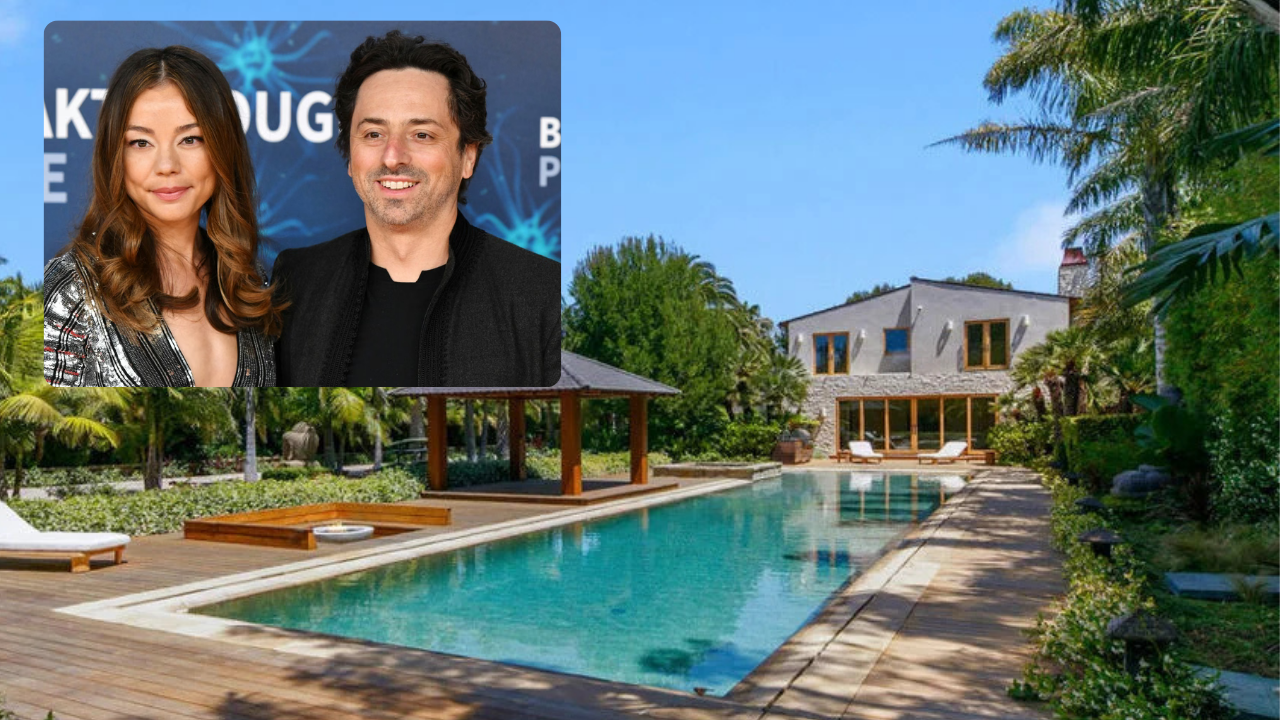
The headline screams luxury. A six-figure monthly lease. A billionaire divorce. A sun-drenched stretch of Point Dume coastline.
Competitor outlets read a listing sheet, slap a celebrity tag on it, and call it real estate news. They treat a $175,000-a-month rental figure as if it is the punchline of the story.
It isn’t. It’s a distraction.
When you look at the former Malibu property tied to Sergey Brin and Nicole Shanahan—acquired in September 2020 for $13.5 million, previously owned by pop singer P!nk, and later marketed at $175,000 a month as a seasonal rental before resurfacing on the sales market at $33.5 million—the lazy consensus is predictable. Tabloids and lifestyle blogs act like $175,000 a month is either proof of obscene wealth or a desperate post-divorce cash grab.
Both interpretations are amateurish. In ultra-prime coastal real estate, a seasonal asking rent is not an income stream. It is a carrying-cost buffer, a market-testing probe, and a staging tactic wrapped inside an LLC structure.
I have spent years watching high-net-worth families, family offices, and developers burn millions by confusing flashy monthly numbers with actual return on invested capital. People see a big gross rent and assume a trophy asset is printing money. Once you factor in California property taxes, coastal insurance premiums, staff, maintenance, renovation drag, and illiquidity, that "huge" check shrinks fast.
The Wrong Question Everyone Is Asking
Most readers looking at a story like this ask: How can anyone afford $175,000 a month just to rent a house?
That is the wrong question. The real question is: Why would owners of a multi-million-dollar coastal estate bother with a $175,000 monthly rental listing at all?
Think about the math for thirty seconds. Suppose a property carries an asking valuation north of $30 million, as this Point Dume estate eventually did when it hit the market at $33.5 million. Even if you rent it for three summer months at $175,000 per month—assuming you actually collect every dime without vacancy gaps or brokerage friction—that is $525,000 in gross seasonal rent.
On a $33.5 million asset, $525,000 is roughly 1.57% of the asking price. A gross yield under two percent over a peak quarter does not make a landlord rich. It barely dents property taxes, insurance, salt-air wear-and-tear, and security on a 1.2-acre coastal bluff property.
Gross rental yield is simply annual—or seasonal—rent divided by property value before expenses. In ultra-luxury trophy markets like Malibu, gross yields are notoriously low because buyers and holders price scarcity, privacy, and land value rather than cash flow. Confusing a high nominal rent with a high-yielding investment is a classic rookie mistake.
What People Also Ask (And Why the Premise Is Flawed)
Does celebrity ownership automatically add massive value to a luxury home?
No. That premise gets repeated endlessly in real estate coverage because it makes for easy copy. Having a famous prior owner—whether a pop star or a tech founder—creates initial curiosity and PR oxygen. It does not replace fundamentals.
In ultra-prime real estate, buyers with eight-figure budgets care about lot topography, ocean views, beach access, privacy from paparazzi, permitting history, and build quality. Celebrity provenance might get a broker’s call returned faster. It will not force a rational buyer to overpay by ten million dollars if the floor plan, lot lines, or coastal regulations fight them.
Is listing a luxury home for rent right after a high-profile split a sign of financial pressure?
Almost never when billionaires or established family offices are involved. Public reports around the Brin–Shanahan split and subsequent property moves note that the residence was tied to an LLC managed by Shanahan’s family office, while Brin acquired other high-priced Malibu properties separately.
When wealth sits at that level, a high seasonal rental listing usually serves one of three practical purposes:
- Offsetting holding costs while deciding on longer-term disposition or renovation plans.
- Testing demand at the top of the market to see who is willing to pay peak seasonal rates.
- Keeping the property active and maintained rather than sitting completely dormant while legal, family, or portfolio decisions settle.
How Ultra-Prime Real Estate Actually Works Behind the Curtain
To understand what is really happening with a property like this, you have to strip away celebrity gossip and look at asset mechanics.
In real estate economics, there is a sharp divide between cash-flow assets and store-of-value / trophy assets. Suburban rentals and multifamily apartments live and die by cap rates and net operating income. Point Dume bluff properties live by land scarcity and buyer psychology.
Consider a thought experiment. Imagine a scenario where an investor buys a $13.5 million coastal property, pours millions into upgrades and wellness-oriented modifications, and then watches comparable trophy sales move upward over several years. Even if the owner puts the home on the market for a seasonal lease at $175,000 a month, the goal is rarely to turn the house into a hotel business. The goal is to keep optionality open.
Optionality is the currency of big balance sheets. Selling a multi-tens-of-millions property takes time, discretion, and the right buyer pool. Renting it seasonally—or pivoting later to a full sale listing—lets the asset pay a fraction of its own keep while the owner waits for market conditions or personal timelines to align.
The Hidden Traps of "Wellness" and Hyper-Custom Upgrades
One detail highlighted in coverage of this property is its wellness-focused features and low-EMF or specialized building elements.
Here is the uncomfortable truth from the trenches of luxury development: hyper-niche upgrades do not guarantee dollar-for-dollar resale recovery.
I have seen owners spend heavily on custom biohacking setups, specialized air/water/EMF modifications, or ultra-specific layout changes—like turning rooms into dedicated wellness suites or custom offices—only to discover at resale that the next buyer wants a standard primary suite or a different flow. Customizations tailored to one owner’s lifestyle can narrow the buyer pool at the exact moment you need maximum competition.
A buyer who loves low-EMF sleeping environments and wellness spaces may see added value. A buyer who only cares about views, beach access, and classic architecture may view specialized systems as extra gear to maintain or rip out.
Why Divorce Headlines Distort Property Math
Divorce coverage loves drama. When a high-profile marriage ends, every deed, LLC, and listing gets read like a soap opera script.
In reality, complex estates held through trusts or LLCs rarely move in a straight line from "married couple" to "fire sale." Settlements, tax considerations, estate planning, and family office administration take time. A property can move from quiet holding to seasonal rental listing to full sale listing over months or years without any financial distress whatsoever.
Principals like Thomas Sowell and Howard Marks have long emphasized looking past surface narratives to incentives, second-order effects, and market cycles. In luxury real estate, the first-order story is always the price tag. The second-order reality is carrying cost, liquidity, and timing.
Comparing the Narratives: Tabloid Myth vs. Asset Reality
| Dimension | Lazy Media Consensus | Contrarian Asset Reality |
|---|---|---|
| The $175k/mo Rent | Proof of outrageous luxury or post-divorce cash scrambling | A modest gross offset against steep coastal holding costs and taxes |
| Celebrity History | Automatically inflates intrinsic property value | Generates attention and PR, but land, views, and specs drive the check |
| Wellness / Custom Specs | Universal value booster for every high-end buyer | Appeals to niche buyers; can require extra upkeep or taste alignment |
| Listing Shift (Rent to Sale) | Signals a failed rental strategy or sudden urgency | Reflects shifting portfolio timing and liquidity strategy over time |
The Downsides of Playing the Trophy & Optionality Game
Before anyone decides that copying billionaire real estate tactics is a smart move, let’s be honest about the risks. My contrarian take—that high-end seasonal leasing and long-horizon trophy holding are about optionality rather than rental yield—comes with real downsides.
First, illiquidity bites hard when markets cool. Trophy properties have fewer buyers. If interest rates, insurance costs, or buyer sentiment shift, an aggressive asking price can sit stale while monthly carrying costs keep ticking.
Second, renters wear down high-end finishes. Even vetted ultra-high-net-worth tenants bring staff, guests, luggage, and wear. A home built or upgraded with delicate materials or specialized systems takes real oversight to keep in show condition.
Third, headline exposure cuts both ways. When a property is publicly linked to famous names, it draws eyeballs—and sometimes tire-kickers, gawkers, or media speculation—rather than quiet, serious buyers who value discretion above all else.
Actionable Playbook for Buyers, Sellers, and Watchers
If you are evaluating luxury real estate—or simply trying not to get fooled by flashy headlines—skip the gossip and run this checklist instead:
- Calculate net carrying cost before admiring gross rent. Add annual property taxes, coastal or specialty insurance, HOA/coastal compliance, routine maintenance, reserves, and management fees. Compare that number to realistic net rent after vacancy and commissions.
- Separate land/location value from bespoke upgrades. Price the dirt, view, privacy, and beach access first. Treat hyper-specific wellness or lifestyle installations as a bonus only if your target buyer shares that exact priority.
- Watch days on market and price pivots, not just initial asking numbers. An asking rent or sale price is a hypothesis, not a cleared transaction. What the market actually pays—and how long it takes—tells the real story.
- Match the exit strategy to the asset’s liquidity profile. Do not buy a specialized, high-carrying-cost property with short-term cash-flow expectations unless you have the balance sheet to hold patiently.
A $175,000 monthly asking rent in Malibu makes a great click. Real estate wealth is built on the math nobody puts in the headline.