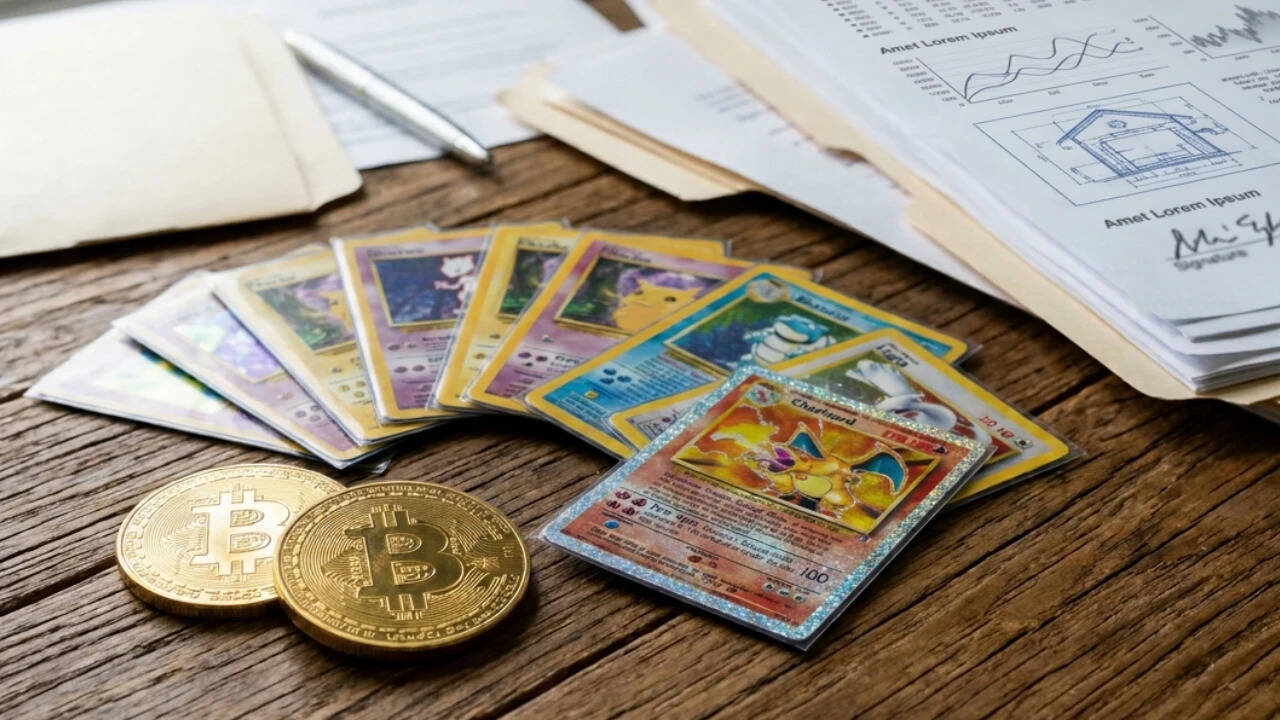
Divorce courts are stuck in the past, and a messy North Carolina appeal involving $180,000 in Bitcoin and a binder of Pokemon cards proves it. If you think splitting up a house, a 401(k), and a couple of cars is complicated, try explaining cold storage wallets and graded Charizard holographics to a family court judge.
That exact scenario landed before the North Carolina Court of Appeals, turning a local marital dispute into a textbook case on how modern wealth breaks traditional divorce laws. Most people assume equitable distribution is straightforward. You list what you own, put a price tag on it, and cut it down the middle. Read more on a connected topic: this related article.
Reality is much uglier.
When digital currencies and high-value collectibles enter the courtroom, the standard playbook falls apart. Values swing wildly overnight, ownership trails disappear into encrypted ledgers, and proving whether an asset was bought before or during the marriage becomes an expensive forensic nightmare. Additional reporting by NBC News explores related perspectives on the subject.
Why Crypto and Collectibles Break Standard Divorce Rules
Traditional family law was built for brick, mortar, and paper statements. Banks send monthly PDFs. Deeds sit in county offices. Stock portfolios have clear closing prices on specific dates.
Bitcoin and Pokemon cards don't play by those rules.
In North Carolina, marital property is governed by N.C. General Statute § 50-20, which requires courts to identify, classify, value, and distribute everything acquired between the date of marriage and the date of separation. Every step of that four-part process hits a wall when alternative assets are on the table.
First, there's the classification trap. Suppose one spouse bought a few Bitcoin back in 2015 for pennies, or kept a childhood binder of 1999 Base Set Pokemon cards in their parents' attic. That's separate property. Right?
Usually, yes. Things get murky fast when you actively trade those assets during the marriage. If you swapped that 2015 Bitcoin for Ethereum in 2021, used marital funds to pay gas fees, or sold three holographic cards to buy a graded PSA 10 Pikachu, you've likely commingled separate and marital property. Courts hate commingled assets because untangling them requires tracing every single transaction over years.
Then comes the valuation nightmare. In North Carolina, marital assets are supposed to be valued as of the date of separation. Sounds simple enough.
Except crypto doesn't have a closing bell. Bitcoin trades 24 hours a day, seven days a week, across dozens of exchanges with slightly different prices. A $180,000 crypto stash on the day someone moves out can drop to $110,000 before the first mediation session—or spike to $250,000 before a judge signs the final order. Courts have to deal with "divisible property," which accounts for passive gains or losses after separation, versus active changes caused by one spouse trading the account.
Collectibles are arguably worse. A raw Pokemon card sitting in a plastic sleeve might look like a $20 piece of cardboard to an untrained eye. Get that exact same card graded by Professional Sports Authenticator (PSA) as a Gem Mint 10, and suddenly you're looking at five figures. Without an expert appraiser, one spouse can easily hide thousands of dollars in plain sight while the other fights over the dining room table.
Inside the North Carolina Divorce Appeal Over $180,000 Bitcoin and Pokemon Cards
The North Carolina Court of Appeals case highlights just how easily trial courts get tripped up when untraditional assets dominate the marital estate. When a trial judge makes a mathematical error, misclassifies separate funds, or fails to make specific written findings about how they valued volatile assets, the losing spouse has clear grounds to appeal.
And appeals are expensive. Really expensive.
In high-conflict divorces featuring crypto and collectibles, arguments almost always boil down to three recurring flashpoints that trigger appellate review.
The Date of Separation Valuation Trap
Trial judges frequently struggle to pin down a fair market value when an asset refuses to sit still. If a husband holds $180,000 in Bitcoin at separation, and the market crashes six months later during litigation, who eats that loss?
Under North Carolina law, passive fluctuations in value between separation and distribution are classified as divisible property. Both spouses share the pain or the windfall. However, if the holding spouse actively traded the coins, moved them into risky altcoins, or cashed them out without permission, the court can treat that loss as marital waste—also known as dissipation. Proving whether a drop in value was passive market movement or reckless trading requires expert testimony that many trial records simply lack.
Proving Separate Property Without a Paper Trail
Everyone claims their valuable collectibles or early crypto investments were acquired before the wedding. Saying it on the witness stand isn't enough.
North Carolina courts place the burden of proof squarely on the spouse claiming an asset is separate. For a stack of vintage Pokemon cards, you need more than a childhood photo. You need receipts, grading submission logs, insurance riders, or credible third-party testimony showing those specific cards existed prior to the marriage and weren't purchased on eBay using a joint checking account three years ago.
Crypto presents an even steeper climb. If you bought Bitcoin on an exchange that no longer exists—think Mt. Gox or defunct early platforms—or moved coins across multiple hardware wallets, reconstructing the chain of custody takes a certified forensic accountant. Without clean blockchain tracing, judges routinely default to classifying the entire holding as marital property.
Missing Findings of Fact
Appellate courts don't re-weigh evidence. They check whether the trial judge followed the law and showed their work.
One of the fastest ways a divorce judgment gets overturned in North Carolina is when a judge assigns a lump-sum value to complex assets without explaining how they got the number. If an order says "the Pokemon collection is worth $15,000" or "the cryptocurrency totals $180,000" without citing an appraisal, an exchange timestamp, or a specific evidentiary exhibit, the Court of Appeals will vacate the ruling and send it right back to square one.
Why Hidden Crypto and Collectibles Are a Terrible Gamble
Some people see digital wallets and niche collectibles as the ultimate divorce shield. The logic goes like this: if my spouse doesn't understand blockchain, or thinks my trading cards are kids' toys, I can quietly keep them off the financial affidavit.
Honestly, that's one of the fastest ways to lose everything in family court.
Modern discovery tools have caught up fast. Subpoenas to major exchanges like Coinbase, Kraken, or PayPal reveal fiat on-ramps immediately. Even if you moved your $180,000 in Bitcoin onto a Ledger or Trezor hardware wallet years ago, the bank wire that originally bought the crypto leaves a permanent scar on your checking statements.
Forensic investigators look for specific red flags in routine bank records:
- Outgoing wire transfers or ACH payments to known crypto exchanges or payment processors.
- Recurring charges to grading companies like PSA, Beckett (BGS), or CGC.
- Purchases from specialty auction houses, TCGplayer, eBay, or vault storage facilities.
- Tax filings showing Schedule D capital gains, 1099-B forms, or checked boxes on IRS Form 1040 regarding digital asset transactions.
When a judge catches a spouse hiding assets, the punishment goes way beyond a simple 50/50 split. In many jurisdictions, courts award the innocent spouse a massive percentage of the hidden asset—sometimes up to 100%—along with ordering the deceptive spouse to pay the other side's attorney fees and forensic accounting bills.
How to Protect Digital Assets and Collectibles Before and During Divorce
Whether you're the one holding the crypto wallet or the spouse worried that $180,000 in digital wealth is about to vanish into thin air, passivity will cost you. Waiting until the final equitable distribution hearing to figure out how these assets work is a recipe for an appeal.
If You Own the Crypto or Collectibles
Document everything right now. Don't wait for a subpoena to start organizing your records.
- Export complete CSV histories from every centralized exchange you've ever used, including closed accounts if you can still request data archives.
- Screenshot and timestamp wallet balances on the exact date of separation, showing public wallet addresses and transaction hashes so there's zero ambiguity about passive versus active changes.
- Catalog physical collectibles with high-resolution photos, serial numbers, PSA/CGC certification numbers, and original purchase receipts.
- Freeze active trading on disputed crypto accounts once separation occurs. If you want to protect against a market crash, get written consent from your spouse's attorney before converting volatile coins into stablecoins or cash.
If Your Spouse Controls the Assets
You don't need to become a blockchain developer overnight, but you do need to force transparency early.
- Request a temporary restraining order or freeze on digital asset transfers as soon as a divorce complaint is filed, preventing the controlling spouse from moving funds into privacy coins or overseas platforms.
- Demand public wallet addresses during initial discovery, not just sanitized PDF summaries. Anyone can paste a public Bitcoin or Ethereum address into a free block explorer like Etherscan or Blockchain.com to verify exact balances and timestamps.
- Hire an independent collectibles appraiser rather than accepting your spouse's self-reported values. A binder of cards described as "old Pokemon stuff" could easily hide five-figure tournament promos or first-edition holos.
- Watch the tax consequences when negotiating a settlement. Getting awarded $90,000 in cash is not the same as getting awarded $90,000 in low-basis Bitcoin that carries a massive capital gains tax bill the second you sell it.
Practical Steps to Avoid an Expensive Divorce Appeal
Appeals happen when parties leave valuation methods vague or let judges guess at numbers they barely understand. If your marital estate includes cryptocurrency, graded trading cards, NFTs, or high-end memorabilia, build airtight specificity into your separation agreement or proposed court order.
Specify the exact exchange rate source and UTC timestamp used to value digital assets, or better yet, split volatile crypto in-kind—meaning each spouse gets 50% of the actual coins transferred to their own wallet rather than fighting over a fluctuating dollar figure. For physical collectibles, agree on a neutral third-party auction house or certified appraiser upfront and bind both sides to that valuation. Lock down the paper trail early, account for capital gains taxes before signing anything, and never assume a family court judge will automatically understand what a cold wallet or a PSA 10 Charizard is actually worth.