The Narrative Is a Lie
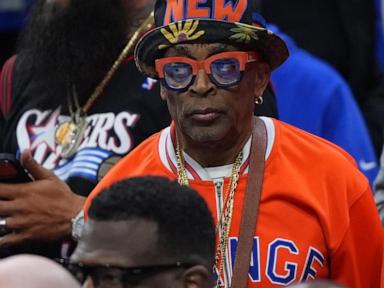
Every few years, the sports media machine cranks out the same tired retrospective. They wheel out the grainy footage of Willis Reed limping onto the hardwood. They find a camera angle of a young Spike Lee in the stands, eyes wide, witnessing "history." We are told, with religious fervor, that May 8, 1970, was the pinnacle of basketball—the night the New York Knicks saved the soul of the city.
It’s a beautiful story. It’s also a fairy tale designed to mask the fact that the 1970 NBA Finals were a tactical disaster salvaged by a fluke psychological gambit.
The industry consensus is that Reed’s entrance was the bravest act in sports history. The truth? It was a desperate, medically questionable stunt that shouldn't have worked against a Lakers team with half a brain. We’ve spent fifty years celebrating a moment of "spirit" because we’re too afraid to admit the actual basketball played that night was an anomaly that would never happen in a high-IQ era of the game.
The Willis Reed Fallacy
Let’s look at the actual physics of the situation. Willis Reed had a torn muscle in his thigh. He was shot up with Carbocaine. He could barely move. He made two jumpers in the opening minutes and then contributed almost nothing statistically for the rest of the game.
The "lazy consensus" argues his presence won the game. That is an insult to Walt Frazier. While everyone was busy swooning over a man who could barely walk, "Clyde" Frazier put up 36 points, 19 assists, and 7 rebounds. Frazier played arguably the greatest Game 7 in the history of the league, yet the headline is always about a guy who scored four points.
By focusing on the "miracle" of Reed, we ignore the tactical incompetence of the Los Angeles Lakers. Any modern coach would have put Reed in a pick-and-roll on every single possession. They would have forced him to move laterally until his leg gave out. Instead, Wilt Chamberlain and the Lakers stood there like statues, paralyzed by the "aura" of a limping man. They didn't lose to a better team; they lost to a vibe.
Spike Lee and the Architecture of Nostalgia
Spike Lee is a master storyteller, which makes him the most dangerous person to trust regarding Knicks history. He recalls the Garden "shaking." He talks about the energy as if it were a tangible force that guided the ball into the hoop.
I’ve spent years analyzing the business of sports nostalgia. Nostalgia is a sedative. It makes fanbases tolerate decades of mediocrity because they are chasing a high from a black-and-white television era. Spike Lee’s constant rehashing of 1970 isn't just a tribute; it’s a branding exercise that keeps the Knicks relevant despite a championship drought that is approaching geological timescales.
The "Spike Lee was there" narrative serves to validate the Garden as the "Mecca." But if the Mecca hasn't seen a title in over half a century, is it a cathedral or a museum? We’re celebrating a period where the league had 14 teams and the three-point line didn't exist. To hold 1970 up as the gold standard of New York basketball is to admit that the best days are not just behind us—they belong to a different sport entirely.
The Tactical Void of 1970
We need to stop pretending the 1970 Finals represented the peak of the sport.
- Pacing without Purpose: The 1970 season featured a pace that would make a modern player collapse, yet the efficiency was abysmal. It was a track meet with no finish line.
- The Wilt Enigma: Wilt Chamberlain, the most physically dominant force in history, was out-rebounded by a hobbled Reed and a 6'7" Dave DeBusschere in key stretches. This wasn't "grit" from the Knicks; it was a total psychological collapse from the Lakers' superstars.
- The Depth Myth: People talk about that Knicks roster as "perfectly balanced." In reality, they were a top-heavy unit that caught a Lakers team in the middle of an internal identity crisis between Jerry West, Wilt, and Elgin Baylor.
Why the "Inspiration" Argument Is Toxic
The most common retort I hear is: "But the inspiration! You can't quantify what Reed did for the locker room!"
Actually, you can. You quantify it by looking at the defensive lapses of the opposition. The 1970 Lakers gave up 113 points in a Game 7. They allowed Frazier to dictate every rhythm of the game. Calling it "inspiration" is just a polite way of saying the Lakers lacked the mental toughness to play against a wounded opponent.
If a star player today tried what Reed did, he would be criticized for hurting his team's spacing and being a defensive liability. We would call the coach reckless for risking a player's career for a few minutes of "energy." But because it happened in 1970, we wrap it in a layer of untouchable myth.
Stop Asking if the Knicks Can Reclaim the Magic
The "People Also Ask" sections of the internet are filled with fans wondering when the Knicks will find another Willis Reed or another 1970.
You’re asking the wrong question.
The 1970 title was a product of a specific, unrepeatable vacuum. The NBA was a fringe sport. The talent pool was microscopic compared to today. The media wasn't there to dissect the Lakers' failure in real-time.
If you want the Knicks to win again, you have to kill the ghost of 1970. You have to stop interviewing directors who were teenagers at the time and start looking at why the organization has spent fifty years trying to draft "character" instead of modern skillsets. The obsession with the Reed moment has created a culture where the Knicks value "toughness" over talent—a strategy that hasn't worked since the Nixon administration.
The Hard Truth of the Matter
The 1970 Knicks were a great team that won a title because their opponent choked on the fumes of a theatrical entrance.
If Willis Reed doesn't walk out of that tunnel, the Lakers likely win Game 7. They would have played their game instead of reacting to a ghost. The Knicks' victory was a triumph of theater over sport.
As a piece of cinema, it’s brilliant. As a piece of basketball history, it’s a fluke that has been inflated by New York’s massive media echo chamber. Spike Lee remembers it gleefully because he’s a fan. But as professionals, we have to look past the grin and the orange jersey.
We have to stop treating 1970 as a blueprint. It was a glitch in the system. A one-off. A beautiful, limping accident that will never happen again—and shouldn't.
Burn the tapes. Stop the interviews. The 1970 Knicks are holding the 2026 Knicks hostage. It’s time to pay the ransom and move on.


