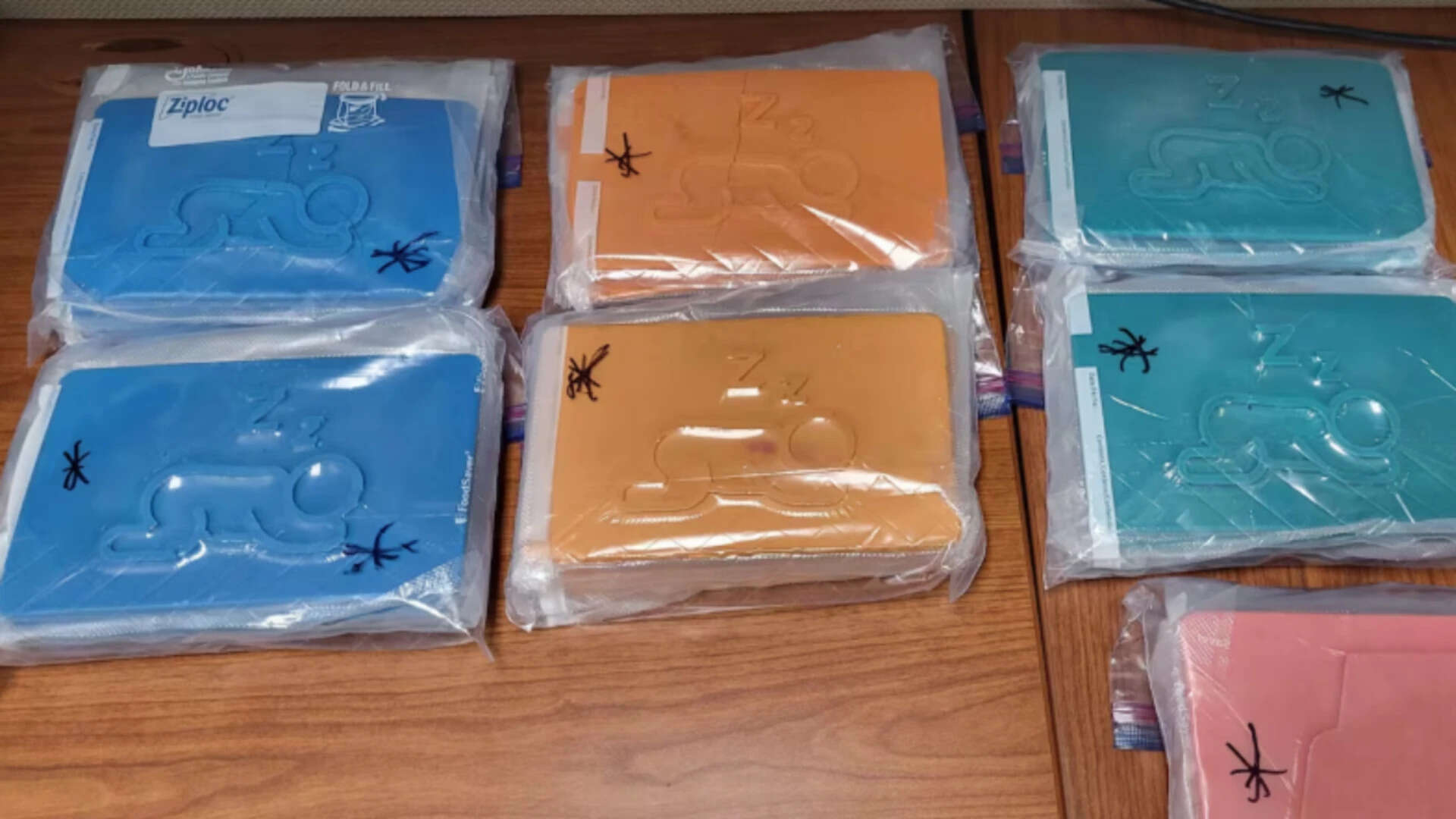
Peel Regional Police recently executed a series of raids in Brampton that resulted in the seizure of $2.3 million worth of suspected fentanyl and the arrest of four men. Navjot Singh, Attarvir Singh, Balwinder Singh, and Manpreet Singh now face a battery of charges including possession for the purpose of trafficking. While the sheer volume of the haul is significant, the street value is only the surface of a much deeper, more troubling rot. This isn't just another drug bust in a suburban driveway; it is a clear indicator that the logistics of the opioid crisis have moved from the shadows of the urban core directly into the residential veins of the Greater Toronto Area.
The operation, spearheaded by the Specialized Enforcement Bureau, targeted a specific cell operating within the region. Officers recovered a substantial quantity of the synthetic opioid, which, when measured by lethal dosage, represents enough potential harm to devastate the population of a mid-sized Canadian city. The four suspects, ranging in age from 21 to 41, suggest a multi-generational involvement in the distribution network. If you found value in this piece, you might want to check out: this related article.
The Logistics of a Suburban Distribution Hub
Brampton has become an ideal staging ground for high-level drug trafficking for reasons that have nothing to do with its social fabric and everything to do with its geography. It sits at the intersection of the 400-series highways, providing immediate access to the entire Golden Horseshoe and the international border. For a trafficking ring, a quiet residential street in Peel Region offers the perfect camouflage. It allows for the movement of large quantities of product without the constant heat associated with downtown "trap houses" or industrial zones.
Investigators are increasingly finding that the "bricks" of fentanyl seized in these raids are not meant for local street-level consumption in Brampton alone. They are wholesale quantities. This was a distribution node. The $2.3 million figure reflects the bulk price; once stepped on and divided into individual hits, the profit margins for the organizers behind these four men would have tripled. For another look on this story, see the recent update from BBC News.
Beyond the Yellow Tape
The names listed in the police report represent the "operators"—the individuals caught with the product. However, the sophistication of a $2 million inventory suggests a much larger supply chain. Fentanyl is rarely manufactured in a Brampton basement at this scale. It is imported, often as precursor chemicals from overseas, and then processed in sophisticated labs before being handed off to regional distributors.
The public often views these arrests as a victory, but veteran investigators see them as a "cost of doing business" tax on the cartels. When the police take $2.3 million off the street, the supply chain feels a momentary pinch, but the demand remains unchanged. This creates a vacuum.
We must look at the math of the trade.
- The Cost: Precursor chemicals are cheap.
- The Risk: Low-level and mid-level distributors are replaceable.
- The Reward: A single successful shipment can fund ten more, even if five are intercepted.
The Lethality of the Modern Batch
What makes this specific seizure in Brampton particularly harrowing is the purity levels currently seen in the Ontario market. Fentanyl has moved beyond being a "filler" for heroin; it is now the primary product. Users are often unaware of the concentration they are purchasing. A fluctuation of just two milligrams—the weight of a few grains of salt—is the difference between a high and a funeral.
Police services across the GTA are seeing a trend where fentanyl is being dyed bright colors or pressed into tablets that mimic legitimate prescription pills. This "branding" is a marketing tactic used by the organizations to denote potency or "quality" in a market that is fundamentally unregulated and lethal. The four men charged in this bust were part of a machinery that treats human life as a rounding error on a balance sheet.
The Failure of Current Deterrents
If the goal of these high-profile busts is to stop the flow of drugs, the data suggests we are failing. Despite record-breaking seizures year after year, the price of fentanyl on the street has remained relatively stable, and the overdose rates continue to climb.
The legal system is currently a revolving door for mid-level traffickers. Under current sentencing guidelines, the "big fish" remain insulated by layers of deniability, while the "runners" and "holders" serve their time or get out on bail to resume operations. The four Singhs will have their day in court, but the infrastructure that provided them with $2.3 million in product remains largely intact.
The focus remains on the seizure of the physical substance. This is a reactive strategy. To actually dismantle these networks, the focus must shift toward the financial arteries that allow millions of dollars to be laundered back into the legitimate economy. Until the profit is harder to hide than the drugs, the suburban streets of Brampton will continue to serve as the warehouses for a national tragedy.
The neighborhood where these arrests occurred is typical of the GTA—multi-car driveways, families, and people commuting to work. The fact that $2.3 million in deadly narcotics sat behind one of those front doors is not an anomaly. It is the new standard of the Canadian drug trade.
Demand transparency from the courts regarding the source of the bail money for these suspects.