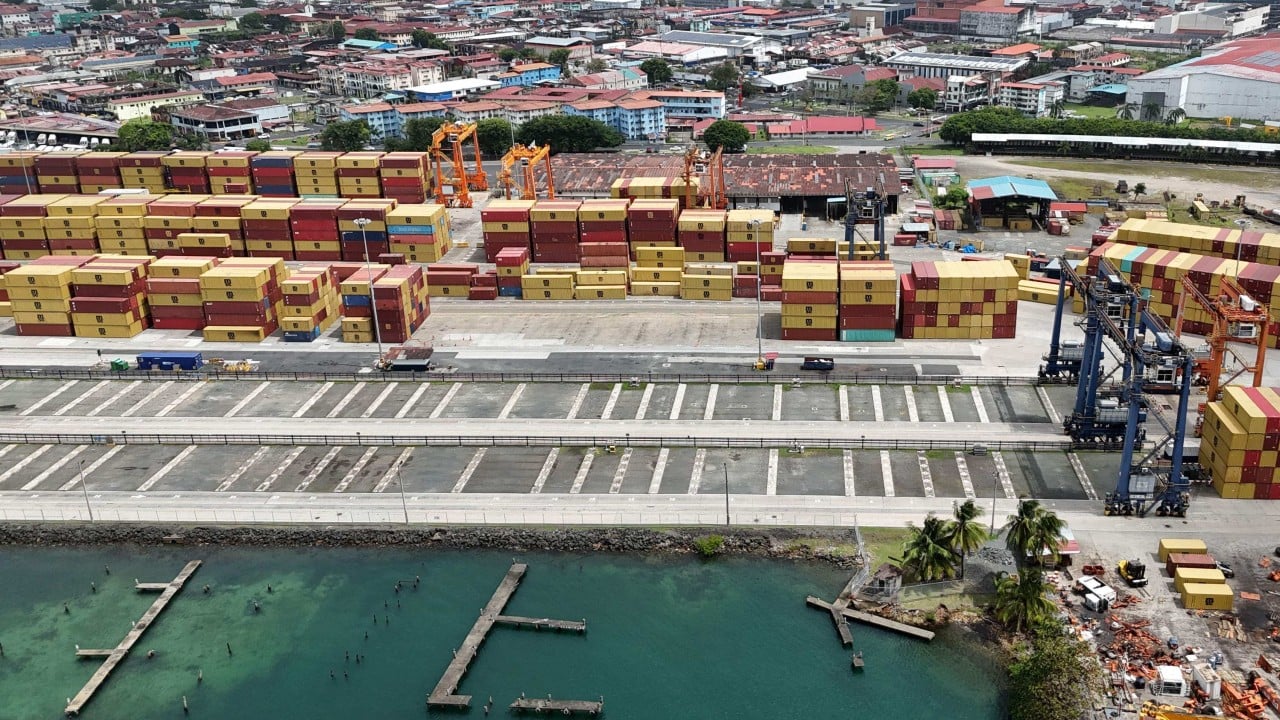
Panama has effectively evicted the world’s most prolific port operator from the mouth of its own canal, and the shockwaves are currently dismantling thirty years of maritime precedent. In February 2026, the Panamanian government transitioned from legal disputes to physical occupation, seizing the Balboa and Cristóbal terminals from the Hong Kong-based conglomerate CK Hutchison. This was not a standard contract expiration. It was a calculated, high-stakes neutralization of Chinese-linked influence at a chokepoint that handles 5% of all global trade.
CK Hutchison is now retaliating with a $2 billion international arbitration claim, but the numbers on the ledger tell only half the story. The "why" behind this seizure reveals a new era where the sanctity of a contract is secondary to the demands of geopolitical alignment.
The Constitutional Coup
The mechanism of the seizure was as surgical as it was controversial. For nearly three decades, Panama Ports Company (PPC)—Hutchison’s local arm—operated under Law No. 5 of 1997. In 2021, the company even secured a 25-year extension after an audit by the Comptroller General confirmed "substantial compliance" with its investment obligations.
Everything changed in late January 2026. Panama’s Supreme Court abruptly declared the 1997 law unconstitutional. The court argued the original deal granted "exclusive privileges" and tax exemptions that harmed the Panamanian state, claiming the country had lost more than $1.2 billion in potential revenue over the decades.
Within weeks of the ruling, the government issued Executive Decree No. 23. It wasn't just a notice to vacate. Security forces moved in, occupying terminals, seizing archives, and locking down proprietary computers. By the time the ink was dry on the decree, pre-drafted 53-page contracts were already being signed with new interim operators: Maersk’s APM Terminals and Mediterranean Shipping Company (MSC).
Lawfare as a Geopolitical Tool
The timing of the "constitutional" discovery is impossible to ignore. The ousting of a Hong Kong firm happened to coincide with intense pressure from the United States. In Washington, the move is being hailed as a "win for America," framed as a necessary step to purge Chinese-linked entities from the Canal’s immediate vicinity.
This is the "Panama Model" in action. It suggests that infrastructure concessions in strategic regions are no longer governed by local commercial law, but by the shifting winds of Great Power competition. If a contract becomes geopolitically inconvenient, the "rule of law" can be retroactively adjusted to find a fatal flaw.
For Hutchison, the betrayal is personal and financial. The company had spent years negotiating a $23 billion global ports divestment deal with a consortium led by BlackRock. That deal is now in jeopardy because two of its most valuable "crown jewel" assets have been effectively nationalized without a cent of compensation.
The $2 Billion Calculated Risk
Hutchison’s legal team is moving with a ferocity rarely seen in maritime disputes. They have filed for arbitration through the International Chamber of Commerce (ICC) in Paris, demanding $2 billion to cover lost assets, future earnings, and what they describe as "egregious breaches of contract."
Panama’s response to the arbitration has been a masterclass in bureaucratic stalling. The government missed the critical March 13 deadline to respond to the ICC claim, citing a lack of prepared legal counsel. It is a bold gamble. By delaying, Panama buys time to solidify the new operations with Maersk and MSC, betting that by the time an arbitration award is issued—likely years from now—the world will have moved on.
The Collateral Damage of Seizure
The fallout isn't limited to the courtroom. The seizure has triggered a chain reaction among shipping giants:
- COSCO Shipping, the Chinese state-owned behemoth, has already suspended operations at the Port of Balboa in retaliation.
- Logistics Reliability is cratering. With proprietary software and documents seized, the transition to new operators has been described by PPC as a "radical occupation" that disrupted supply chains for weeks.
- Investor Sentiment across Latin America is at a decade-low. If a 30-year concession can be voided by a sudden constitutional reinterpretation, no long-term infrastructure project is safe.
The Illusion of Sovereignty
President José Raúl Mulino has defended the seizure as an act of restoring national sovereignty, claiming the ports had become "autonomous territories" where the state lacked oversight. However, the immediate handoff to European giants like Maersk and MSC suggests this wasn't about Panamanian control, but about choosing a different master.
Replacing a Hong Kong firm with Western-aligned operators satisfies the U.S. security apparatus, but it leaves Panama exposed to massive financial liabilities. If the ICC rules in favor of Hutchison, Panamanian taxpayers could be on the hook for a $2 billion bill—a high price for a "victory" of sovereignty that essentially traded one foreign operator for another.
The legal battle now moves into a dark room in Paris, where the future of international investment protection will be tested. If Panama successfully evades the $2 billion claim, it sets a precedent that will make every global port operator rethink their next 30-year lease. The era of the "neutral" maritime gateway is over. In its place is a landscape where the deed to the dock is only as good as the political favor of the day.
Would you like me to analyze the specific clauses in the 1997 Law No. 5 that the Supreme Court used to justify the unconstitutionality ruling?
Investigation by the Analyst Team.