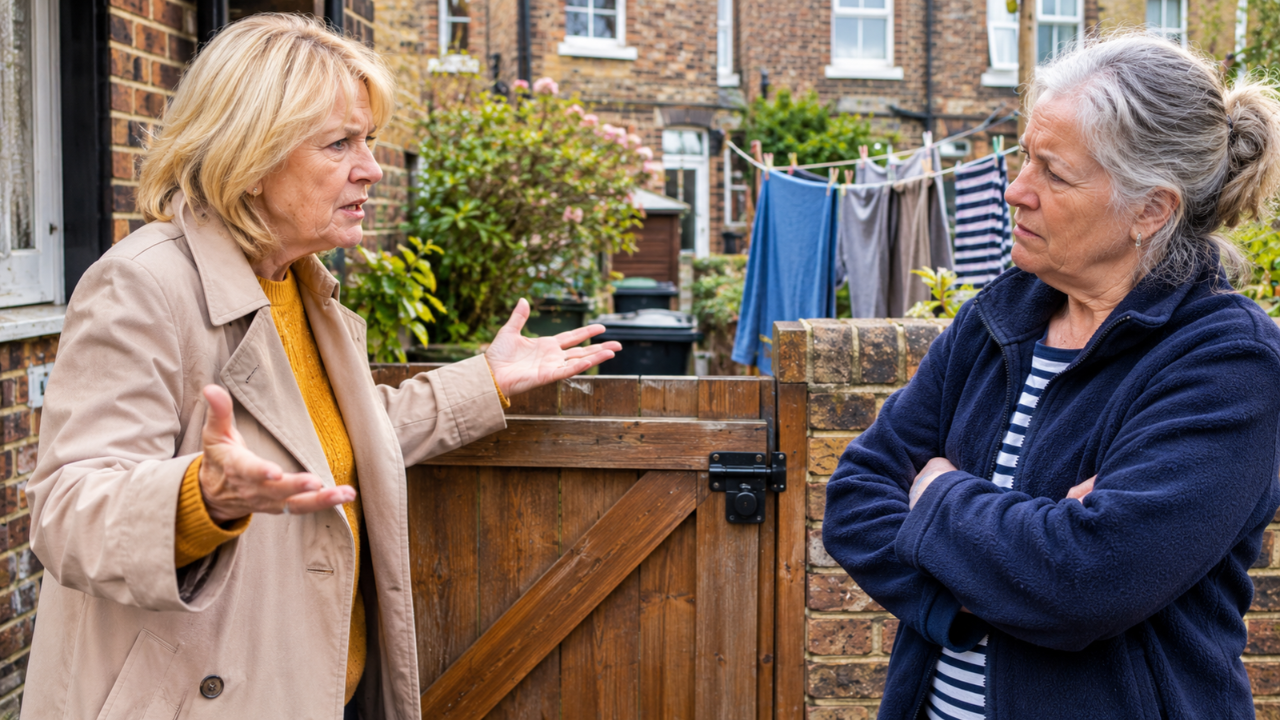
Two neighbours in London just burned through £20,000 in legal fees over who gets to walk through a garden. Let that sink in for a second.
Twenty grand. That isn't the price of an extension or a luxury landscaping overhaul, just the court-ordered bill slapped onto the losing side of a bitter argument over back-garden access. You see these headlines pop up in the British press every few months, and honestly, they almost always follow the exact same tragic script. Someone buys a terraced house, someone puts up a gate or blocks a path, tempers flare over the fence, and eighteen months later a county court judge is reading decades-old deeds while two families face financial ruin.
The recent London garden access row ending with a £20,000 legal-cost order isn't an isolated freak accident. It's the predictable result of how English property law handles shared pathways, rights of way, and stubborn pride. If you own a property in the UK—especially a Victorian terrace, a converted flat, or an end-of-terrace home—you're probably sitting on the exact same legal time bomb without realizing it.
Why Garden Access Disputes Escalate So Fast
Nobody wakes up intending to spend their life savings fighting the person living six feet away. It starts small. A wheelie bin gets left in a shared side return. A new owner decides they want more privacy and bolts a padlock onto an alleyway gate. Maybe someone assumes that because they've walked across the back of their neighbour's patio for ten years to take the lawnmower to the shed, they automatically own the right to keep doing it.
They don't.
In England and Wales, property boundaries and access rights are governed by a messy patchwork of Land Registry titles, historic conveyances, and centuries-old common law principles. When a dispute over a garden access row hits a solicitor's desk, the meter starts running immediately. At £250 to £450 an hour plus VAT for a specialist property litigation lawyer, you can easily rack up £5,000 just writing angry letters back and forth before anyone even files a claim at the First-tier Tribunal or the County Court.
Once a case actually reaches a hearing, costs explode. You need barristers. You need chartered surveyors to map out millimetre-accurate boundary lines against blurry 1920s title plans. And under the general rule of English civil litigation—loser pays—the party who misjudges their legal standing gets stuck paying their own lawyers plus a massive chunk of their neighbour's bill. That is precisely how a spat over a garden path turns into a £20,000 court order.
Understanding Easements and Rights of Way in UK Gardens
If you want to avoid becoming the next cautionary tale in the local papers, you need to understand one word: easement.
An easement is a legal right to use someone else's land for a specific purpose. In residential streets across London and other UK cities, the most common easement is a right of way on foot—often worded in old deeds as a right to pass and repass at all times and for all purposes, with or without wheelbarrows.
Here is where people trip up. Having a right of way over your neighbour's garden doesn't mean you own that strip of land. Your neighbour still owns the freehold. You just have a legal permission slip attached to your property title allowing you to walk across it. Conversely, if you're the one who owns the garden, you can't just stick a shed, a raised flowerbed, or a locked gate across that path if it substantially interferes with your neighbour's right to use it.
What counts as "substantial interference"? Courts look at practicality. Putting up a gate isn't automatically illegal, provided you give your neighbour a key or the combination code and the gate isn't ridiculously heavy or awkward to open. Locking them out completely, however, is a textbook breach of an easement.
Express Easements vs Prescriptive Rights
Most garden disputes fall into two buckets when they land in front of a judge.
First, there are express easements. These are written directly into the Title Register or the historic conveyance deeds held by HM Land Registry. If your deeds explicitly say Number 42 has a right of way across the rear of Number 44, the court will enforce it. It doesn't matter if the previous owner never used the path. An express easement doesn't expire just because nobody walked down it for twenty years.
Second, there are prescriptive easements. This is where things get expensive. Under the Prescription Act 1832 and common law doctrine of lost modern grant, if you—and previous owners of your house—have used a path across a neighbour's garden openly, without force, and without permission for at least 20 continuous years, you might acquire a legal right of way automatically.
Proving 20 years of uninterrupted use in court is a nightmare. You have to track down former homeowners from the 1990s, dig up old family photos showing the path in use, and cross-examine witnesses under oath. Lawyers love prescriptive easement cases because they take days of court time to argue. Homeowners hate them because the legal bills routinely dwarf the value of the land itself.
The Hidden Financial Trap of Neighbour Litigation
Let's talk about the real-world math of a £20,000 legal-cost order. When a judge orders one neighbour to pay £20,000 toward the other's costs, that is rarely the total amount spent.
Courts assess costs on either the "standard basis" or the "indemnity basis." Even when you win a property dispute on the standard basis, you typically only recover about 60% to 70% of what you actually paid your own legal team. So if the winning neighbour was awarded £20,000 in costs, there is a very good chance their actual legal bill was closer to £30,000. Meanwhile, the losing neighbour has to pay their own solicitor—say another £25,000—plus the £20,000 court order.
Between two households fighting over a few square feet of London turf, upwards of £50,000 just evaporated into the legal system.
And the financial bleeding doesn't stop when the judge bangs the gavel. The moment you get into a formal dispute with a neighbour, your property becomes toxic on the open market. When you eventually try to sell your house, you are legally required to complete the TA6 Property Information Form issued by the Law Society.
Question 2 on that form asks directly whether there have been any disputes or complaints regarding the property or a property nearby. If you lie, the buyer can sue you for misrepresentation after completion. If you tell the truth and disclose a £20,000 court battle over garden access, mortgage lenders get nervous and buyers either walk away or slash tens of thousands of pounds off their offer. You end up paying twice—once in court, and again when you try to move.
Why Title Plans Rarely Settle the Argument
A massive misconception among homeowners is that downloading a £3 title plan from HM Land Registry will settle a boundary or access fight instantly. It won't.
Under Section 60 of the Land Registration Act 2002, almost all title plans operate under the general boundaries rule. That red line drawn around your house and garden on the official Land Registry map isn't a laser-guided survey. At a standard 1:1250 scale, the thickness of that red line on the map represents roughly half a metre to a full metre on the ground in the real world.
If you're arguing over whether a shared garden path is 90 centimetres wide or 120 centimetres wide, the Land Registry map is basically useless. You have to go back to the original paper deeds—often handwritten or typed on fragile parchment from the Victorian or Edwardian era—to look for measurements, T-marks on fences, or descriptive clauses that never got transcribed onto the modern digital register.
What to Do If a Neighbour Blocks Your Garden Access
If you come home tomorrow and find your neighbour has bolted a gate across a path you've always used, your first instinct will be rage. Suppress it. Taking a crowbar or an angle grinder to a neighbour's lock can land you with a criminal damage charge under the Criminal Damage Act 1971, even if you genuinely believe you have a right of way. Courts take a dim view of self-help remedies when they involve smashing property.
Instead, follow a cold, methodical sequence to protect your position without triggering a £20,000 disaster.
- Pull the official copies immediately. Go to the official GOV.UK Land Registry portal and download both your own Title Register and Title Plan, plus your neighbour's. It costs a few pounds per document. Look at the "Property Register" section for rights benefiting the land, and the "Charges Register" for rights burdening the land.
- Check your home insurance policy. Before calling a high-street solicitor, dig out your buildings and contents insurance paperwork. Check if you ticked the box for Legal Expenses Cover (often called Family Legal Protection). If you have it, your insurer may fund up to £50,000 or £100,000 of legal representation, provided your claim has a better than 50% chance of success. Note that insurers usually won't cover disputes that started before you took out the policy.
- Document everything quietly. Take dated photographs of the obstruction, old photos showing the path clear, and write down a timeline of when access was blocked and any conversations you've had. Keep your tone polite and factual in every text or email—assume a county court judge will read every single message out loud in two years' time.
- Propose mediation before litigation. The Civil Procedure Rules actively penalize parties who refuse reasonable offers to mediate. Organizations like the Royal Institution of Chartered Surveyors (RICS) and the Civil Mediation Council offer fixed-fee neighbour dispute mediation. Sitting in separate rooms with an independent mediator for a day costs roughly £500 to £1,500 split between both parties. Compared to a £20,000 court order, that's pocket change.
If you're on the other side of the fence and want to restrict access across your own garden for security or privacy reasons, never just throw up a fence and hope for the best. Spend £500 getting a specialist property solicitor to review your deeds first. If an express easement exists, you cannot legally block it without your neighbour signing a formal Deed of Release—which usually means paying them compensation to give up their right. Get the paperwork checked today, talk to your neighbour like a human being before positions harden, and keep your money in your own bank account instead of funding a courtroom battle.