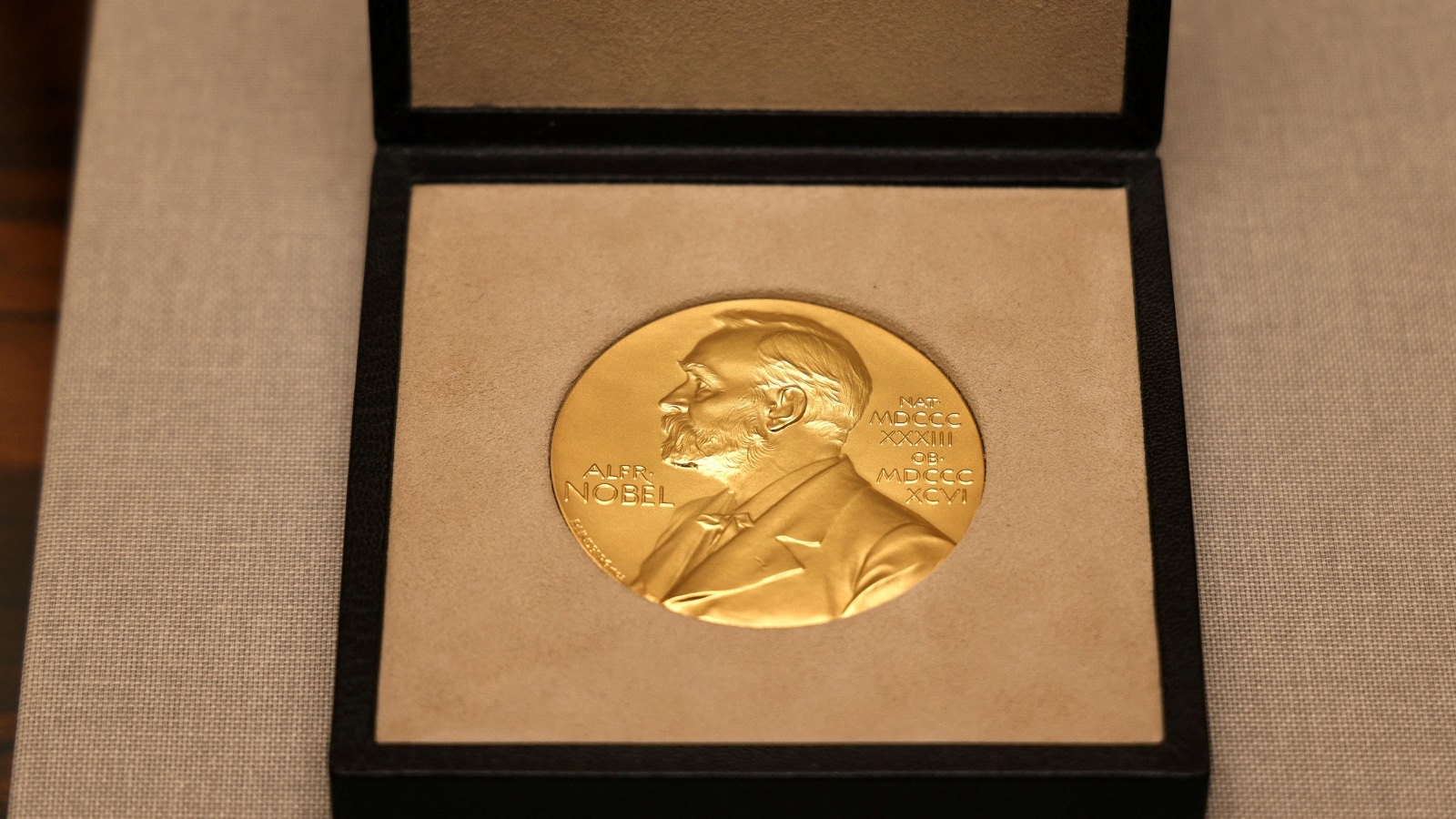
Every October, Stockholm and Oslo hand out the most famous medals on Earth. Most people glance at the headlines, nod at the names, and forget them by lunchtime. But the 2026 Nobel Prize winners aren't just names on a plaque. Their breakthroughs touch everything from how we treat brain disorders to how we map the deep universe.
If you want to know what science, literature, and global diplomacy achieved this year, look past the formal press releases. Here is the real story behind who won and why it counts. You might also find this similar story insightful: Why Fixing the UN General Assembly Requires Total Structural Overhaul.
Decoding the Brain With Light in Medicine
The 2026 Nobel Prize in Physiology or Medicine went to Karl Deisseroth, Peter Hegemann, and Georg Nagel for their work on optogenetics. That sounds like dense jargon, but the concept is wild. They figured out how to control brain cells using light.
For decades, neuroscientists faced a massive roadblock. They could record electrical signals in the brain, or they could zap tissue with electricity to see what happened, but they lacked precision. They couldn't target a single specific neuron without disturbing thousands of neighbors. As extensively documented in recent coverage by BBC News, the results are significant.
These researchers looked at light-seeking algae and found a natural protein that acts as a gatekeeper for ion channels. By introducing these algal genes into nerve cells, they built a biological light switch. Shine a blue light on the modified cells, and they fire. Turn it off, and they stop.
This isn't just academic theory. Labs across the world use optogenetics to map complex neural circuits. Researchers are even testing ways to use these techniques to restore sight in people with degenerative eye conditions.
Listening to Ghost Particles in Physics
Down at the South Pole, buried deep within a cubic kilometer of pristine ice, lies the IceCube Neutrino Observatory. Francis Halzen took home the 2026 Nobel Prize in Physics for his decisive contributions to this massive detector and the discovery of high-energy neutrinos originating from deep space.
Neutrinos are subatomic particles with almost no mass. They rarely interact with ordinary matter. Billions of them stream through your body every second without leaving a trace. Catching them requires extreme engineering. When a high-energy cosmic neutrino occasionally smashes into an atomic nucleus in the Antarctic ice, it produces a faint flash of blue light. Thousands of digital optical modules trapped in the ice capture those flashes.
Why care about ghost particles? Because unlike light or cosmic rays, neutrinos travel across the universe in straight lines, completely unhindered by magnetic fields or galactic dust. They point straight back to their explosive cosmic engines, such as active galactic nuclei and supernovae. Halzen basically handed humanity a brand-new pair of eyes to look at the universe.
Chemistry Chooses a Mirror Image
Chemistry is obsessed with shapes. Many molecules come in two versions that are mirror images of each other, much like your left and right hands. This property is called chirality. In organic chemistry, getting the right hand instead of the left hand can mean the difference between a life-saving medication and a toxic failure.
Henri B. Kagan and Kenso Soai won the 2026 Nobel Prize in Chemistry for discovering non-linear effects and autocatalysis in asymmetric organic synthesis. For a long time, producing just one specific mirror-image molecule efficiently was a grueling puzzle.
Kagan and Soai unlocked mechanisms where a reaction amplifies its own asymmetric preference. Their work solved a long-standing mystery about how chemical asymmetry could emerge in nature. It completely transformed how pharmaceutical companies and synthetic chemists build complex molecules today.
Pushing Poetry and Tradition in Literature
The literature prize went to Canadian poet and classicist Anne Carson. The committee cited her bold and inventive oeuvre for creating new forms for contemporary literature through a playful dialogue with classical traditions.
Carson doesn't write standard novels or predictable poetry collections. Her work bridges ancient Greek philology with modern emotional excavation. Books like Autobiography of Red rewrite myth into stark, modern verse that stuns readers. She treats etymology as an active archaeological dig, pulling fresh meaning out of ancient roots. Her win reminds the literary world that poetry thrives when it refuses to stay inside safe, conventional boxes.
Defending International Law for Peace
Navanethem "Navi" Pillay received the 2026 Nobel Peace Prize for her relentless efforts to promote peace and international law. As a former UN High Commissioner for Human Rights and judge on international criminal tribunals, Pillay spent decades holding powerful actors accountable.
Peace isn't just the absence of war. It requires functioning institutions and enforceable justice. Pillay fought against impunity in brutal conflicts, standing up for victims of genocide, systemic discrimination, and state violence. Her career proves that international law is more than ink on paper when driven by uncompromising independence.
Securing Economic Stabilisation
The Sveriges Riksbank Prize in Economic Sciences went to Robert E. Hall and Michael Woodford for their work on the microeconomic foundations of macroeconomic stabilisation.
Governments and central banks constantly try to smooth out economic downturns through monetary and fiscal policy. Hall and Woodford figured out how large-scale macroeconomic trends tie directly back to individual choices and market frictions. Their models give policy makers sharper tools to anticipate how consumer behavior and price rigidities react when financial shocks hit the global market.
Take these insights and look at how science and policy shape daily headlines. Innovation doesn't happen in a vacuum. It relies on decades of stubborn curiosity, deep ice, laser-guided algae, and rigorous legal defense.