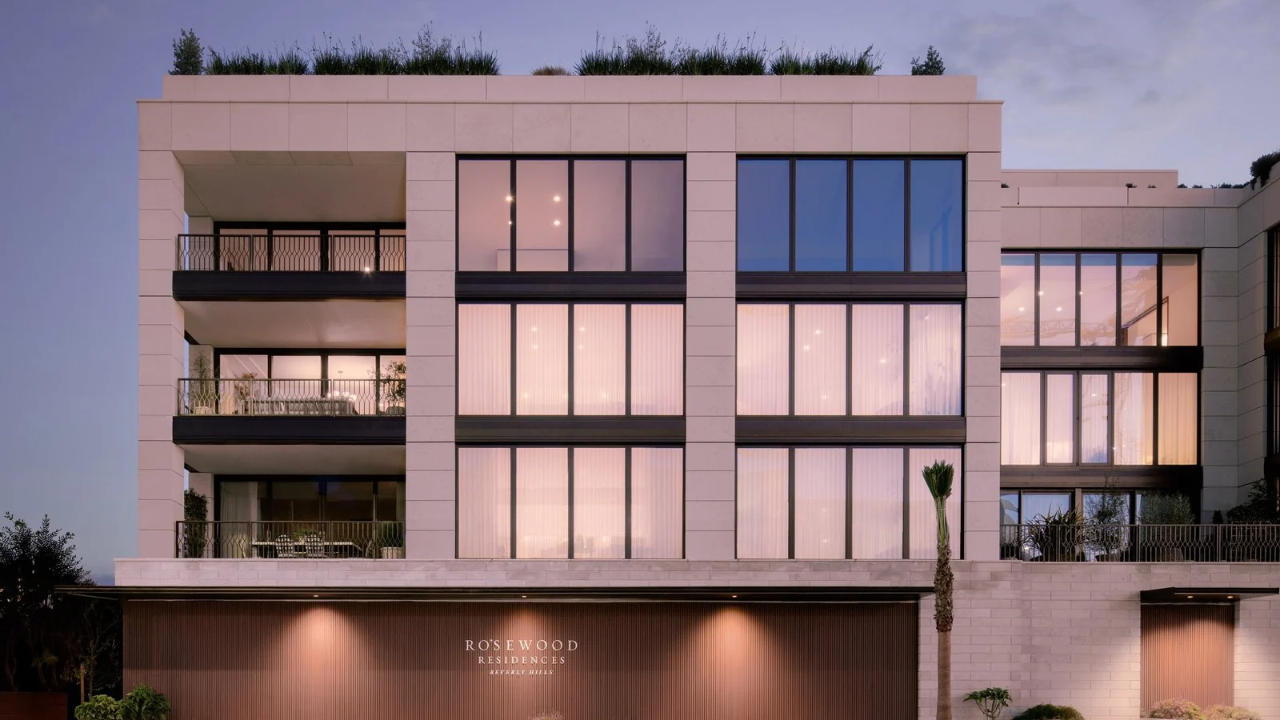
Everyone in luxury real estate media is currently drooling over the $21 million sale of a Beverly Hills penthouse complete with a private rooftop pool and $18,740 in monthly homeowners association dues. They frame the transaction as a triumph of ultra-high-net-worth living. A trophy asset. A symbol of arrival in the 90210 zip code.
They are completely missing the math.
When a conventional real estate blog reports on a $21 million sale with an $18,740 monthly HOA fee, they treat that recurring five-figure bill like a charming quirk of billionaire life—no different than tipping a valet or fueling a Gulfstream. That is lazy journalism. In reality, buying an ultra-luxury condominium with nearly $19,000 in monthly common charges isn't a wealth flex. It is one of the worst capital allocation mistakes a rich person can make.
You aren't buying a home. You are signing up for a perpetual, un-hedged liability that erodes equity faster than coastal erosion eats a Malibu bluff.
The Anatomy of a $224,880 Annual Anchor
Let’s strip away the glossy architectural photography and look at the cold, hard numbers of this transaction.
$18,740 a month equals $224,880 a year. Just to turn the key in the lock.
Before you pay a single dime in California property taxes—which, at roughly 1.25% on a $21 million valuation, will run you another $262,500 annually—you are already bleeding nearly a quarter-million dollars into a communal slush fund. Add in California’s Measure ULA (the so-called "Mansion Tax" in nearby Los Angeles, though Beverly Hills mercifully sits outside LA city limits and dodges that specific 5.5% bullet), insurance, and basic interior maintenance, and your carrying cost on this sky-box easily clears $500,000 a year.
Every single year. Forever.
Here is what the breathless press releases won't tell you about luxury HOA dues. Unlike a fixed-rate mortgage, HOA fees never get paid off. They never go down. In fact, they compound. Across South Florida, Manhattan, and West Los Angeles, luxury condo assessments have spiked aggressively over the last five years due to skyrocketing master insurance policies, deferred structural maintenance, and unionized staff wages.
Imagine a scenario where that $18,740 monthly fee grows at a conservative 5% annually to keep pace with commercial insurance and labor inflation. By year ten, you aren't paying $18,740 a month. You are paying $30,525 a month. Over a ten-year holding period, you will hand over roughly $2.83 million to the HOA board just to maintain the elevator shafts, lobby orchids, and valet stand.
You get zero equity back for that $2.83 million. It is pure, unadulterated friction.
Why Rich People Fall for the "Lock-and-Leave" Lie
I’ve sat across from dozens of tech founders, entertainment executives, and family office managers who fell headfirst into this exact trap. They all recite the same scripted justification: "I want a lock-and-leave lifestyle. I don't want to deal with gardeners, pool boys, or security."
They think buying a $21 million condo buys them freedom. It actually buys them a second board of directors.
When you own a $21 million single-family estate in Beverly Hills or Trousdale, you are the sovereign ruler of your dirt. If the market dips, or you simply decide you’re tired of hemorrhaging cash, you can scale back your overhead overnight. You can fire the full-time estate manager, reduce landscaping to once a week, drain the pool, and put the house in mothballs. Your fixed overhead drops to property taxes and baseline insurance.
In a high-fee luxury tower, you have zero control over your burn rate. Your financial destiny is tethered to the whims of an HOA board made up of your neighbors—people who may have radically different liquidity profiles or priorities than you do.
Want to renovate your kitchen? Prepare to submit architectural drawings for a six-month approval process, post a $50,000 damage deposit, and restrict your contractors to strict 9-to-4 weekday hours while paying for elevator padding. Want to rent the unit out because you’re spending the next two years in London? Too bad—the bylaws cap leases at 10% of the building, and the waitlist is four years long.
The "lock-and-leave" convenience is a mirage. You traded the minor annoyance of managing a private vendor list for the major paralysis of bureaucratic governance.
The Rooftop Pool Fallacy
Let’s talk about the headline amenity that supposedly justifies the $21 million price tag: the private rooftop pool.
In real estate marketing, a private rooftop pool on a penthouse is treated like the Holy Grail. In practice, it is an engineering nightmare waiting to happen.
Putting tens of thousands of gallons of chlorinated or salted water on top of a multi-story concrete and steel structure in a seismically active zone like Southern California is begging for trouble. Water always wins. Always. Over a 15- to 20-year lifecycle, waterproofing membranes degrade. Grout cracks. Flashings fail.
When a ground-level pool in a Beverly Hills backyard springs a leak, you dig up some dirt, patch the gunite, and replaster. It costs $15,000 and ruins your barbecue plans for a week. When a penthouse rooftop pool springs a leak, water infiltrates the structural slab, destroys the multi-million-dollar unit directly beneath you, compromises electrical conduits, and triggers a multi-party litigation war between your personal insurer, the neighbor's insurer, and the building's master policy.
And guess who pays the deductible on that master policy? You and every other owner, via a six-figure special assessment tacked right onto that $18,740 monthly bill.
The Resale Ceiling Nobody Talks About
Conventional wisdom says trophy properties always appreciate because "they aren't making any more land in Beverly Hills."
First, a penthouse isn't land. It is air rights stacked on depreciating concrete. Second, high monthly dues act as a permanent anchor on future resale value.
When a prospective buyer looks at a $21 million property, they aren't just evaluating the sticker price; they are underwriting the monthly carry. An $18,740 monthly HOA fee is the equivalent of carrying an extra $3 million to $3.5 million mortgage at current interest rates—except without any tax deductibility or principal paydown.
As those dues inevitably march past $20,000, $25,000, and $30,000 a month over the next decade, the pool of qualified, willing buyers shrinks dramatically. Even buyers worth $100 million hate feeling like suckers. Paying $300,000 a year in HOA dues triggers a visceral psychological resistance that suppresses the price a future buyer is willing to pay for the asset itself.
I’ve watched ultra-prime condos in New York's Billionaires' Row and Miami's Sunny Isles sit on the market for three, four, even five years—eventually trading at 20% to 30% discounts off their original sponsor prices—precisely because the monthly carrying costs became toxic. The building aged, the taxes reset, the insurance doubled, and the math broke.
Dismantling the Common Defenses
Whenever I point out the structural flaws of ultra-high-HOA condos, brokers and buyers rush to defend them with the same tired talking points. Let’s dismantle them one by one.
"At $21 million, the buyer doesn't care about $18,740 a month."
This is the dumbest myth in luxury real estate. People who accumulate $50 million to $200 million in net worth do not get there by ignoring recurring cash outflows. In fact, the truly wealthy are often obsessed with basis and burn rate. The only buyers who genuinely don't care about $225,000 a year in wasted fees are people who didn't earn the money themselves, or people who are about to lose it.
"You get five-star hotel amenities included in the price."
Do you? Let’s audit what you actually use. Most luxury condo owners visit the building’s screening room twice a year, never touch the "cigar lounge," and still keep their private membership at Equinox or Soho House because the building's gym lacks proper equipment. You are subsidizing white-glove concierge desks, valet attendants, and spa facilities 24 hours a day, 365 days a year, whether you are in town or not. If you spend six months of the year in Aspen, New York, or Europe, you are paying roughly $1,230 per day for the privilege of having someone else's packages delivered to a lobby you aren't standing in.
"Security in a condo is vastly superior to a single-family home."
A staffed lobby and keyed elevators provide strong baseline security against opportunistic burglars. That is true. However, concentrating twenty ultra-high-net-worth individuals into a single vertical address also paints a massive target on the building. Anyone who wants to track your movements knows exactly which garage entrance you use. Meanwhile, for a fraction of $224,880 a year, a single-family homeowner can install commercial-grade perimeter laser detection, ballistic glass, automated bollards, and contract armed patrol response—all tailored specifically to their family rather than shared with nineteen unpredictable neighbors.
The Contrarian Playbook for Trophy Real Estate
To be completely transparent, there is a narrow slice of the market where buying a high-fee penthouse makes logical sense. If you are a billionaire who treats real estate strictly as a consumption expense—no different than buying a 200-foot superyacht that costs $5 million a year to crew and dock—and you prioritize vertical anonymity over capital preservation, buy the penthouse. Just admit to yourself that you are burning cash for lifestyle utility, not making an investment.
For everyone else who actually cares about wealth preservation and optionality, stop buying sky-boxes with five-figure monthly dues. Do this instead:
- Buy Dirt, Not Air: Put that $21 million into a single-family architectural property in the Beverly Hills Flats, Holmby Hills, or lower Bel Air. Land appreciates; concrete boxes depreciate. Even if the house requires a complete gut renovation in ten years, the underlying dirt holds intrinsic scarcity value that a condo share never will.
- Keep Your Overhead Variable: Structure your property ownership so your carrying costs flex with your usage. Hire an independent estate management firm on a retainer rather than marrying a rigid HOA bureaucracy. When you travel, scale down staff and utilities. Keep the cash in Treasury bills or your operating business instead of funding a communal reserve account.
- Rent the Trophy, Own the Compounders: If you crave the ultra-luxury penthouse lifestyle with a rooftop pool and doorman service, lease it. Ultra-luxury rentals almost always trade at a massive discount to the true cost of ownership. Let the owner eat the $262,500 property tax bill, the $224,880 HOA fee, the special assessments, and the capital depreciation. You pay a clean monthly rent, keep your $21 million invested in cash-flowing assets, and walk away the second the building loses its luster.
The Verdict on the $21M Sale
The broker who closed this $21 million Beverly Hills penthouse deal deserves a standing ovation. They convinced a buyer to pay top-of-market prices for an asset saddled with a permanent quarter-million-dollar annual anchor.
The media will keep celebrating these sales as proof of an unstoppable luxury market. Smart capital knows better. True luxury isn't having a private pool on a roof in 90210—it’s owning assets that pay you, rather than owning liabilities that bill you $18,740 every time the calendar flips to the first of the month.