The siren of an emergency department is a sound meant to tear through concrete. It commands the world to part. When a critical patient rolls through the double doors of a level-one trauma center, an emergency physician relies on an invisible web of absolute certainty. They expect the oxygen lines in the wall to flow. They expect the laboratory downstairs to return a metabolic panel in twenty minutes. Most of all, they know that if a procedure fails, they can call a specialist from three floors up to salvage the wreckage.
But what happens when the ceiling of your ER is 250 miles of vacuum?
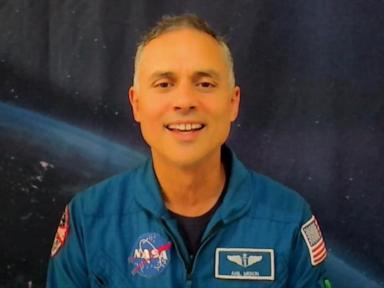
In July 2026, Dr. Anil Menon will step into a Soyuz MS-29 capsule at the Baikonur Cosmodrome in Kazakhstan. The roar of the rocket will push him into a world where none of those terrestrial certainties exist. For eight months, the Minneapolis native, mechanical engineer, and Space Force colonel will live aboard the International Space Station.
He will not just be an astronaut doing science. He will be the thin line between an orbital outpost and a catastrophic medical evacuation.
The public often views spacefarers as peak biological specimens, modern deities engineered out of grit and flawless cardiovascular health. The reality inside the hull is far more fragile. To understand the stakes of Dr. Menon’s upcoming 240-day exile, one only has to look back a few months. In January 2026, NASA had to pull off something it had never done in 65 years of human spaceflight: a premature, controlled medical evacuation.
An astronaut aboard the station experienced a sudden, unheralded medical event. For twenty agonizing minutes, a highly trained individual was completely unable to speak. It passed. The person felt fine afterward. Yet, the sheer terror of an undiagnosed neurological or cardiovascular anomaly hovering in low-Earth orbit forced flight controllers to abandon a multi-million-dollar science mission, scrub vital spacewalks, and rush an entire crew back to Earth via a SpaceX Dragon capsule.
Space is a brutal clinic. When things go wrong up there, you cannot call an ambulance. You can only fall back to Earth.
The Zero-Gravity Fluid Crisis
Consider a hypothetical scenario that mirrors the quiet anxieties of aerospace medicine. Imagine an astronaut working on the station's exterior. A sudden shift, a tear in a glove, or a systemic infection brought from Earth manifests as septic shock. The human body, fighting an overwhelming invader, drops its blood pressure to lethal depths.
On Earth, the solution is standard: you hang a bag of saline, opening the line to flood the veins and preserve the organs.
In microgravity, that simple act becomes a nightmare of physics. You cannot use gravity to drip liquid into a vein; the fluid merely clumps into erratic, floating spheres. More importantly, every ounce of weight launched into space costs thousands of dollars. You cannot store hundreds of liters of heavy, sterile intravenous fluids on a station where space is at a premium.
This is exactly why Dr. Menon’s dual identity as a Stanford-trained doctor and a mechanical engineer matters. One of his primary tasks during Expedition 75 is to test technology capable of turning the space station’s own gray water—recycled sweat and urine—into medical-grade, sterile intravenous fluid.
Think about the sheer audacity of that engineering loop. You must take wastewater, strip it of every contaminant through a sequence of filtration beds, and verify its sterility without a standard hospital lab. Then, you must mix it with concentrated salts to create a solution that can safely enter a human bloodstream. If the filter fails by a fraction of a micron, you inject toxic endotoxins straight into a colleague’s heart.
The Reversal of Blood
The violence space inflicts on human biology is not always a sudden trauma. Mostly, it is a slow, silent restructuring.
Without gravity pulling blood down toward the boots, a massive fluid shift occurs. Roughly two liters of fluid migrate from the legs toward the chest and head. The face bloats; the brain notes an apparent excess of blood and signals the kidneys to dump water. Astronauts become chronically dehydrated within days of arrival.
But the real problem lies elsewhere, hidden deep within the deep veins of the neck.
Recent data from orbital ultrasounds has revealed a chilling phenomenon. In weightlessness, the internal jugular vein—the main highway returning blood from the brain to the heart—can become sluggish. In some individuals, the blood flow actually stops entirely. In others, it reverses.
When fluid stagnates, it clots. A deep vein thrombosis in the neck of an astronaut represents an immediate, life-threatening crisis. If that clot breaks free, it travels directly to the lungs. A pulmonary embolism 250 miles above the nearest hospital is a death sentence.
Dr. Menon will spend a significant portion of his eight months using himself and his crewmates as subjects, mapping how microgravity alters vein structure and blood composition. He will be running ultrasound probes over carotid arteries and jugular veins while floating upside down, looking for the tiny, swirling eddies of blood that signal impending disaster.
The Loneliness of the Orbital Practitioner
To practice medicine in an ER is to be surrounded by noise, resources, and people. To practice medicine on the ISS is to understand the profound weight of isolation.
Yes, there is a video link to Mission Control in Houston. Yes, there are brilliant flight surgeons sitting at consoles on Earth, ready to advise. But the communications loop can suffer from latency, solar flares can degrade the signal, and when a heart stops, a second of delay feels like an eternity.
Every physician knows the crushing weight of a bad outcome. On Earth, you cope by walking out to your car, driving home through traffic, and hugging your family. You create a physical boundary between the room where the tragedy happened and the space where you sleep.
Aboard the station, Dr. Menon will live, eat, and sleep in the exact same aluminum cylinder where he might have to perform chest compressions or manage a psychotic break brought on by extreme confinement. There are no walls thick enough to hide from the psychological toll of treating your only companions.
When his Soyuz launches, Dr. Menon will leave behind his wife, Anna—herself a veteran of advanced spaceflight operations—and their two children. He understands the trade-off. He knows the cost of the ticket.
We are entering an era where spaceflight is no longer a series of brief sprints. As humanity eyes the red deserts of Mars, the missions will lengthen from months to years. The 250-mile safety net of the International Space Station will dissolve into a multi-million-mile void where returning home early is physically impossible.
The technologies Dr. Menon is testing and the biological mysteries he is trying to unravel are the first tentative steps toward building an independent, deep-space hospital. We cannot become an interplanetary species until we figure out how to heal ourselves in the dark.
When the station crosses into the shadow of the Earth every 45 minutes, the lights inside the modules dim slightly, and the windows show nothing but an absolute, unblinking blackness. In those moments, the true nature of the mission becomes clear. It is not about the grand machinery or the glory of the launch. It is about a solitary doctor, floating in a tin can, holding a stethoscope against the chest of humanity’s future.