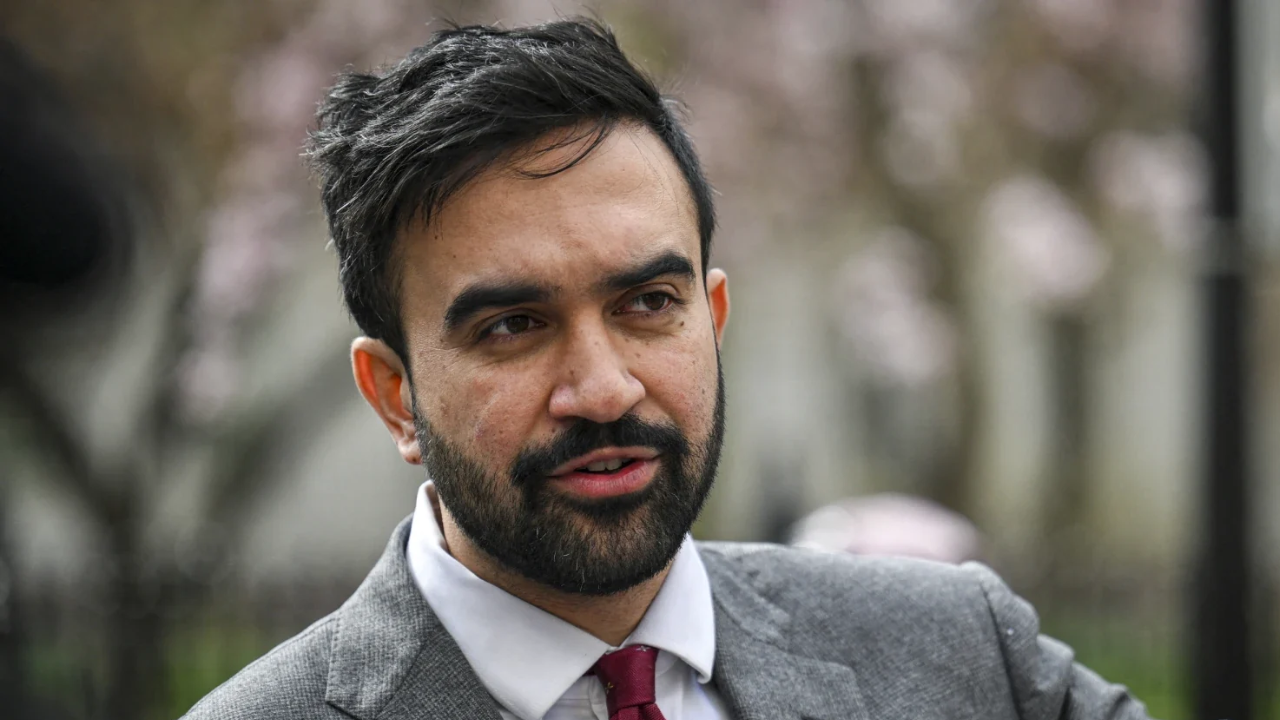
The arithmetic of New York City’s jail crisis has never added up. Under a 2019 City Council mandate, the sprawling, violent jail complex on Rikers Island was supposed to shut its doors permanently by August 2027, replaced by four smaller, borough-based facilities. That deadline is dead. In its place stands a newly unveiled $290 million roadmap championed by Zohran Mamdani and his allies, designed to push the closure of Rikers Island to 2032—a full five years past the statutory cutoff. The proposal attempts to bridge the widening chasm between statutory mandates and physical reality by pouring nearly three hundred million dollars into non-carceral infrastructure, mental health diversion, and accelerated judicial processing to drive the jail population down to a manageable threshold before the final cellblock locks for good.
Numbers on a budget sheet do not pour concrete. Nor do they speed up felony trials in backlogged borough courthouses. For decades, every administration that has stepped into City Hall has promised to tame the East River penal colony, only to watch construction timelines slip and detainee populations swell. Moving the goalpost from 2027 to 2032 is an admission of institutional failure, yet the $290 million blueprint represents the most aggressive attempt yet to bypass the single greatest obstacle to closing the island: the city simply has too many people behind bars to fit inside the replacement jails currently under construction. If you liked this article, you might want to look at: this related article.
The Math Behind the Missed 2027 Deadline
To understand why a five-year extension became unavoidable, you have to look at capacity limits. The original 2019 borough-based jail plan was engineered around an optimistic projection. City planners calculated that by 2027, New York City’s average daily jail population would drop to roughly 3,300 people. Each of the four new facilities—in Manhattan, Brooklyn, Queens, and the Bronx—was designed to hold roughly 800 to 1,000 detainees, creating a combined system capacity of around 3,300 to 4,000 beds.
Reality broke that model. Instead of shrinking toward three thousand, the Rikers Island population climbed back above 6,000 detainees and stubbornly stayed there. You cannot stuff 6,200 human beings into facilities built for 3,300 without recreating the exact conditions of overcrowding, violence, and federal receivership that doomed Rikers in the first place. For another look on this event, check out the recent coverage from The New York Times.
Meanwhile, the physical construction of the four borough jails fell catastrophically behind schedule. Supply chain bottlenecks, skyrocketing labor costs, community lawsuits, and complex demolition phases pushed completion dates for the Manhattan and Queens sites into the late 2020s and early 2030s. Even if the buildings were ready tomorrow, the beds would not exist to absorb the current headcount. Extending the legal deadline to 2032 buys five years of construction time, while the $290 million allocation tries to solve the other half of the equation by shrinking the headcount itself.
Where the $290 Million Actually Goes
Traditional criminal justice spending in New York tends to vanish into overtime budgets, physical repairs on crumbling boilers, and bloated administrative contracts. The $290 million plan takes a sharply different structural approach. Rather than spending capital on temporary fixes for a doomed island, the money targets the intake valves that feed Rikers Island every single night.
- Supportive Housing and Crisis Stabilization Beds: A massive slice of the funding goes toward rapidly expanding locked and unlocked clinical beds outside the Department of Correction. Roughly half of the detainees on Rikers Island carry a diagnosed mental illness, and nearly a fifth suffer from serious psychiatric conditions like schizophrenia or bipolar disorder. Jail cells function as the city's default psychiatric wards because community beds do not exist. Building dedicated, clinically staffed stabilization centers removes medically fragile individuals from the criminal docket before a judge ever sets bail.
- Pretrial Diversion and Supervised Release: The plan injects direct operational capital into community-based nonprofit providers that monitor defendants awaiting trial. Supervised release has consistently demonstrated high court-appearance rates at a fraction of the $500,000-plus annual cost of housing a single person on Rikers Island. Expanding these programs allows judges to release low- and moderate-risk defendants with structured check-ins, drug treatment, and employment support rather than remanding them to the East River.
- Court Processing and Discovery Infrastructure: People rot on Rikers not because they have been convicted, but because their cases stall. Under New York's discovery laws, prosecutors must turn over massive troves of body-camera footage, lab reports, and police disciplinary records within strict timeframes. A portion of the $290 million funds specialized paralegal teams, digital evidence-sharing infrastructure, and dedicated court parts to clear the felony backlog and shorten the average length of stay from months to weeks.
The Structural Friction Inside the Courthouse
Money alone cannot force a judge to change how they set bail, nor can it compel a district attorney to offer a non-custodial plea deal. This is the central vulnerability of the 2032 roadmap. While the mayor and City Council control the municipal purse strings, they do not control the state court system or the five independently elected District Attorneys across the five boroughs.
Consider how bail reform has played out in New York over the past several years. When state lawmakers narrowed cash bail eligibility in 2019 and subsequently rolled back parts of those reforms in 2020, 2022, and 2023, judicial behavior shifted dramatically. Judges became far more cautious, setting high cash bail or remanding defendants outright on repeat offenses that previously resulted in release. When a judge sets $50,000 bail on a defendant who makes minimum wage, that person goes straight to Rikers Island, regardless of how many diversion programs the city funds.
If the five District Attorneys and the Office of Court Administration do not align their charging and scheduling practices with the city's decarceration targets, the $290 million investment risks becoming an expensive sidecar to a train still barreling toward overcrowding. For the 2032 deadline to hold, the daily jail population must drop by nearly half over the next six years. Achieving that drop requires the courts to process felony cases twice as fast as they currently do, while simultaneously diverting thousands of mentally ill defendants into hospital beds that have yet to be built.
The Opposition and the Political Cost of Delay
Advocacy groups that spent a decade fighting to shut down Rikers Island view the 2032 timeline with deep skepticism, if not outright anger. To families who have lost loved ones to overdoses, medical neglect, and violence inside the complex, five more years is not a realistic adjustment—it is a death sentence. Over thirty people have died in city custody over the past several years alone, prompting federal judges to seriously weigh stripping the city of control over its own jails through an independent federal receiver.
On the other side of the political spectrum, law enforcement unions and moderate lawmakers argue that closing Rikers without expanding total bed capacity is reckless. Their counter-argument rests on public safety metrics and the physical reality of managing violent offenders. They contend that shrinking the jail system to roughly 3,300 beds leaves zero margin for error if crime spikes or if the city faces a sudden surge in arrests. To critics from the center and right, spending $290 million on diversion programs while pushing back the closure date proves that the original 2019 mandate was ideologically driven and logistically impossible from day one.
Both critiques hit a nerve because both point to genuine flaws in the city's execution. The city failed to build the replacement jails on time, and it failed to reduce the jail population to match the footprint of those new buildings. The 2032 plan attempts to split the difference, satisfying neither the abolitionists demanding immediate closure nor the skeptics demanding more cells.
Why Five Years Might Still Not Be Enough
History in New York City real estate and public infrastructure teaches a harsh lesson: municipal construction timelines always drift to the right. Building four high-security, multi-story detention facilities in dense urban neighborhoods like Chinatown, Kew Gardens, Mott Haven, and Boerum Hill is an engineering nightmare.
Take the Manhattan Detention Complex on White Street. Demolishing the existing structure—nicknamed "The Tombs"—required painstaking, floor-by-floor deconstruction because standard implosion techniques would damage surrounding historic buildings and subway tunnels. Every month lost to asbestos abatement, utility relocation, or foundation reinforcement pushes the final occupancy date further into the next decade.
Then there is the siting problem for the $290 million diversion infrastructure. Every neighborhood in New York City agrees in principle that mentally ill detainees belong in treatment facilities rather than jail cells. Almost no neighborhood welcomes a secure psychiatric stabilization center on its own block. Securing zoning approvals, negotiating community board pushback, and retrofitting buildings for clinical use takes years. If the city allocates $290 million today, the physical beds paid for by that money might not open their doors until 2029 or 2030, leaving minimal runway to actually drain Rikers Island before the 2032 statutory cutoff arrives.
The Federal Receiver Wildcard
Looming over every budget negotiation and timeline extension is the Southern District of New York. For years, federal monitors appointed under the Nunez consent decree have documented persistent constitutional violations inside Rikers Island—uncontrolled use of force by correction officers, chronic staff absenteeism, broken cell doors, and a collapse in basic supervision.
A federal receiver appointed by the court would possess extraordinary authority. Unlike a mayor or a correction commissioner, a receiver is not bound by city procurement rules, union work-rule negotiations, or political blowback. If a federal judge decides that the city’s 2032 plan is just another bureaucratic stall tactic, the court could seize operational control of the jails, freeze municipal spending priorities, and mandate immediate, unilateral changes to staffing and detainee housing.
In a strange way, the threat of receivership is the only force capable of keeping the $290 million plan honest. City officials know that if they miss the intermediate population reduction milestones laid out in this new framework, the federal bench will step in and take the keys away.
The Bottom Line on the 2032 Blueprint
A $290 million investment into mental health beds, supervised release, and court efficiency attacks the root causes of Rikers Island's bloat far more intelligently than pouring concrete on a sinking island. Shifting the legal deadline from 2027 to 2032 strips away the fiction that New York City could magically halve its jail population and finish four skyscraper jails in the next twelve months. Yet a realistic timeline is not a guaranteed outcome. Until the city proves it can clear felony backlogs in state courts, overcome neighborhood resistance to clinical housing, and keep borough-based jail construction on track without another multi-year delay, 2032 remains a target written in pencil rather than ink.