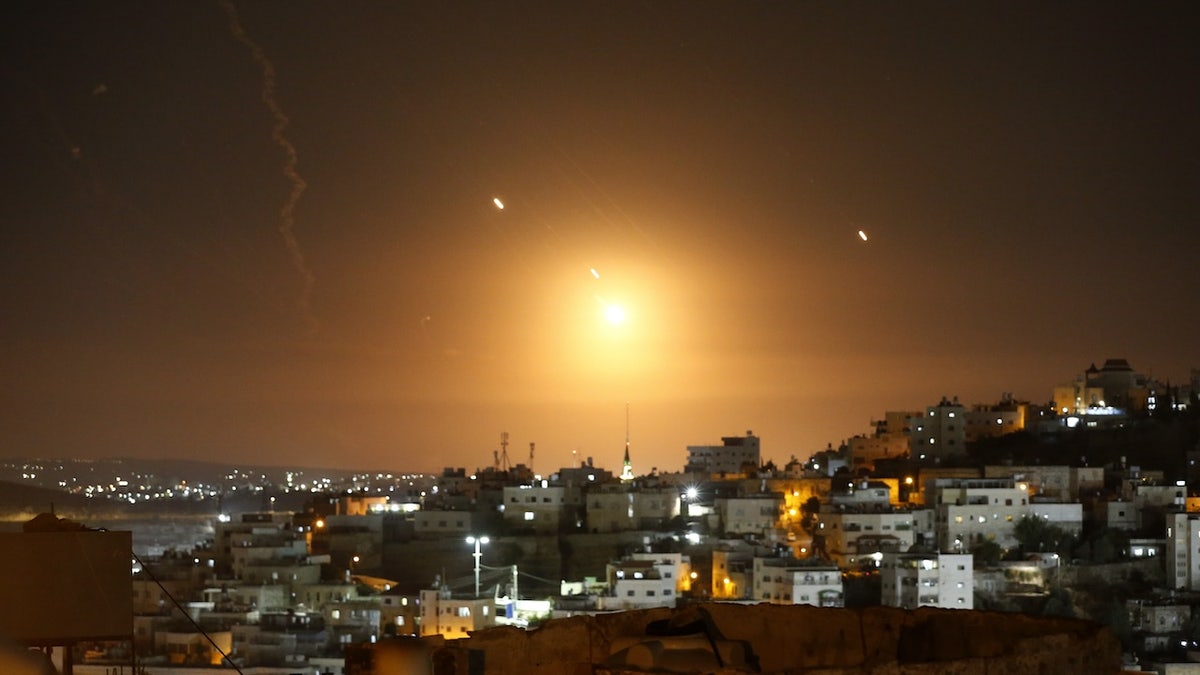
The recent reports suggesting the destruction of a Terminal High Altitude Area Defense (THAAD) radar system in Jordan represent more than a localized military skirmish. If verified, the loss of an AN/TPY-2 radar unit—the "eyes" of the THAAD battery—strikes at the heart of the Pentagon’s integrated air defense strategy for the entire region. This isn't just about a $300 million piece of hardware. It is about the collapse of a deterrent narrative that has underpinned U.S. security guarantees to its allies for over a decade.
For years, the THAAD system was marketed as the ultimate shield against ballistic threats. Its radar is a marvel of engineering, capable of tracking threats at ranges that make standard interceptors look nearsighted. But a shield is only as good as its ability to remain hidden or defended. If a coordinated strike from Iranian-aligned forces successfully neutralized this node, the tactical reality of Middle Eastern warfare has shifted permanently. The hunter has become the hunted. Discover more on a related topic: this related article.
The Engineering of a High Stakes Target
To understand why this matters, one must look at the AN/TPY-2 radar itself. This isn't a mobile unit that can be easily tucked away in a garage. It is a massive, X-band phased-array system that emits a signature so loud and so distinct that it might as well be a lighthouse in a dark room.
The radar operates in two modes. In "forward-based mode," it tracks missiles in their boost phase. In "terminal mode," it guides interceptors to their targets. Both modes require immense power and a clear line of sight. This makes the radar a static, high-value target for any adversary with basic electronic intelligence capabilities. Iran has spent the last twenty years perfecting exactly those capabilities. Further journalism by The Washington Post delves into similar perspectives on this issue.
By utilizing a "saturation" tactic—flooding the zone with cheap, low-altitude suicide drones while simultaneously launching high-speed ballistic missiles—an adversary can overwhelm the processing power of even the most sophisticated defense net. The THAAD is designed to hit objects falling from space. It was never intended to swat away a swarm of $20,000 fiberglass drones hugging the desert floor.
Why Jordan Became the Flashpoint
The placement of THAAD assets in Jordan was a calculated move to provide a "look-ahead" capability for both Israel and Saudi Arabia. Jordan sits in a geographic sweet spot for intercepting medium-range missiles launched from western Iran. However, this strategic advantage comes with a massive security debt.
Unlike a carrier strike group, which moves and carries its own multi-layered defense, a land-based radar is dependent on local security and point-defense systems like the Patriot or the newer, shorter-range C-RAM. If those secondary layers fail, the THAAD is a sitting duck.
Evidence from the ground suggests that the strike utilized a mix of sophisticated jamming and sheer volume. The attackers didn't need to destroy the entire battery. They only needed to crack the face of the radar. Once the array is damaged, the billion-dollar interceptors sitting in their launch tubes are effectively blind. They are expensive lawn ornaments.
The Myth of Total Air Superiority
The Pentagon has long operated under the assumption that its "Integrated Air and Missile Defense" (IAMD) was impenetrable. This belief led to a certain level of stagnation in how these systems are deployed. We saw this same overconfidence in the early days of the Ukraine conflict, where high-end Russian systems were dismantled by hobbyist-grade technology.
The vulnerability of the THAAD radar exposes a fundamental flaw in Western military thinking. We build Ferraris; our adversaries build sledgehammers.
Iran’s missile program is not just about range anymore. It is about precision and "packetized" warfare. They don't send one missile; they send a synchronized package of diverse threats that arrive at the same millisecond. If the radar in Jordan was indeed neutralized, it proves that Iran has cracked the code on timing these arrivals to exploit the "recharge" time of Western tracking software.
Fiscal Consequences and the Replacement Trap
Replacing an AN/TPY-2 is not as simple as cutting a check. These units are hand-assembled and have a lead time that stretches into years. The U.S. military only has a handful of these systems in its global inventory.
When one goes down, a hole opens up in the global surveillance net. Moving a replacement from Guam or Hawaii to the Middle East isn't just a logistical nightmare; it creates a new vulnerability in the Pacific. This is the "shell game" that the Department of Defense is currently losing.
- Cost of the Radar: $300 million to $500 million depending on the block.
- Cost of the Interceptor: Roughly $12 million per shot.
- Cost of the Attack: Estimated under $1 million in combined drone and missile hardware.
The math is brutal. No superpower can sustain a conflict where the cost of defense outweighs the cost of offense by a ratio of 500-to-1.
The Geopolitical Fallout
Allies in the region are watching. If the United States cannot protect its own high-end sensors in a friendly nation like Jordan, the security guarantees offered to the Gulf States lose their luster. We are likely to see a pivot toward decentralized defense systems. Instead of relying on a few massive, expensive hubs, nations may begin looking at "distributed lethality"—hundreds of smaller, cheaper sensors that are harder to kill in a single strike.
This incident also emboldens non-state actors. If a proxy group can claim the scalp of a THAAD system, the psychological barrier of "U.S. technical invincibility" is gone.
The Hard Reality for Missile Defense
We have reached the end of the era of the "invincible shield." The loss in Jordan serves as a cold splash of water for planners who thought technology could replace mass. To fix this, the military must move away from its obsession with monolithic, high-value platforms.
The focus must shift toward "survivable sensing." This means launching low-earth orbit satellite constellations that can do the work of the AN/TPY-2 from a position that a suicide drone can't reach. It means integrating directed energy—lasers—to handle the low-end drone swarms that currently distract our billion-dollar radars.
Until that transition happens, every THAAD battery in the field is a liability as much as an asset. The radar in Jordan wasn't just a target; it was an invitation. The U.S. must now decide if it will keep inviting these strikes or if it will finally evolve its defense architecture for a century where the cheap and the many outweigh the expensive and the few.
If you want to see how this gap in defense is already being exploited in other theaters, look at the recent shipping disruptions in the Red Sea.