The World Health Organization (WHO) recently dropped a statistic that should have sent shockwaves through every ministry of finance and health department on the planet, but instead, it was met with a collective shrug. Four out of every ten cancer cases are preventable. This isn't a theoretical projection or a laboratory hope; it is a clinical reality. We are currently watching millions of people march toward a diagnosis that doesn't need to exist, driven by a global healthcare architecture that is fundamentally obsessed with the "cure" while remaining allergic to the "cause."
The math is brutal. If we can stop $40%$ of cancers before they start, we aren't just saving lives—we are preventing the total collapse of medical infrastructure under the weight of an aging population and skyrocketing drug costs. Yet, the vast majority of global health spending remains locked into late-stage intervention. We are remarkably good at developing $100,000-a-year$ immunotherapy drugs, but we are catastrophically bad at regulating the industrial carcinogens and lifestyle drivers that make those drugs necessary in the first place. Learn more on a connected topic: this related article.
The Preventable Burden
The notion that cancer is a "bolt from the blue" or a purely genetic lottery is one of the most successful myths of the modern era. While genetic predispositions exist, the surge in global cancer rates is largely an environmental and behavioral phenomenon. The primary drivers are well-documented: tobacco use, alcohol consumption, ultra-processed diets, physical inactivity, and chronic exposure to pollutants.
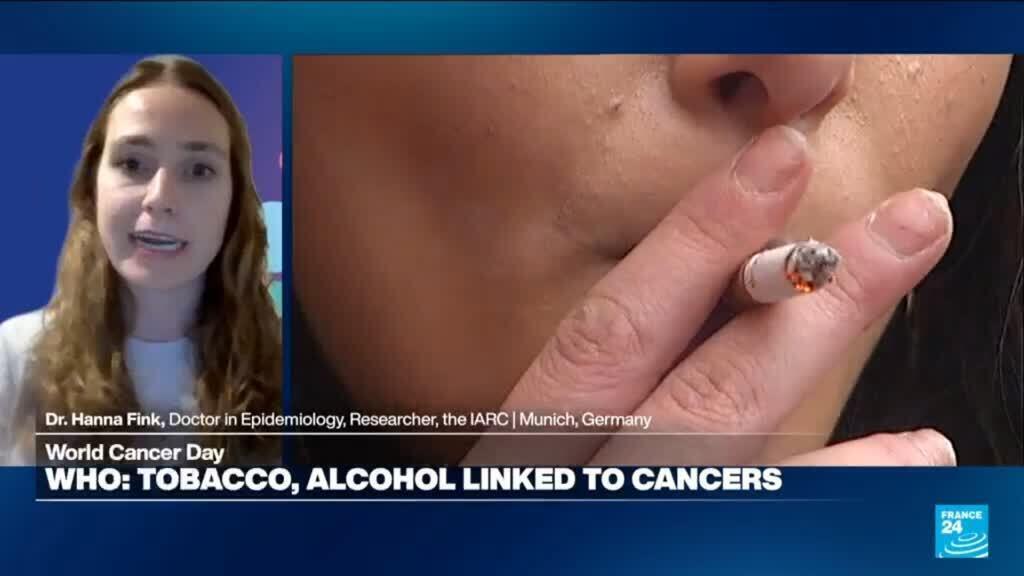
Tobacco remains the undisputed heavyweight champion of preventable death. It is responsible for roughly $25%$ of all cancer deaths globally. Despite decades of litigation and public health campaigns, the industry has simply shifted its focus to emerging markets where regulation is porous. In these regions, the "preventable" $40%$ is actually trending upward because the commercial determinants of health—the business strategies of companies selling harmful products—are outpacing the legislative will to stop them. More journalism by Medical News Today explores related views on the subject.
The Economics of Avoidance
Why is a $40%$ reduction in cases ignored? Follow the money. There is no massive profit margin in a person who doesn't get sick. The pharmaceutical industry, private hospital networks, and even specialized oncology centers are built on a volume-based model. They thrive on treatment cycles.
Prevention, conversely, is a "quiet" success. When a carbon tax reduces lung cancer rates over twenty years, no one stands on a stage and claims a miracle. There is no ribbon-cutting ceremony for a cancer that never happened. This creates a political vacuum. Politicians operate on four-to-six-year cycles; they want to fund a new chemotherapy wing with their name on it, not pass a sugar tax that might show results a decade after they’ve left office.
The Myth of Individual Choice
We often frame prevention as a matter of "personal responsibility." This is a convenient narrative for industries that profit from poor health. It suggests that if you get colon cancer because you lived in a "food desert" where fresh produce was unaffordable and processed meats were the only cheap protein, it was your failure of will.
Real prevention isn't about telling people to "eat better." It’s about systemic engineering. It’s about urban planning that makes walking mandatory rather than a luxury. It’s about aggressive taxation on carcinogens. When we look at the $40%$ figure, we are looking at a failure of policy, not a failure of character.
The Hidden Killers in the Environment
Beyond the obvious culprits like smoking, we are seeing a rise in cancers linked to environmental factors that individuals have almost no control over. Air pollution is now classified by the International Agency for Research on Cancer (IARC) as a Group 1 carcinogen.
Microplastics, "forever chemicals" (PFAS), and industrial runoff are creating a baseline level of chronic inflammation in the global population. This inflammation acts as a primer for oncogenesis. When we talk about the preventable $40%$, we must include the radical cleanup of our water and air. If a city’s air quality is equivalent to smoking half a pack of cigarettes a day, telling the residents to quit smoking is only half the battle.
The Alcohol Blind Spot
Alcohol is the "protected" carcinogen. While the link between tobacco and lung cancer is etched into the public consciousness, the link between alcohol and breast, liver, and esophageal cancers remains obscured by a massive marketing machine. There is no "safe" amount of a known carcinogen, yet alcohol remains a central pillar of social life and tax revenue.
The WHO data suggests that even a modest reduction in global alcohol intake would cause cancer rates to plummet. However, we see almost no warning labels on bottles. We see no bans on sports sponsorships. We are repeating the tobacco playbook of the $1970$s, choosing revenue over reality.
The Screening Trap
We must distinguish between "early detection" and "prevention." Most of what we call "preventative medicine" today is actually just early detection. A colonoscopy that finds a polyp is preventing a full-blown cancer. A mammogram that finds a tumor at Stage 1 is saving a life through early treatment.
But true primary prevention happens before the polyp even forms.
We have become so reliant on screening technologies that we’ve forgotten how to address the underlying biology. If we rely solely on screening, we are still waiting for the disease to start. We are still participating in the "cancer economy." True prevention is boring. It’s a clean water pipe. It’s a bike lane. It’s a ban on a specific pesticide. It’s the stuff that doesn't make for a compelling medical drama but keeps the morgues empty.
The Vaccine Oversight
One of the most tragic segments of that $40%$ is the portion caused by infectious agents. Human Papillomavirus (HPV) and Hepatitis B and C are responsible for a massive chunk of the global cancer burden, particularly in low-income nations.
We have a vaccine for HPV that is essentially a cancer vaccine. In countries like Australia, where the vaccine program is robust, cervical cancer is on track to be eliminated entirely. Yet, in many parts of the world, misinformation and "culture war" politics have stalled the rollout. We have the technology to delete an entire category of cancer from the human experience, and we are letting it sit on the shelf because of a lack of logistical and political guts.
Breaking the Cycle
The $40%$ figure isn't a suggestion; it's an indictment of our current priorities. We are currently spending billions to extend the lives of late-stage cancer patients by three to six months, while cutting budgets for the very programs that would keep those patients out of the hospital in the first place.
If we want to actually move the needle, we have to stop treating cancer as an inevitability of aging and start treating it as a byproduct of a toxic industrial environment. We need to move away from the "war on cancer" (which focuses on killing cells) and toward a "truce with biology" (which focuses on protecting them).
This requires a total realignment of how we value health. It means measuring a country’s success not by how many high-tech hospitals it builds, but by how few people actually need to enter them. It means taking on the lobbies that profit from the $40%$ of cases we know how to stop.
The data is in. The path is clear. The only thing missing is the willingness to stop paying for the cure and start investing in the cause.
Ask yourself why your local government is more likely to fund a new oncology center than a program that makes fresh food cheaper than a box of processed donuts. Then you'll understand why the $40%$ remains a static statistic instead of a declining reality.