The espresso machine at the corner cafe hums a steady, familiar baseline against the morning rain. Steam rises, milk swirls into silk, and the register dings. It feels permanent. It feels safe. But behind the counter, Elena watches her supplier invoice creep upward by pennies that soon become dollars, then dozens of dollars, and finally a quiet threat to her livelihood.
She does not trade in commodities futures. She does not sit in walnut-paneled boardrooms in Ottawa or Washington. She just wants to sell mugs of hot coffee and fresh pastries to a neighborhood that knows her name.
Yet, her business depends entirely on an invisible architecture of trade agreements that most people ignore until they begin to crumble. Right now, those agreements are straining under the weight of political friction.
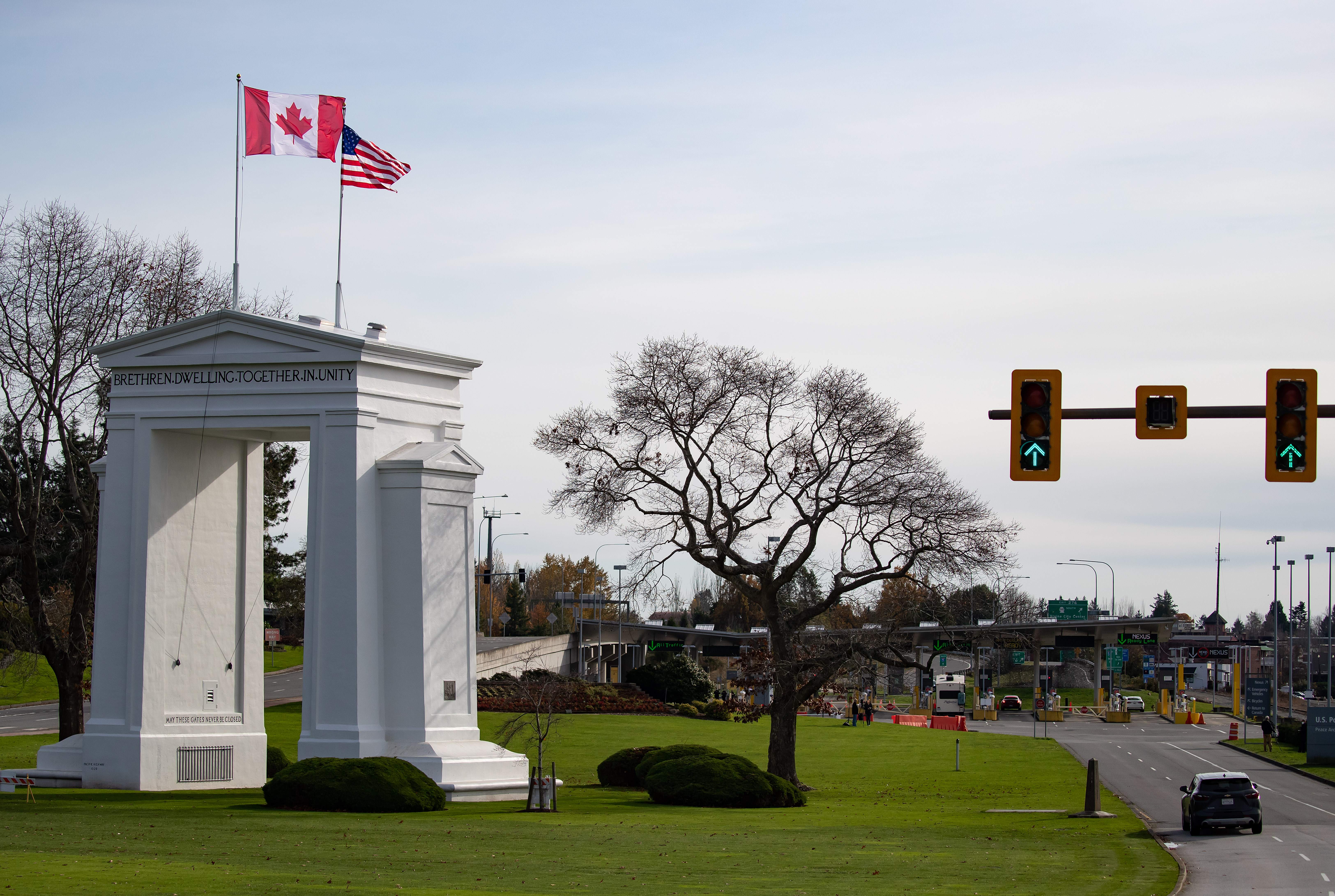
When cross-border talks between Canada and the United States fracture, the shockwaves do not stop at customs checkpoints or federal government buildings. They travel south and north alike, landing squarely on the shoulders of independent operators, local manufacturers, and family-run shops in British Columbia.
To understand why a stalled trade negotiation is an acute emergency for local commerce, we have to look past the macro-economic jargon. We have to look at the grocery shelves, the timber yards, the tech startups, and the storefronts that make up the economic heartbeat of the Pacific Northwest.
The Geography of Interdependence
B.C. does not exist in a vacuum. Geographically and economically, our closest neighbors are often just across the border in Washington, Oregon, and California rather than three time zones away in central Canada.
Supply chains are not abstract lines on a map. They are physical, messy, and urgent. Consider a hypothetical mid-sized furniture maker operating out of Surrey. Let us call him Mark. Mark sources his specialized hardware from Oregon, his lumber from the B.C. interior, and his finishing oils from a supplier in Ohio. He sells half his inventory to boutiques in Seattle and Portland.
When trade talks stall and protectionist rhetoric hardens into tariffs or regulatory red tape, Mark’s world changes overnight. The Oregon hardware jumps in price by twenty percent due to retaliatory duties. The border crossing that used to take his delivery truck forty minutes now traps the vehicle in a four-hour queue of bureaucratic verification.
Multiply Mark by thousands.
You have an entire provincial economy built on frictionless movement. When that friction returns, margins evaporate. Small businesses do not have massive cash reserves or corporate tax lawyers to absorb sudden shocks. They absorb them out of pocket, or they close their doors.
The Anatomy of a Worst-Case Scenario
Economists love to use terms like structural headwinds and market volatility. Let us translate those sterile phrases into human reality.
A nightmare scenario means inventory sitting in limbo. It means a small tech company in Vancouver suddenly finding its cloud services or hardware components priced out of reach because cross-border data or technology pacts hit a political wall. It means a berry farmer in the Fraser Valley watching fruit rot because seasonal labor or export pathways are choked by bureaucratic retaliation.
Trust is fragile. Commerce is built on the quiet assumption that tomorrow rules will resemble today rules. When politicians start treating trade as a weapon, that assumption shatters.
(Note: While specific tariff rates shift daily during active negotiations, the underlying principle remains constant: uncertainty is a direct tax on small enterprises.)
Small business owners are inherently optimistic. They have to be. Opening a shop requires a stubborn belief in the future. But optimism is difficult to maintain when the rules of the game change while you are in the middle of playing it.
When cross-border talks collapse, the big corporations simply pivot. They shift production, renegotiate global contracts, or pass the cost down to consumers through sheer market dominance. The small business owner cannot do this. Elena cannot simply move her coffee shop to Seattle because rent is cheaper or regulations are friendlier. She is rooted here. Her customers are here. Her risk is total.
Beyond the Border Post
The danger of a Canada-U.S. trade breakdown goes deeper than physical goods crossing a painted line in the dirt. It bleeds into services, digital commerce, and energy partnerships.
British Columbia punches above its weight in digital media, clean tech, and professional services. Many of these firms rely heavily on American clients. A diplomatic chill across the 49th parallel makes cross-border contracting risky. U.S. firms start looking inward to avoid regulatory complications, quietly dropping their Canadian partners in favor of domestic alternatives.
The human cost of this quiet decoupling shows up in empty office suites, cancelled contracts, and halted expansions. It shows up in young graduates who pack their bags for Seattle or San Francisco because the local startup ecosystem has contracted under the weight of economic uncertainty.
We lose talent. We lose momentum.
And for what? Political leverage in a game played thousands of miles away by people who have never had to make payroll on the first of the month.
The Resilience We Must Build
We cannot control what happens in capital city backrooms. We cannot force trade ministers to find common ground when political incentives favor division.
What we can do is recognize the vulnerability and name it. We can stop pretending that international trade is only for massive multinational conglomerates. Trade belongs to Elena. Trade belongs to Mark. Trade belongs to every independent artisan, software developer, and logistics operator trying to build something lasting in this province.
The coffee machine hums on. Elena wipes down the counter, smiles at a regular, and sets down a fresh mug. Outside, the rain continues to fall over a landscape that spans two nations, connected by an economy so tightly woven that pulling a single thread threatens to unravel the entire sweater.
The morning rush fades. The quiet returns. And somewhere out there, a customs gate lowers just a fraction of an inch further.
:max_bytes(150000):strip_icc()/CubanSandwich_Beauty_SEO52_3240-5daaee08b62c48a29a925ed2b7ea2929.jpg)