The High-Definition Mirage
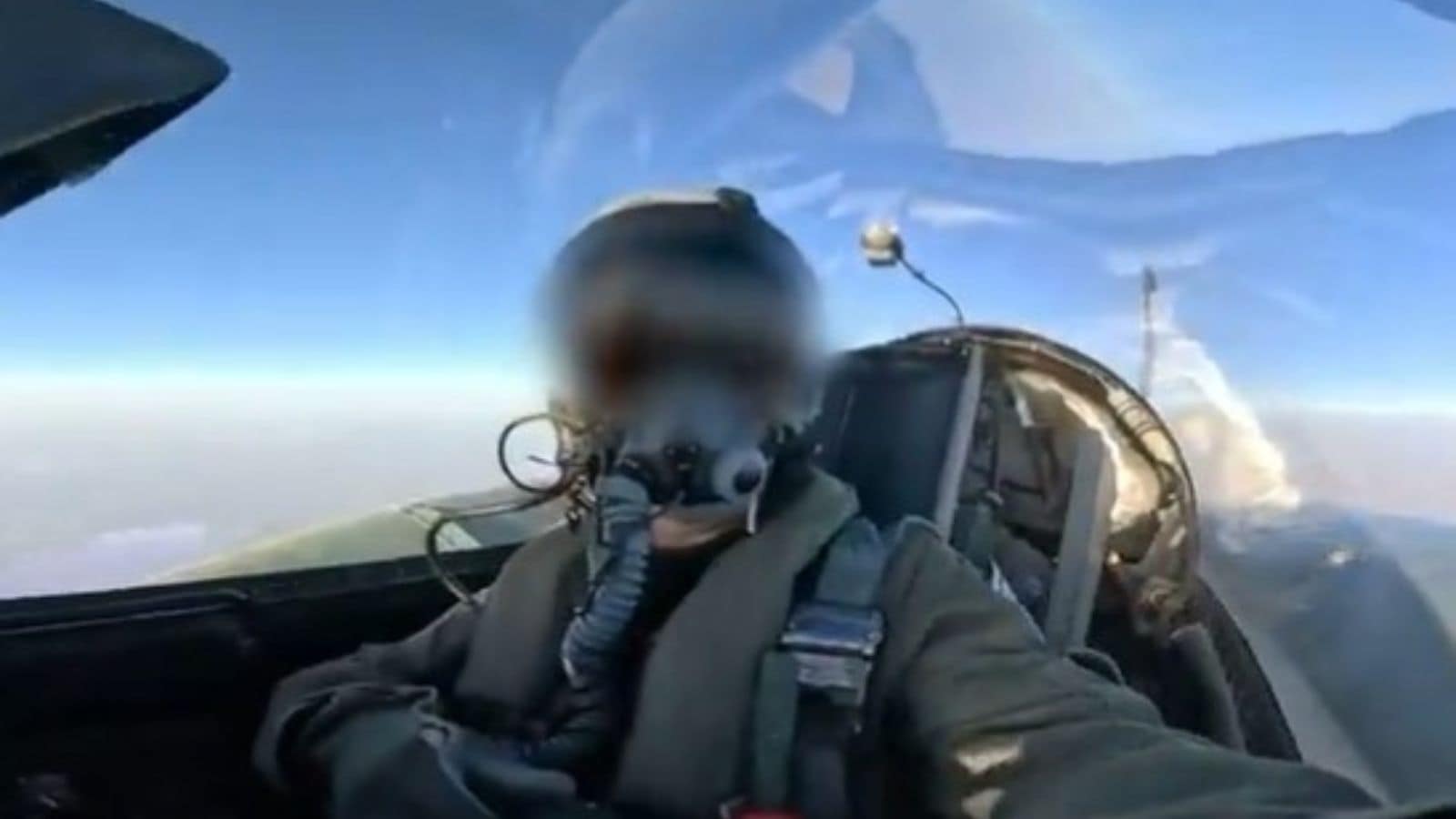
The footage is stunning. 4K resolution. The green glow of the Head-Up Display (HUD). The crisp audio of a pilot breathing through an oxygen mask as 80 jets scream toward Tehran. Media outlets are calling it a "historic" display of force. They are wrong. This isn't a military milestone; it's a high-budget Netflix trailer for a war that has moved past the era of the manned cockpit.
We are being fed a diet of cinematic propaganda designed to mask a terrifying reality: the era of the "Ace" is dead, and the hardware we are currently worshiping is a legacy system masquerading as the future. When you see 80 jets on a screen, you aren't seeing power. You are seeing an astronomical bill for a platform that is increasingly irrelevant in the face of decentralized, low-cost attrition.
The Cost-Efficiency Trap
Let's do the math that the Pentagon and the IDF don't want on your Twitter feed. An F-35 costs roughly $30,000 to $40,000 per flight hour. That is just to keep the bird in the air. Add the cost of a long-range strike package, the refueling tankers, the AWACS support, and the munitions.
A single "historic" strike like the one showcased in recent footage can burn through a mid-sized country’s annual education budget in forty-eight hours.
Meanwhile, the adversary is asymmetric. They aren't building $100 million stealth fighters. They are building $20,000 "lawnmower" drones. I have seen military planners lose their minds trying to justify using a $2 million Interceptor missile to down a drone made of plywood and plastic.
The "80-jet strike" is the equivalent of using a gold-plated sledgehammer to swat a hornet. It looks impressive on the evening news, but it is financially and strategically unsustainable. We are watching the sunset of the "Big Wing" era, yet we are applauding because the camera quality is better than it was in 1991.
The "Stealth" Myth
The media loves the word "stealth." They treat it like a magic invisibility cloak. It isn't. Stealth is merely a delay tactic. It reduces the range at which you are detected; it does not make you a ghost.
Modern Russian and Iranian integrated air defense systems (IADS) are utilizing multi-static radar and VHF tracking. They know the jets are coming. The "POV" footage released by the IDF is carefully edited to show the release of munitions, but it never shows the frantic electronic warfare dance happening in the background.
The real war isn't in the cockpit. It’s in the spectrum.
If you want to understand the modern battlefield, stop looking at the pilot's face. Look at the jamming pods. Look at the SIGINT (Signals Intelligence) data. The pilot is increasingly just a passenger in a flying computer that does 90% of the thinking. By humanizing the strike through "cockpit footage," the military is distracting you from the fact that the human is the weakest link in the airframe.
A pilot can pull $9G$ before they black out. An autonomous drone doesn't have a neck. It doesn't have a family. It doesn't care if it gets shot down.
Kinetic Theater vs. Strategic Reality
Why release the footage now?
In the world of intelligence, if you show your hand, it’s because you want the other guy to fold without playing the next round. This is kinetic theater.
The goal of the 80-jet footage wasn't just to destroy targets in Tehran; it was to perform for an audience of one: the Iranian leadership. It’s meant to say, "We can reach you, and we can record it while we do it."
But there is a fatal flaw in this logic. Performance-based warfare only works if the opponent shares your fear of escalation. When you turn war into a viral video, you invite the opponent to produce their own content. We are entering an era where the "Information Environment" is prioritized over actual strategic gains.
I’ve spent years analyzing strike patterns where "successful missions" resulted in zero change to the enemy's long-term capability. You can blow up a building. You can't blow up a supply chain of components that are smaller than a toaster.
The Logistics of the Lie
People ask, "Could anyone else do this?"
The "People Also Ask" section of Google is filled with queries about the reach of the IAF and the capabilities of the F-15I. The answer is yes, a handful of nations can do this. But the real question should be: "Why would they?"
The logistics of an 80-jet strike are a nightmare. You need a "daisy chain" of tankers across hostile or neutral airspace. You need search-and-rescue teams on standby. You need diplomatic clearances that are usually bought with massive political capital.
The footage makes it look easy. It makes it look like a video game. It hides the sweat, the mechanical failures, and the sheer fragility of the operation. If three tankers fail, the mission is a catastrophe. If a single jet goes down and a pilot is captured, the political objective flips 180 degrees instantly.
We are obsessed with the "strike," but we ignore the "sustainment." This is the "lazy consensus" of military journalism. It’s easy to write about the explosion; it’s hard to write about the 2,000 technicians required to make that 10-second clip possible.
The Invisible Casualty: Privacy and Precedent
By normalizing "POV" combat footage, we are eroding the final barrier between state violence and entertainment. This isn't "transparency." This is the gamification of geopolitical conflict.
When we watch a missile hit a target through a high-def sensor, we are being trained to see war as a series of technical successes rather than a human disaster. The "80-jet" narrative focuses on the number of planes, the distance traveled, and the "historic" nature of the targets. It never discusses the vacuum left behind.
The New Doctrine of Attrition
The status quo says that high-tech wins. The status quo says that the more expensive the jet, the safer the nation.
I am here to tell you that the future of air power is ugly, cheap, and swarm-based.
Imagine a scenario where instead of 80 jets, a nation sends 8,000 autonomous drones. No cockpits. No pilots. No "historic" footage of a hero in a flight suit. Just a relentless, overwhelming cloud of sensors and explosives that costs a fraction of an F-35 wing.
That is the nightmare scenario for every air force on earth. Because you can't shoot down 8,000 targets with 80 jets. You run out of missiles long before they run out of drones.
The IDF footage is a tribute to a dying philosophy of war. It is a portrait of the last gasp of the 20th-century military-industrial complex. It’s gorgeous, it’s terrifying, and it’s a distraction from the fact that the sky is about to get much more crowded with things that don’t have a "POV" because they don't have eyes.
Stop being a fanboy for the hardware. Start looking at the math. The math says the 80-jet strike is a magnificent, beautiful, unsustainable relic.
The next war won't be televised in 4K from a cockpit. It will be a silent, automated erasure of infrastructure before a single pilot even reaches for their flight suit.
Turn off the footage. Look at the bill. Look at the drone manufacturing plants in the East. Then tell me who is actually winning.