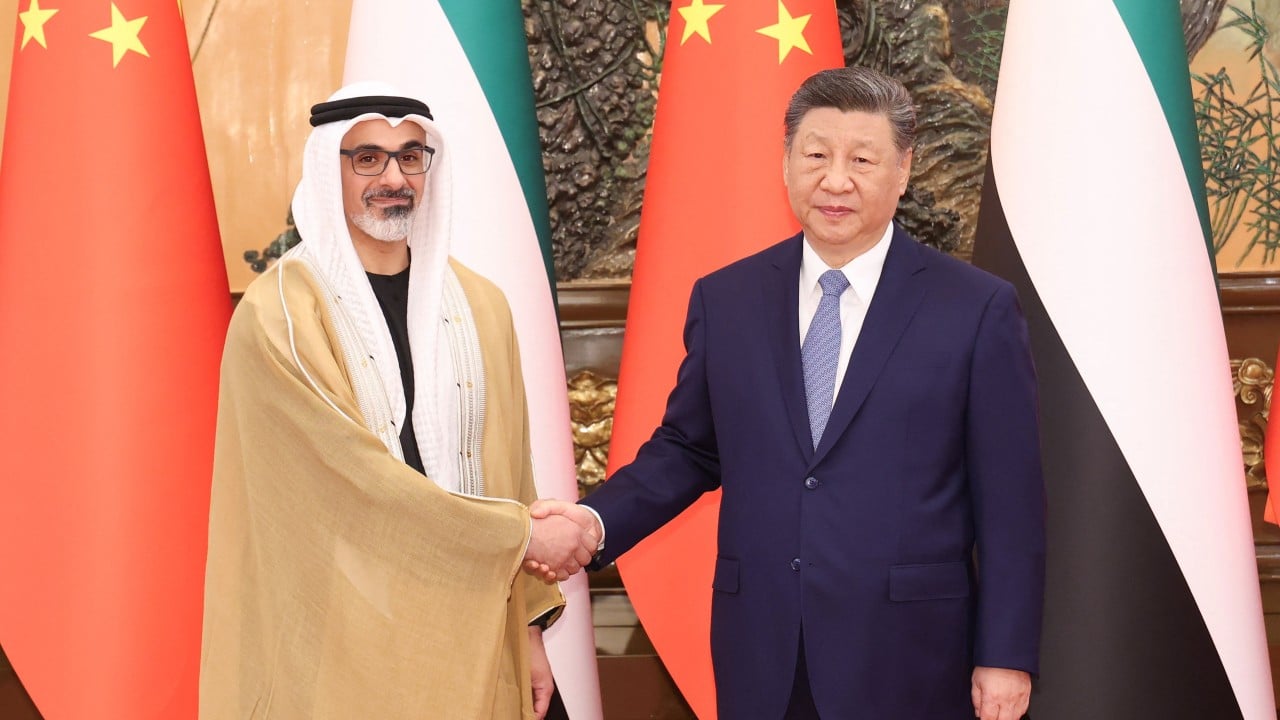
The mainstream media is obsessed with a ghost. Every time Xi Jinping shakes hands with a Gulf monarch, the headlines scream about a "pivotal shift" or the "end of the petrodollar." They see a few billion in infrastructure deals and assume the United Arab Emirates is packing its bags to leave the American security umbrella.
They are wrong.
The consensus view suggests that Abu Dhabi is turning toward Beijing because it’s tired of Washington’s lecturing. They call it a "pivot to the East." In reality, it isn’t a pivot. It’s a hedge. And if you understand the actual mechanics of Gulf power, you’ll realize that China is being used as a high-priced utility provider, not a new best friend.
The Infrastructure Trap
Western analysts love to point at the Belt and Road Initiative as proof of Chinese dominance. They see Huawei 5G masts and DP World partnerships and assume the UAE is now in China’s pocket.
I’ve sat in rooms where these deals get scrutinized. The Emiratis aren't naive. They know exactly what they’re buying: cheap, efficient hardware. China provides the "dumb pipes" of the modern world. Abu Dhabi buys Chinese tech for the same reason a rational CFO buys generic printer toner—it’s cost-effective and it works.
But look at what they don’t buy from China.
They don't buy the "brains." When the UAE wants to build the world’s most advanced AI models, like Falcon or Jais, where do they go? They don't look to Beijing’s restrictive, censored tech ecosystem. They hire Western-trained engineers. They buy NVIDIA chips. They partner with Microsoft.
The UAE isn't turning toward China; it’s extracting maximum value from a desperate vendor. China needs the Gulf’s energy far more than the Gulf needs China’s political model. Xi isn't leading a charge; he’s a customer trying to look like a conqueror.
The Security Myth
The most laughable argument in the "Gulf Turn" narrative is the idea that China will replace the U.S. as a security guarantor.
China has exactly one overseas military base in Djibouti. It has zero experience in regional power projection. It has no desire to get bogged down in the sectarian quagmires of the Middle East. If a tanker gets seized in the Strait of Hormuz tomorrow, Abu Dhabi doesn't call Beijing. They call the U.S. Fifth Fleet in Bahrain.
The "lazy consensus" ignores the $100 billion-plus in U.S. military hardware currently sitting in the UAE. You don't swap out a fleet of F-16s and THAAD missile batteries for Chinese equivalents overnight. It would take decades of retraining, re-tooling, and a complete gutting of their operational doctrine.
Abu Dhabi uses its relationship with Xi to make Washington jealous. It’s a classic geopolitical "thirst trap." By flirting with the rival, they force the primary partner to offer better terms on the next arms deal or trade agreement.
The Petrodollar Panic is a Math Problem
You’ve heard the rumors: "The UAE will start pricing oil in Yuan!"
Let’s look at the math. The UAE dirham is pegged to the U.S. dollar. Most of their massive sovereign wealth fund (ADIA) assets are denominated in dollars. If they were to seriously undermine the dollar, they would be setting fire to their own house to stay warm.
The Yuan is not a reserve currency. It’s not even a fully convertible currency. The CCP keeps a tight grip on capital outflows. Why would a savvy global investor like Sheikh Mohamed bin Zayed Al Nahyan trade a liquid, global currency for one that can be frozen or devalued at the whim of a politburo in Beijing?
They wouldn't. They won't.
The Sovereignty Play
What the "experts" miss is that the UAE isn't looking for a new master. They are practicing "strategic autonomy."
In the old world, you had to pick a side. In the new world, the most powerful players are the ones who refuse to choose. By hosting Xi and keeping the Biden (or Trump) administration on speed dial, the UAE becomes the indispensable middleman.
They are positioning themselves as the Switzerland of the 21st century—a neutral ground where Chinese capital can meet Western tech and Indian labor.
The Hidden Risk
Is there a downside to this strategy? Absolutely.
The risk isn't that China takes over. The risk is that the West overreacts to the optics and pulls back. If the U.S. decides that a few Huawei towers are a dealbreaker and freezes tech transfers, then—and only then—would the UAE be forced into China’s arms.
It would be a self-fulfilling prophecy of Western making.
The Reality Check
Stop looking at the photo ops and start looking at the capital flows.
- Education: UAE elites still send their kids to Harvard, Oxford, and Stanford—not Tsinghua.
- Healthcare: They build branches of the Cleveland Clinic and Mayo Clinic—not Chinese state hospitals.
- Finance: Their legal systems in the ADGM (Abu Dhabi Global Market) are based on English Common Law—not Chinese civil law.
China is a trade partner. The West is the operating system.
The next time you see a headline about the "Gulf’s Turn to China," remember that you’re looking at a PR campaign, not a structural shift. Abu Dhabi is playing the game better than anyone else. They’re letting China pay for the infrastructure while the West remains the foundation of their security and social fabric.
They aren't turning East. They are simply making sure they never have to look in just one direction again.
If you’re still worried about the Yuan replacing the Dollar in the Gulf, you aren't paying attention to the balance sheets. You’re just reading the brochures.