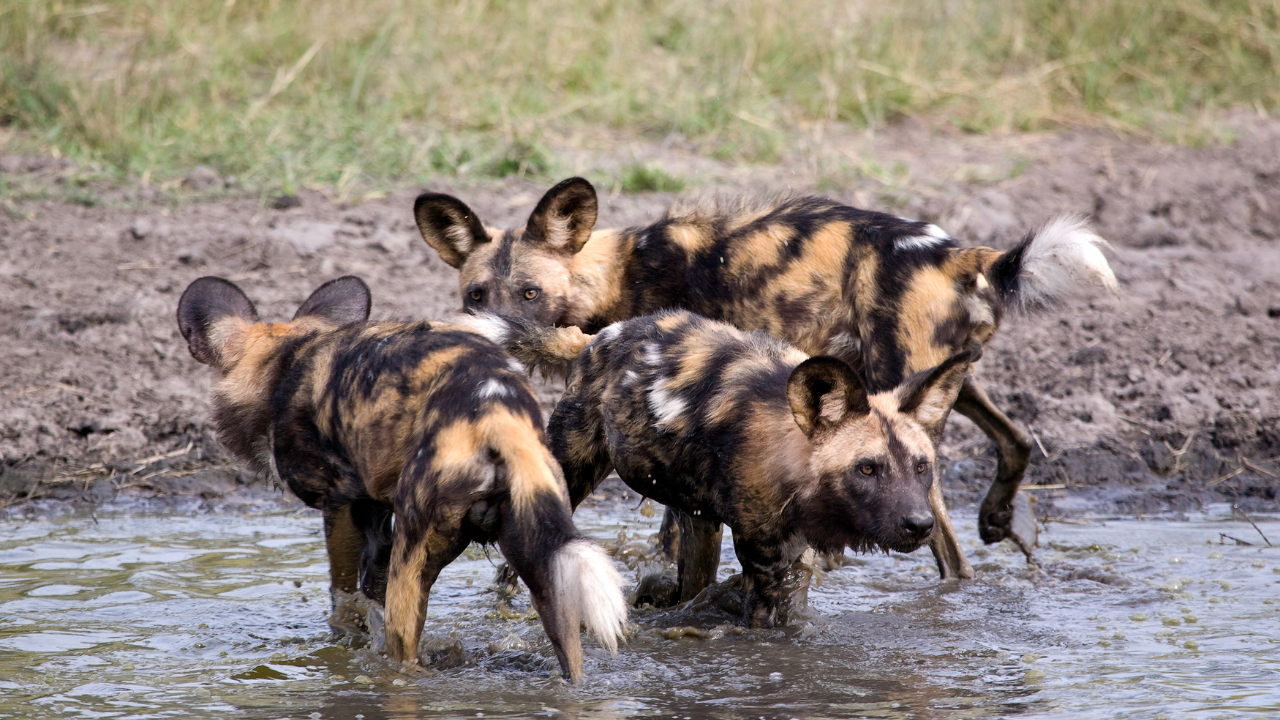
Mammalian dispersal is fundamentally an optimization problem governed by spatial friction, resource distribution, and mortality risk. When three male African wild dogs, known scientifically as Lycaon pictus, traversed a cumulative distance of 4,126 kilometers across southern Africa, they established an extreme upper bound for terrestrial carnivore movement. This dispersal event challenges conventional home range models and exposes the severe limitations of static conservation boundaries when applied to highly mobile wide-ranging species.
To understand the mechanics of this movement, one must deconstruct the primary drivers of mammalian dispersal: natal philopatry breakdown, intraspecific competition, and spatial resource availability. In pack-living social carnivores, dispersal is the primary mechanism for preventing inbreeding and securing reproductive tenure in a new territory. The transition from a stable home range to a dispersal phase introduces an asymmetric cost-benefit structure. The energy expenditure required for daily transit scales non-linearly with distance, while the probability of encountering conspecific packs or anthropogenic hazards increases cumulatively over time. Meanwhile, you can read other stories here: The Night the Lifeline Went Dark.
Spatial friction acts as the primary constraint on mammalian movement corridors. For Lycaon pictus, this friction is composed of three distinct variables: habitat permeability, human-dominated matrix resistance, and prey density gradients. Traditional wildlife corridors often assume linear paths between protected nodes. However, empirical tracking data from extreme dispersal events demonstrate that movement optimization rarely follows Euclidean logic. Instead, animals navigate along environmental gradients that minimize energetic loss while avoiding competitive exclusion zones established by rival packs.
The biological cost function of a 4,126-kilometer trajectory involves severe physiological and nutritional constraints. African wild dogs are obligate coursers, relying on sustained high-speed pursuits to capture cursorial prey. Operating outside a stable home range eliminates local ecological knowledge. Dispersing individuals lack familiarity with local water sources, ambush sites, and prey migratory patterns. Consequently, foraging efficiency drops precipitously during the initial phases of movement, forcing animals to subsist on suboptimal prey or scavenging opportunities while maintaining high daily kilometer outputs. To see the complete picture, check out the recent report by The Washington Post.
Anthropogenic mortality risks compound natural ecological barriers. Roads, agricultural fencing, livestock protection measures, and snare lines represent discrete hazard nodes distributed across the landscape. The probability of encountering these anthropogenic mortality sources is a direct function of cumulative distance traveled and time spent traversing unsecured matrices. The survival of these three male dogs across such an expansive duration highlights an exceptional navigation strategy that successfully minimized exposure to high-risk interfaces, despite passing through densely utilized human landscapes.
Population connectivity models must be recalibrated to account for such macro-dispersal events. Conservation planning frequently relies on micro-scale connectivity indices that prioritize short-range stepping stones between adjacent protected areas. While valid for sedentary or territorial species with limited vagility, these localized frameworks fail to capture the metapopulation dynamics of wide-ranging carnivores. A protected area network designed solely around average home range diameters will systematically isolate populations by ignoring the necessity of long-range inter-regional movement corridors.
The management implication is a shift from static reserve design to dynamic matrix stewardship. Preserving continuous corridors across international borders requires coordinated multi-jurisdictional policy frameworks that mitigate fence barriers and control snaring pressures along low-density human-wildlife interfaces. Without securing these expansive ecological networks, populations of Lycaon pictus will remain functionally fragmented, vulnerable to stochastic demographic collapses regardless of internal reserve health.