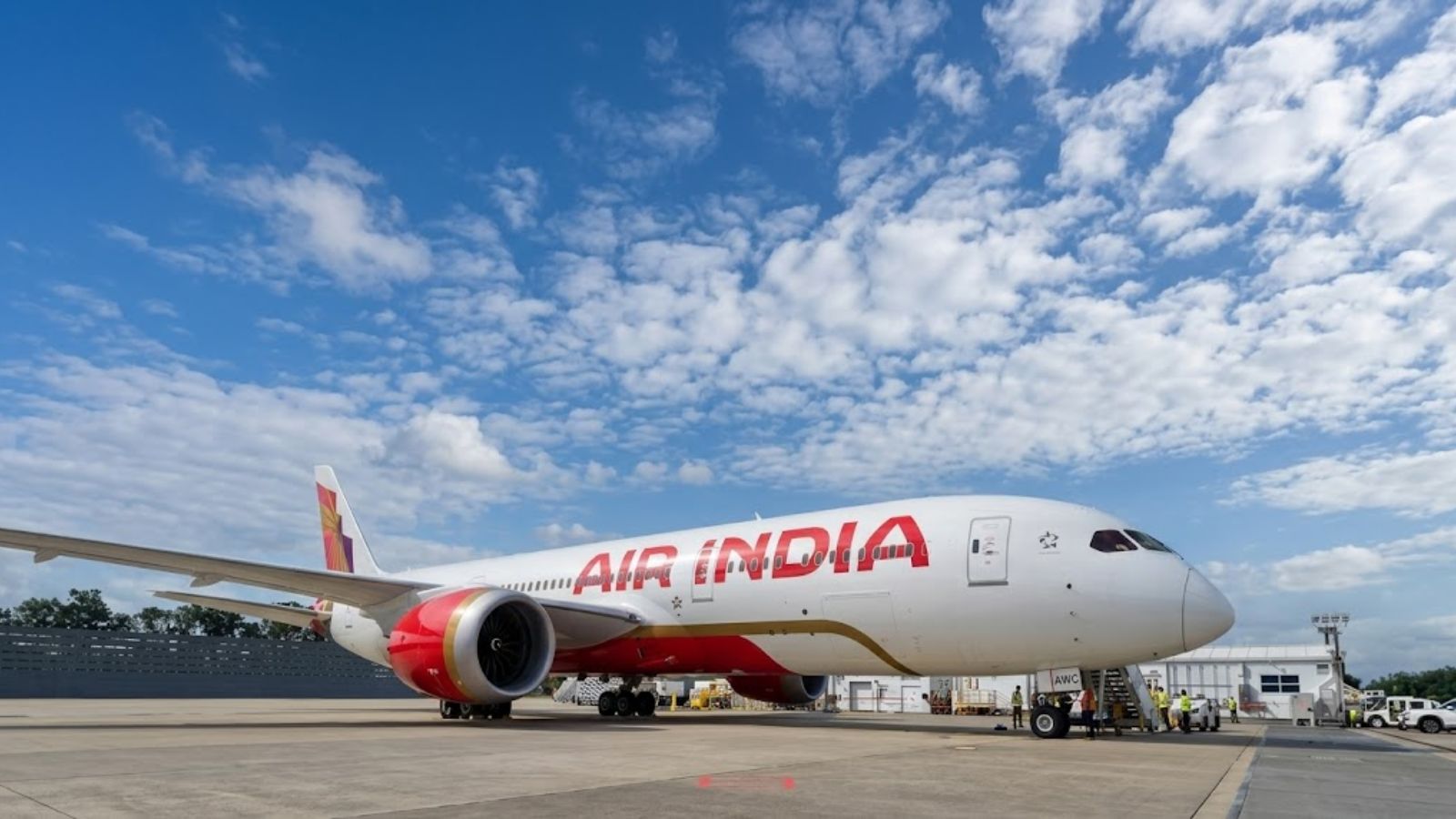
Air India is finally launching a direct, non-stop flight between Mumbai and Toronto, alongside a sweeping capacity upgrade on its existing Delhi-Toronto route. For years, the diaspora between India's financial capital and Ontario has endured the tedious ritual of multi-stop itineraries, Gulf carrier layovers, or the dreaded European connection. Now, a Boeing 777-200LR or equivalent widebody will bridge the two cities without an intermediate stop, rewriting the playbook for trans-Pacific and trans-Atlantic long-haul corridors.
Commercial aviation is a game of margins, geopolitical positioning, and fleet utilization. Let us look past the corporate press releases to examine the real mechanics of these routes, the aircraft constraints, and the shifting dynamics of the North American-South Asian aviation market. If you liked this piece, you might want to check out: this related article.
The Fleet Reality Behind the Non-Stop Promise
Announcing a route is easy. Operating it profitably while dealing with headwinds, airspace closures, and maintenance turnarounds is another matter entirely.
To run a non-stop service from Mumbai to Toronto, an airline needs ultra-long-haul capability. Air India’s recent fleet modernization program under the Tata Group has injected capital and ambition into a carrier that spent decades weighed down by bureaucracy. Yet, widebody aircraft availability remains a bottleneck. For another angle on this event, refer to the recent update from National Geographic Travel.
[Image of Boeing 777 in flight]
The mathematics of ultra-long-haul flying dictate that fuel burn scales exponentially with distance. Mumbai to Toronto covers roughly 12,500 kilometers. Against prevailing jet streams on westbound tracks, fuel loads must be meticulously calculated. Payload restrictions often apply. If headwinds over the Atlantic or Europe are severe, an aircraft may face weight limitations, forcing airlines to restrict cargo capacity or, in worst-case scenarios, take a technical fuel stop.
Why Mumbai Changes the Equation
Delhi has long served as Air India's primary fortress hub for North American operations. Flights from Delhi to Toronto, New York, and Chicago have run for years because Delhi sits geographically closer to the polar routes and northern tracks.
Mumbai is different. As the commercial engine of India, its corporate traffic demands direct access. Executives flying from Nariman Point to Bay Street currently lose a full day to layovers in Frankfurt, London, or Dubai.
- Corporate Yields: Business class demand out of Mumbai is exceptionally high, providing the high-yield revenue needed to offset economy seat discounting.
- Cargo Capacity: Pharmaceuticals, perishables, and high-value electronics moving between Maharashtra and Ontario represent a lucrative secondary revenue stream.
- Time Savings: Slicing four to six hours off total travel time alters executive mobility patterns entirely.
Upgrading Delhi to Toronto
Simultaneously ramping up the Delhi-Toronto frequency or deploying higher-capacity aircraft addresses a different kind of pressure. The demand on the Delhi-Toronto sector has traditionally outstripped supply, largely due to bilateral air service agreement caps between India and Canada.
When seats are artificially scarce, ticket prices skyrocket. Travelers have frequently complained about exorbitant fares during peak seasons like summer and December holidays. By increasing gauge size—shifting from older aircraft configurations to modernized cabins with higher density or better premium inventory—Air India aims to capture market share that previously bled over to Emirates, Qatar Airways, and British Airways.
However, capacity upgrades bring operational friction.
[Old Configuration] ---> Lower Premium Yields / High Maintenance
[Modernized Cabin]  ---> Higher Density / Better Passenger Retention
Turnaround times at Toronto Pearson International Airport are notoriously tight, and winter operations in Ontario introduce de-icing delays, baggage sorting bottlenecks, and gate congestion. An airline cannot simply dump hundreds of additional passengers onto the tarmac without straining ground handling infrastructure.
The Geopolitical and Airspace Variable
No discussion of flights between India and North America is complete without addressing the elephant in the room: airspace restrictions.
Since the closure of Russian airspace to Western carriers and the complex web of reciprocal or retaliatory airspace bans, routing economics have shifted. While Indian carriers are generally permitted to traverse Russian airspace depending on specific bilateral alignments and aircraft registries, doing so introduces complex insurance, safety, and political calculations.
If an aircraft routes north over Central Asia and Russia, the flight time drops significantly. If it is forced to route south around conflict zones in the Middle East and across Europe, the burn increases.
- Southern Detours: Add 45 to 90 minutes to the total journey.
- Fuel Contingency: Requires higher contingency fuel margins, reducing cargo payload.
- Crew Rostering: Pushes pilots closer to maximum flight duty period limits, requiring augmented crew scheduling.
Air India’s ability to maintain reliable scheduling on the new Mumbai-Toronto route will depend heavily on which flight paths air traffic control clears on a daily basis. A single regional escalation can throw transcontinental scheduling into chaos.
Navigating Passenger Expectations
The traveling public remembers Air India’s legacy era of inconsistent service, delayed departures, and aging cabin interiors. The brand transformation under private ownership requires flawless execution on these flagship Western routes.
When a passenger pays top dollar for a direct flight, tolerance for broken in-flight entertainment systems, non-functioning lavatories, or lost baggage drops to zero. Upgrading the hardware—the physical aircraft—is only half the battle. Software—meaning ground staff training, customer service responsiveness, and baggage handling reliability at Pearson and Mumbai's Chhatrapati Shivaji Maharaj International Airport—determines whether a one-time flyer becomes a loyal customer.
Toronto-bound travelers from western and southern India are watching closely. If Air India delivers on the promise of punctuality and comfort, legacy western mega-carriers will face a serious challenge on their most lucrative diaspora corridors.
The wheels are up, but the real test begins the moment the first flight touches down in Ontario.