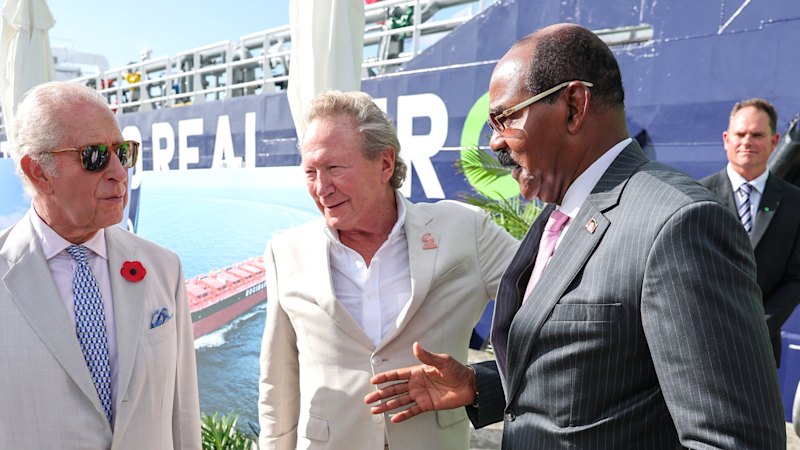
Political theater sells papers, which is why every media outlet in the country just swallowed the Anthony Albanese and Angus Taylor spat over Caribbean travel demand hook, line, and sinker.
Watch the circus. One side screams about cost-of-living optics and ministerial priorities during a domestic pinch. The other side fires back with chest-thumping rhetoric about international trade ties, diplomatic presence, and economic recovery. Both sides are playing you for a fool. They are arguing over the price of the deck chairs while the hull of Australian long-haul aviation is actively taking on water. You might also find this connected article useful: The Night the Ledger Broke in Brussels.
If you are reading the mainstream coverage of this political brawl and picking a team, you are asking the wrong question entirely. The real story is not whether politicians or wealthy Australians should be booking flights to Bridgetown or Montego Bay. The real story is why getting from Sydney to the Caribbean—or almost anywhere outside the immediate Asia-Pacific rim—has become an exercise in financial masochism, bilateral protectionism, and hub-and-spoke decay.
I have spent twenty years watching governments and legacy carriers collude to manufacture artificial scarcity while blaming "unprecedented demand" for eye-watering airfares. Every time a minister and a shadow minister trade barbs over international travel trends, they provide free PR cover for an aviation duopoly that thrives on constrained seat capacity. As discussed in latest coverage by The New York Times, the effects are widespread.
The Lazy Consensus Around Long-Haul Leisure Demand
Mainstream political reporters treat international travel demand like a moral barometer. When outbound bookings to luxury or long-haul destinations like the Caribbean tick upward, pundits frame it as either proof of a roaring, resilient economy or a tone-deaf indulgence by an out-of-touch elite.
Both framings are economically illiterate.
In aviation economics, outbound demand to secondary long-haul markets like the Caribbean is not a clean measure of national wealth. It is a distortion caused by capacity bottlenecks and yield management algorithms. When airlines slash seat supply on major trunk routes—Sydney to Los Angeles, Melbourne to Dallas, Brisbane to London—average fares skyrocket. Once a standard economy ticket to Europe or North America crosses a certain psychological threshold, the marginal cost of tacking on a regional hop to Barbados, Saint Lucia, or Jamaica becomes negligible.
The traveler isn't suddenly richer. The pricing curve simply broke.
When Albanese and Taylor spar over what Caribbean travel demand signals about the broader economy, they are arguing over a lagging, distorted metric. Legacy carriers love this distraction. As long as Canberra is arguing about the optics of where Australians are flying, nobody in Parliament is asking why bilateral air service agreements remain locked in the 1990s, or why fifth-freedom rights—which would allow foreign carriers to fly Australians onward from North American hubs at competitive rates—are routinely strangled in the crib.
Decoding the Mechanics of Artificial Scarcity
To understand why you are paying double what you should to reach the Western Hemisphere, you have to understand Revenue Passenger Kilometers (RPKs) versus Available Seat Kilometers (ASKs).
RPKs measure actual bums in seats. ASKs measure total seats flown. Airlines do not make maximum profit by filling 100 percent of a massive fleet at low fares; they make maximum profit by restricting ASKs until load factors hit 88 to 92 percent, then letting automated pricing engines gouge the remaining 10 percent of late-booking passengers.
Look at how this plays out on a route from Australia to the Caribbean:
- The Pacific Chokepoint: There are zero direct commercial flights from Australia to the Caribbean. Every single passenger must transit through a North American mega-hub—primarily Los Angeles (LAX), Dallas-Fort Worth (DFW), Houston (IAH), or Vancouver (YVR)—or take the brutal eastward route through London or Doha.
- The Alliance Tollbooth: Because trans-Pacific capacity is heavily concentrated among a handful of joint-venture partners (think Qantas and American Airlines, or Air New Zealand and United), competition on the trans-Pacific leg is largely theatrical. Joint ventures enjoy antitrust immunity to coordinate schedules and pricing.
- The Interline Squeeze: Once you land in Dallas or Los Angeles, you are captive to the domestic partner's regional pricing into the Caribbean basin. If you try to book separate tickets on a low-cost carrier out of Miami or Fort Lauderdale to save money, you forfeit baggage protection and miss-connection coverage.
When politicians weaponize travel statistics to score points during Question Time, they completely ignore this structural cartel. Taylor wants you to believe travel demand metrics expose government mismanagement; Albanese wants you to believe they reflect a nation getting back on its feet. Neither man will touch the competition policy that allows joint-venture airlines to keep ASKs artificially depressed while posting record yields.
People Also Ask The Wrong Questions
Whenever a political row over travel hits the front page, search engines light up with the same predictable queries. Let's dismantle them with actual industry reality rather than parliamentary talking points.
Why is travel demand to the Caribbean surging despite high inflation?
It isn't surging in raw volume; it is surging in revenue yield. Airlines and tour operators measure "demand" primarily by ticket revenue, not headcount. When a flight carries 20 percent fewer passengers than it did in 2019, but each passenger pays 65 percent more for the ticket, corporate press releases call it "record demand." Add in pent-up VFR (Visiting Friends and Relatives) traffic, cruise line fly-cruise packages out of Miami and San Juan, and corporate incentive trips that were deferred for three years, and you get a temporary statistical spike that looks like a boom on paper. It is an illusion created by inflation and reduced seat supply.
Are politicians out of touch for debating international holidays during a housing crisis?
Yes, but not for the reason you think. Debating the optics of leisure travel is a classic political smoke screen. A federal government cannot directly lower the price of a hotel room in Nassau, nor can the opposition stop Australians from using their own savings or frequent flyer points to escape winter. What Canberra can control is airport slot hoarding at Sydney Kingsford Smith, fuel excise structures, bilateral capacity caps on Middle Eastern and Asian carriers, and competition oversight on airline alliances. Focusing on the morality of the traveler lets politicians dodge accountability for the infrastructure failures they actually own.
Is now a bad time to book long-haul flights from Australia?
If you are booking through traditional retail channels using standard search engines, yes, you are volunteering to be fleeced. Airline pricing algorithms are currently tuned to punish brand loyalty and direct point-to-point booking. If you buy a single-ticket itinerary from Sydney to Bridgetown on a major alliance carrier, you are paying a massive convenience tax.
The Battle Scars of Aviation Deregulation
I have sat in boardrooms where network planners openly celebrated the retirement of high-capacity aircraft like the Boeing 747 and Airbus A380 on secondary routes—not because the planes were inefficient, but because replacing a 480-seat aircraft with a 250-seat Dreamliner allowed them to cut capacity in half while raising average ticket prices by 40 percent.
They called it "capacity discipline." Consumers experienced it as price gouging.
During the post-pandemic restart, carriers across the globe discovered a dirty secret: they didn't need to rebuild their networks to 100 percent of pre-crisis capacity to make 100 percent of their pre-crisis profits. By keeping supply tight, grounding older frames, and blaming supply chain delays at Boeing and Airbus, airlines forced consumers to bid against each other for scarce seats.
Governments stepped right in to protect this racket. Remember when major international carriers begged Canberra for additional weekly flights into Australian capital cities, offering to inject immediate seat capacity that would have driven down fares across the board? The federal government blocked them, citing "national interest" and protecting local aviation jobs.
That is the context missing from every word spoken by Albanese and Taylor this week. You cannot actively block foreign competition from adding seats to your market, watch fares double as a direct result, and then stand at a dispatch box acting surprised or indignant about what travel demand numbers look like.
The Contrarian Playbook for Long-Haul Travelers
You cannot wait for Parliament to fix aviation competition, and you certainly shouldn't take economic advice from a political shouting match. If you are actually trying to move people or capital between Australia and the Americas—including the Caribbean—stop playing by the legacy airlines' rules.
- Break the Single-Ticket Addiction: Stop searching for "Sydney to Caribbean" on aggregators. The alliance pricing engine automatically defaults to the highest-fare-class bucket available across all segments. Instead, position yourself to a major North American gateway using ultra-low-cost or secondary trans-Pacific carriers—Fiji Airways via Nadi, Hawaiian Airlines via Honolulu, or Air Canada via Vancouver—and buy a separate, flexible ticket onward from Miami, Fort Lauderdale, or New York. Build in a mandatory 24-hour buffer stopover. Even with a hotel night, you will routinely save $1,200 to $2,500 per passenger.
- Exploit Open-Jaw Routing: Airlines penalize simple round-trip itineraries because they signal predictable leisure or business patterns. Fly into one Caribbean hub (such as San Juan, Puerto Rico, which has massive domestic US lift) and return from another (like Cancun or Panama City via Copa Airlines, one of the most underrated network connectors in the hemisphere).
- Weaponize Transferable Credit Card Currencies: Never lock your points into a single domestic frequent flyer program that imposes massive carrier-imposed surcharges (fuel fines) on international redemptions. Keep points in transferable bank ecosystems and push them to partner programs—like Avianca LifeMiles, Air Canada Aeroplan, or Cathay Pacific Asia Miles—that do not pass along bogus carrier surcharges on partner metal.
The Uncomfortable Downside to This Strategy
I am not going to pretend self-connecting across multiple airlines is frictionless. If you split your itinerary across two separate tickets and a mechanical delay in Nadi or Honolulu causes you to miss your onward flight out of Los Angeles, the second airline owes you nothing. You forfeit the fare, and you buy a walk-up ticket at the gate.
That is the trade-off. You either pay the legacy cartel a 40 percent insurance premium for single-ticket protection, or you self-insure with a 24-hour buffer, travel insurance that explicitly covers missed connections on separate tickets, and carry-on-only luggage. For experienced travelers, the math is a no-brainer. For families with four checked bags and rigid schedules, the cartel still holds all the cards.
Where the Political Theater Ends
Look at the mechanics of what happened this week. A complex intersection of bilateral aviation treaties, joint-venture antitrust exemptions, fleet delivery delays, and currency fluctuations was reduced to a ten-second soundbite designed for the six o'clock news.
Albanese gets to posture as a defender of international engagement and economic momentum. Taylor gets to posture as a populist watchdog calling out perceived tone-deafness. Both men walk away with their base energized, while the structural monopolies governing how Australians connect to the rest of the world remain completely untouched.
Ignore the noise coming out of Canberra. Watch the seat capacity filings, track the bilateral air service negotiations, and never pay full retail for a multi-leg ticket.