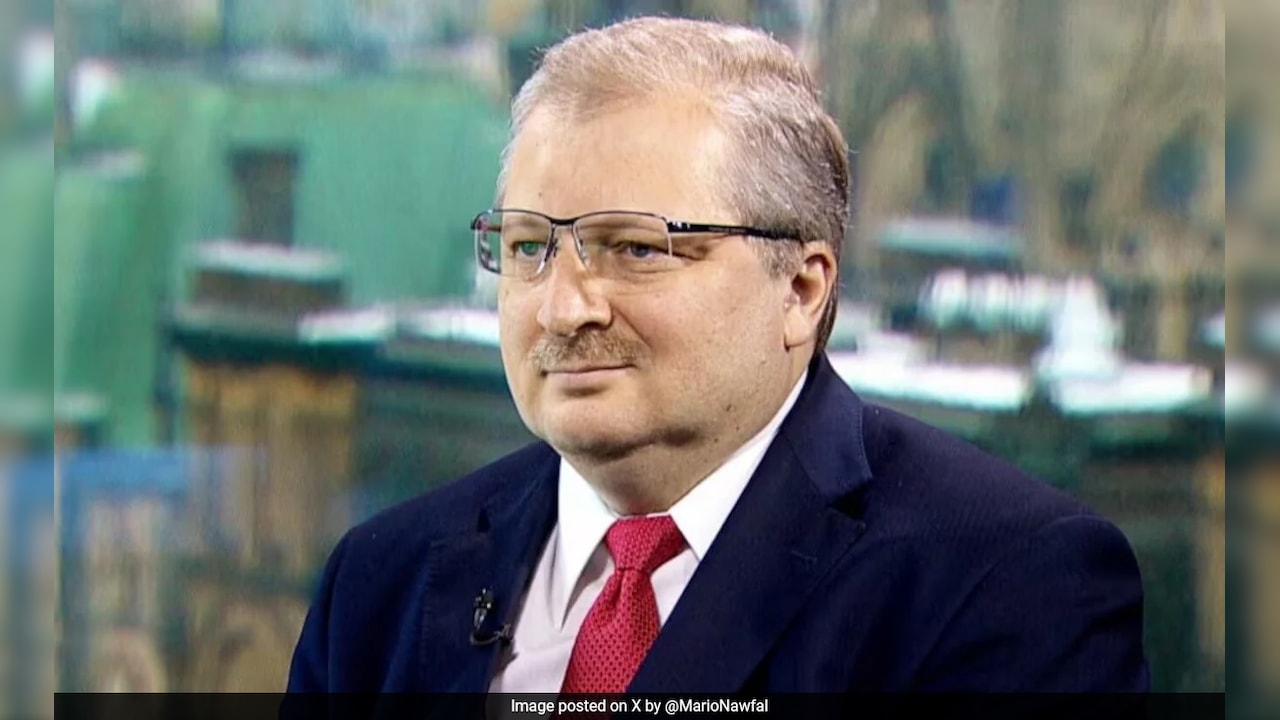
When Moscow announces that its top diplomat in Washington has died "suddenly" at 66, people immediately start looking for hidden meanings. That's just how international politics works right now. Alexander Darchiev wasn't a random bureaucrat pushing paper in a quiet corner of the Russian Foreign Ministry. He was a seasoned North America specialist who spent decades navigating the sharpest edges of US-Russia relations, and his passing leaves an immediate, awkward vacuum at one of the most sensitive diplomatic posts on earth.
Let's be honest about why this story grabbed headlines everywhere. Whenever a high-ranking Russian official dies unexpectedly, speculation goes into overdrive. Internet sleuths start connecting dots that aren't even there, while cable news panels debate palace intrigue. Yet if you actually look at Darchiev's career, the reality is both simpler and far more consequential for how Washington and Moscow talk to each other—or fail to talk to each other. Don't miss our earlier post on this related article.
Who Was Alexander Darchiev and Why Did His Post Matter?
To understand what just happened, you have to understand who Darchiev was before he ever stepped into the ambassador's residence on 16th Street. Born in 1960, he came up through the traditional Soviet and Russian diplomatic machinery, earning a degree from Moscow State University and focusing early on North American affairs. Unlike some of the louder, more theatrical figures in Russian foreign policy who love viral soundbites, Darchiev built a reputation as a career insider who knew the American political system inside and out.
He served multiple stints in Washington long before taking the top job. During the late 1990s and again in the 2000s, he worked as a counselor and minister-counselor at the Russian Embassy in the United States. Later, from 2014 to 2021, he served as Russia's ambassador to Canada—a posting that kept him right next door to Washington during the fallout over Crimea, sanctions, and diplomatic expulsions. After returning to Moscow to lead the Foreign Ministry's North America Department, he was tapped to succeed Anatoly Antonov as ambassador to the United States. To read more about the history here, TIME offers an excellent summary.
That background matters. You don't send a thirty-year North America veteran to Washington unless you want someone who understands the mechanics of Congress, the State Department, and the White House without needing a translator for American political culture.
The Reality of the "Suddenly" Label
Moscow's official statement used the word "suddenly" when announcing Darchiev's death at age 66, without immediately releasing a detailed medical cause. In Russian diplomatic announcements, that phrasing isn't unusual. Official obituaries from the Ministry of Foreign Affairs tend to be formal, brief, and notoriously tight-lipped about private health matters.
Still, the lack of detail fuels rumors. People forget that high-level diplomacy is physically brutal, especially in a posting where bilateral relations are frozen near rock bottom. An ambassador in a hostile or semi-hostile capital works relentless hours under constant scrutiny, managing embassy staff reductions, visa freezes, and endless crisis cables back to Moscow. At 66, sudden cardiac events or strokes happen every day across the globe, including among high-stress government officials. Until official medical details are confirmed by primary sources, treating unverified internet theories as fact is a rookie mistake.
What Happens Inside an Embassy When an Ambassador Dies?
Most people picture an embassy grinding to a complete halt when the ambassador passes away. It doesn't. Diplomatic missions are built specifically to survive sudden leadership gaps without losing communication lines.
The moment an ambassador dies or becomes incapacitated, the Deputy Chief of Mission automatically steps in as Chargé d'Affaires ad interim. That person takes over day-to-day operations, signs diplomatic notes, and serves as the primary point of contact for the host government—in this case, the US State Department.
Here is what changes immediately and what stays the same:
- Routine consular work continues. Visa processing, citizen services, and administrative management don't stop just because the top office is empty.
- High-level backchannels slow down. A Chargé d'Affaires has legal authority, sure, but they don't carry the personal mandate or direct Kremlin access that a confirmed ambassador holds.
- Protocol shifts fast. The host country's protocol office coordinates honors, condolence books, and the repatriation of the diplomat's remains, even when political relations between the two countries are frosty.
I've watched diplomatic transitions play out in tense capitals before, and the quiet truth is that a Chargé d'Affaires can keep the lights on, but they rarely take risks. Nobody wants to make a bold call when they're only holding the seat temporarily. That means any delicate negotiations on embassy staffing, diplomatic property disputes, or prisoner exchanges effectively hit pause until Moscow names a permanent replacement.
Why Replacing a Russian Ambassador in Washington Takes Forever
If you think the Kremlin can just pick someone on Monday and fly them to Dulles Airport by Friday, you haven't watched how US-Russia diplomatic clearances work over the past decade. Appointing a new ambassador isn't a one-sided decision.
First, Moscow has to select a candidate internally, vetting them through the Foreign Ministry and the Presidential Administration. Given how narrow the pool of senior diplomats with deep US experience has become, that list isn't long. Once Moscow settles on a name, it has to quietly request agrément—formal diplomatic consent—from Washington.
Under normal circumstances, agrément takes a few weeks or a couple of months. Between Washington and Moscow, nothing is normal. Both sides have spent years trading tit-for-tat visa delays, limiting embassy personnel caps, and arguing over diplomatic compounds in Maryland, New York, and San Francisco. Washington can sit on an agrément request if it wants leverage, or use the window to demand reciprocal approvals for American diplomats waiting to enter Russia.
The Shrinking Pool of North America Specialists
Here's something most casual observers miss about Russian diplomacy right now. Over the last several years, Moscow's foreign policy establishment has pivoted hard toward Asia, the Middle East, and the Global South. Young diplomats entering the Russian Foreign Ministry aren't flocking to the North America desk the way they did in the 1990s or early 2000s.
Darchiev belonged to a generation that grew up studying the United States as Moscow's primary counterpart. Replacing him means finding someone who isn't just loyal to the Kremlin's current worldview, but actually knows how Washington thinks. Those two traits don't always overlap neatly in today's Russian diplomatic corps.
Common Misconceptions About Diplomatic Deaths and Protocol
Whenever a story like this breaks, the same myths pop up across social media within minutes. Clearing them up helps you separate real geopolitical signal from background noise.
- Myth: Diplomatic immunity means the host country investigates everything. In reality, under the Vienna Convention on Diplomatic Relations, the embassy premises and the ambassador's residence are inviolable. Local US authorities cannot simply barge into a Russian diplomatic facility without explicit consent from Moscow. Any medical examination or handling of remains involves tight coordination between the Russian Embassy, the State Department's Office of Foreign Missions, and local authorities.
- Myth: The US government chooses who replaces him. Washington can reject a proposed nominee by withholding agrément, and it doesn't even have to explain why. What it can't do is pick Moscow's candidate.
- Myth: Bilateral talks completely vanish without an ambassador. Major strategic discussions—whether on arms control frameworks, regional conflicts, or sanctions—often bypass the embassy altogether, running directly between national security advisors, intelligence chiefs, or foreign ministers in third-party countries.
How to Follow This Story Without Falling for Clickbait
If you're tracking what Darchiev's death means for US-Russia relations over the coming weeks, ignore anonymous social media threads promising "secret leaks." Watch the actual diplomatic indicators instead.
Pay attention to how quickly the US State Department issues a formal condolence statement and who signs it. Watch who steps up as Chargé d'Affaires at the Russian Embassy in Washington, because that diplomat will manage every bilateral friction point for the next several months. Most importantly, track how long it takes Moscow to float a successor—if the Kremlin moves fast, it signals they want a heavyweight in Washington to manage active negotiations; if they leave the post empty for months, it tells you Moscow sees little value in upgrading diplomatic channels right now.
You can check official updates directly through the U.S. Department of State press briefings and the Ministry of Foreign Affairs of the Russian Federation to verify formal diplomatic announcements as they happen, rather than relying on second-hand rumors.