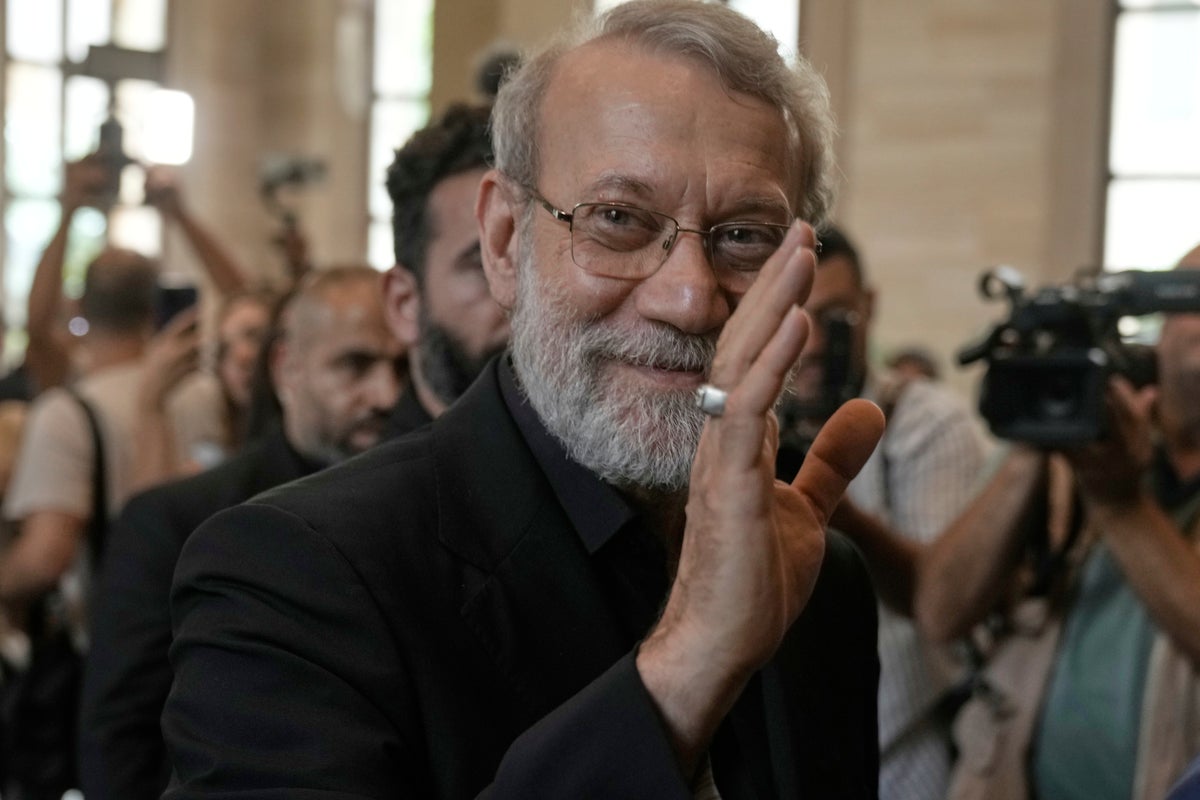
The smoke hadn't even cleared from the March 17 airstrike in Tehran before the panic started setting in. When an Israeli missile leveled a residence in the Pardis area, it didn't just kill a man; it effectively decapitated the only operational "brain" left in the Iranian regime. Ali Larijani wasn't just another bureaucrat with a fancy title. At 68, he was the guy holding the steering wheel while the rest of the leadership was either dead, hiding in bunkers, or too inexperienced to find the ignition.
You've probably heard the name Larijani for decades. He was the perpetual insider—former Parliament Speaker, chief nuclear negotiator, and recently, the Secretary of the Supreme National Security Council (SNSC). But since the assassination of Supreme Leader Ali Khamenei on February 28, Larijani had become something much more significant. He was the de facto leader of Iran. While the new Supreme Leader, Mojtaba Khamenei, remained a ghost in the system, Larijani was the one actually making the calls on the Strait of Hormuz and managing the brutal internal crackdowns.
His death leaves a hole that can't be filled by a simple appointment. In a system built on personal loyalties and "who you know" in the corridors of Qom and Tehran, Larijani was the ultimate bridge. Now, that bridge is gone.
The Man Who Was Too Important to Kill (Until He Wasn't)
Larijani represented a very specific, and now extinct, breed of Iranian politician. He was a "pragmatic hardliner." That sounds like an oxymoron, but it’s how the Islamic Republic survived for 47 years. He could quote German philosopher Immanuel Kant—he wrote three books on him—and then turn around and oversee the Revolutionary Guard’s most aggressive regional strategies.
When the war with the U.S. and Israel kicked off in late February, the regime’s traditional hierarchy shattered. With the elder Khamenei gone, the transition to his son Mojtaba was messy. Mojtaba lacks his father’s "revolutionary street cred" and has barely been seen in public. Larijani stepped into that vacuum. He was the one lobbying the Assembly of Experts, the one talking to the Russians, and the one telling the Gulf states to "think about their future."
By removing him, Israel didn't just take out a general; they took out the only person capable of negotiating an "off-ramp." If you’re looking for someone to sign a peace treaty or even a temporary ceasefire, you need a guy who can actually deliver the IRGC and the clerics. That was Larijani. Without him, we're looking at a rudderless ship with a lot of heavy weaponry.
Why the Succession Crisis Just Hit Red Alert
The Islamic Republic likes to pretend it’s an institutional masterpiece. Foreign Minister Abbas Araghchi recently went on Al Jazeera to claim the system doesn't rely on any one person. Honestly? That’s total nonsense.
The "Larijani Clan" was a pillar of the state. One brother, Sadeq, headed the judiciary. Another, Mohammad Javad, was a top diplomat. They were the Iranian version of the Kennedys, but with more turbans and better security details. Ali Larijani’s death doesn't just leave a vacancy at the SNSC; it cripples a faction that acted as a counterweight to the ultra-radicals.
The Mojtaba Problem
Now, look at Mojtaba Khamenei. He was officially announced as the third Supreme Leader on March 9, but his legitimacy is paper-thin.
- The Clerical Issue: He doesn't have the religious rank. Critics say he’s not even a Mojtahed (a jurist capable of independent reasoning).
- The Hereditary Stigma: The 1979 Revolution was supposed to end hereditary rule (the Shah). Turning the Supreme Leader into a "dynasty" is a hard sell for the Iranian public.
- The Isolation: Reports suggest Mojtaba might have been wounded in the initial strikes. He’s ruling from the shadows, while Larijani was the public face.
Without Larijani to act as the "fixer" between the new Leader and the various warring factions of the IRGC, the risk of a military coup or a total internal collapse has never been higher. You can't run a war when your generals are arguing over who gets to sit in the big chair.
The Hormuz Chokehold and the Global Fallout
If you don't care about Iranian internal politics, you should care about your gas prices. Larijani was the mastermind behind the "Hormuz Posture." He was the one deciding which tankers passed through the strait and which ones got harassed.
Just a week ago, he was trading barbs with President Trump on X (formerly Twitter), essentially telling the U.S. that Iran wasn't afraid of "empty threats." He was the operational lead on the strategy to use the Strait of Hormuz as a shield. With him gone, that strategy is now in the hands of whoever is the most aggressive person in the room. In Tehran right now, that's usually an IRGC commander with a grudge.
India is already feeling the squeeze. They had a direct line to Larijani to ensure their LPG supplies kept flowing. That line is dead. When you lose the "interlocutor," you lose the ability to prevent small accidents from turning into world wars.
What Happens Tomorrow?
Don't expect the regime to fold overnight. They’re built to absorb losses, but there’s a breaking point. We’re seeing it. The January 2026 protests already showed that the public is fed up—Larijani was a key architect of the crackdown that killed 30,000 people to keep the regime alive. Now, the guy who kept the lid on the pressure cooker is gone.
The "New Iran" is currently a collection of bunker-dwelling clerics and paranoid generals. Without a pragmatic center like Larijani, the response to his death is likely to be a reflexive, violent lashing out. Expect:
- Hardened Retaliation: Army Chief Amir Hatami has already promised a "decisive and regrettable" response.
- Increased Paranoia: The hunt for "infiltrators" within Tehran will lead to more internal purges.
- Diplomatic Silence: There is no one left with the authority to talk to the West or even regional mediators in Oman.
If you’re tracking this, keep your eyes on the Assembly of Experts. If they start moving toward a more "moderate" (relatively speaking) figure to support Mojtaba, the regime might stabilize. If the IRGC simply takes over the SNSC functions directly, the "Republic" part of the Islamic Republic is officially over.
Basically, the "adult in the room" just left, and the room is on fire.
Next Step: You should monitor the official announcements regarding the new Secretary of the Supreme National Security Council. If the seat remains vacant or is filled by a career military officer from the IRGC Quds Force rather than a political heavyweight, it’s a clear sign that the era of Iranian diplomacy is dead and the military is now fully in charge.