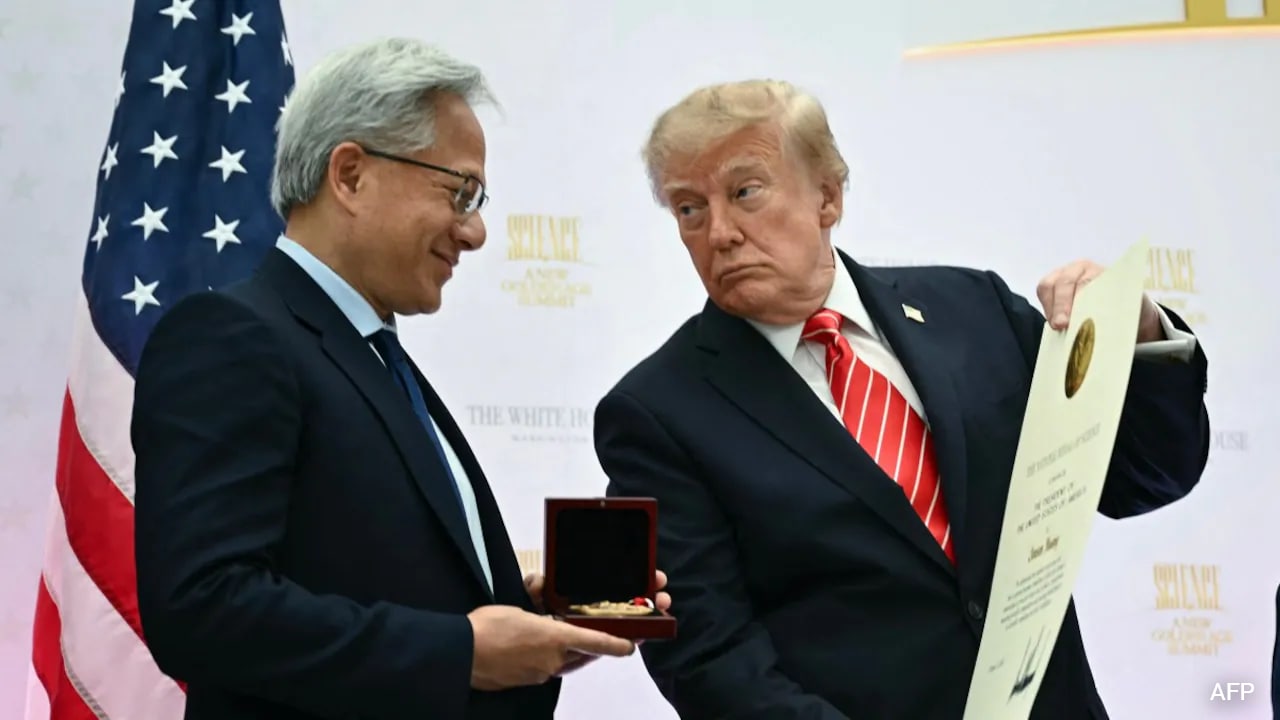
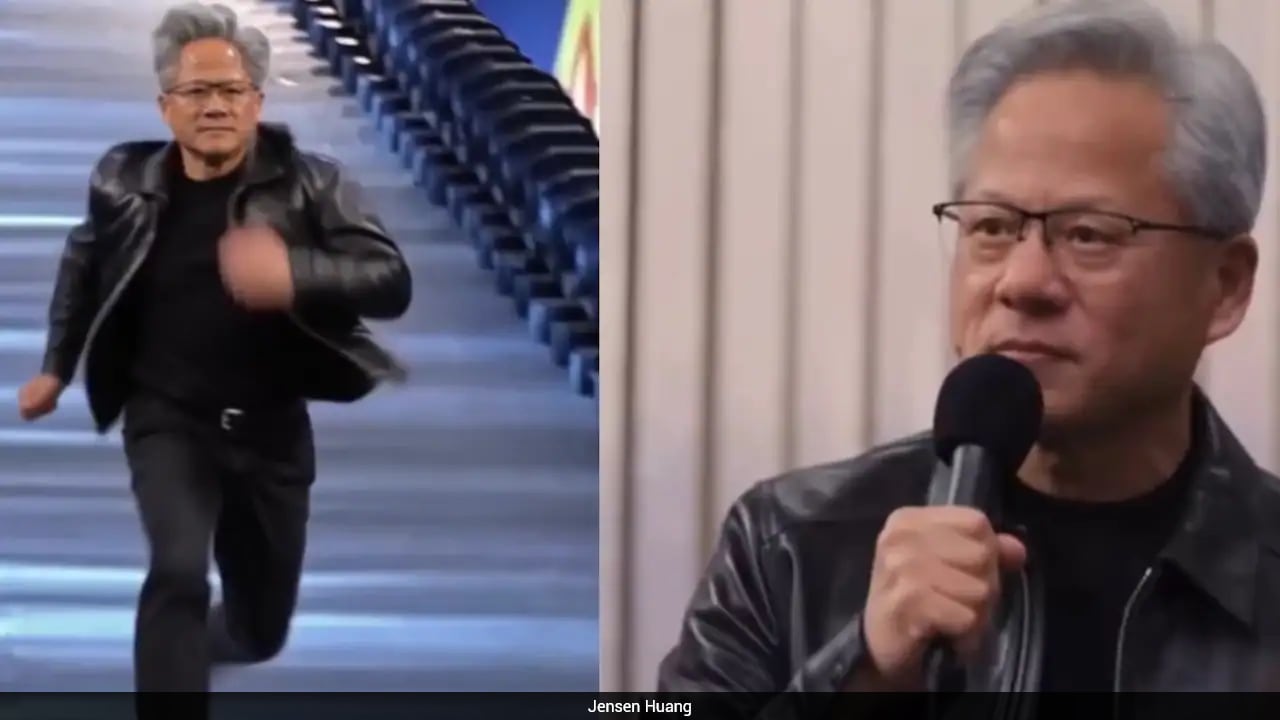
Alice Huang—often confused in viral social media threads with Jensen Huang’s wife, Lori Mills, or his daughter, Madison Huang—does not exist as an active corporate executive at Nvidia, nor has Jensen Huang ever left his post as CEO to "come back." The viral rumor mill conflates two distinct realities. First, Jensen Huang has served continuously as Nvidia’s chief executive since co-founding the company in 1993. Second, the name "Alice Huang" belongs either to Dr. Alice S. Huang, a renowned microbiologist and former president of the American Association for the Advancement of Science who has no corporate ties to Nvidia, or it is a persistent misnomer generated by algorithmic content farms confusing Jensen’s immediate family members—specifically his wife Lori and daughter Madison—during Nvidia’s meteoric rise to a multi-trillion-dollar valuation.
Search engines reward confusion. When a company crosses the threshold from hardware vendor to geopolitical infrastructure, every peripheral detail about its leadership becomes fodder for automated aggregation sites and click-driven financial blogs. Over the past two years, headlines claiming "Jensen Huang Is Back At Nvidia, But Where Is Alice Huang?" began circulating across low-tier syndication networks. They rely on a classic editorial sleight of hand. By implying a sudden executive return and a mysterious disappearance, these pieces manufacture soap-opera drama out of mundane corporate stability.
The reality inside Santa Clara is far more disciplined, and considerably less theatrical, than the rumor mill suggests.
The Anatomy of a Corporate Phantom
To understand why "Alice Huang" keeps surfacing in search queries alongside Nvidia’s chief executive, you have to look at how modern financial misinformation spreads. It rarely starts with a malicious lie. Usually, it begins with a transcription error, a hallucinated autocomplete suggestion, or a sloppy conflation of prominent Asian-American figures in science and technology.
In the upper echelons of American science, there is indeed a prominent Alice Huang. Dr. Alice S. Huang is a senior faculty associate in biology at the California Institute of Technology, a former dean of science at New York University, and a past president of the AAAS. Her career in virology and academic leadership spans decades. She has zero operational, familial, or board-level connection to Nvidia. Yet, when automated scraping tools index prominent figures sharing a surname with the world’s most watched semiconductor CEO, cross-contamination happens instantly.
Simultaneously, another branch of the rumor stems from people misremembering the names of the women actually inside Jensen Huang’s orbit.
Jensen’s wife is Lori Mills Huang. They met as teenage engineering lab partners at Oregon State University in the late 1970s. She worked as an electrical engineer before stepping back from corporate life to manage the Jen-Hsun & Lori Huang Foundation, the philanthropic vehicle that now channels hundreds of millions of dollars into higher education, public health, and STEM initiatives.
Their daughter is Madison Huang. Unlike the fictional "Alice," Madison is very much inside Nvidia. After studying culinary arts at Le Cordon Bleu and working in the hospitality sector, she joined Nvidia as a marketing intern in 2020, earned an MBA from London Business School, and climbed the ranks to become a senior director of product marketing for Nvidia Omniverse, the company’s industrial digital-twin and simulation platform. Her brother, Spencer Huang, followed a similarly unconventional route—running a cocktail bar in Taipei for several years before returning to the United States, completing an MBA at NYU, and joining Nvidia as a product line manager focused on robotics simulation.
When casual observers hear whispers about a female family member working behind the scenes at Nvidia, or read fragmented accounts of Lori’s foundation work, the telephone game of the internet occasionally spits out "Alice." Content farms then seize on the search volume, spinning entire articles around a fabricated mystery.
Why the Myth That Jensen Left Persists
The first half of the viral headline—"Jensen Huang Is Back At Nvidia"—is just as revealing as the second. Jensen never left. Unlike Steve Jobs, who was ousted from Apple in 1985 before returning in 1997, or Sam Altman, whose five-day exile from OpenAI in late 2023 became corporate folklore, Huang holds the record for the longest-serving founder-CEO in the technology sector. He has occupied the corner office—or rather, rotated through Nvidia’s famously desk-less conference rooms—without interruption since April 1993.
So why do headlines frame him as "being back"?
It comes down to public visibility and travel cadence. For nearly three decades, Huang was a known quantity primarily to PC gamers, graphics engineers, and Wall Street semiconductor analysts. Nvidia was a cyclical graphics chipmaker. That changed overnight when generative AI turned Nvidia’s H100 and Blackwell architectures into the most sought-after commodities on earth.
Suddenly, Huang was no longer just delivering keynotes at SIGGRAPH or Computex. He was meeting with heads of state in Tokyo, Paris, New Delhi, and Washington. For stretches of 2024 and 2025, Huang spent more time on a Gulfstream jet negotiating sovereign AI infrastructure deals than he did sitting in Nvidia’s Voyager headquarters in Santa Clara. When he returned from marathon international tours to host all-hands meetings or unveil new architectures on home turf, local business press and tech blogs routinely ran headlines declaring that Jensen was "back at Nvidia."
To a reader skimming feeds without context, "back at Nvidia" sounds like a reinstatement. Pair that phrase with a misspelled family name, and you have the exact recipe for a viral curiosity trap.
Inside the Real Power Structure at Santa Clara
If you strip away the fabricated mystery surrounding Alice Huang, you find an organizational structure that defies almost every rule taught in modern business schools. Investors obsessed with succession planning or hidden family dynasties often misunderstand how Nvidia actually operates.
Huang does not run a traditional hierarchical company. He has roughly sixty direct reports. Most Fortune 500 CEOs maintain an executive team of eight to twelve senior vice presidents, buffering themselves with layers of middle management, chief operating officers, and chiefs of staff. Huang deliberately dismantled that insulation years ago.
He does not hold regular one-on-one meetings with his direct reports unless they specifically request one. Instead, information flows laterally across the entire leadership team simultaneously. If a VP of hardware engineering encounters a bottleneck with CUDA software integration, that issue is debated openly in front of finance, marketing, and supply-chain leads. Nobody gets to hoard bad news. Nobody gets to spin a private narrative to the boss behind closed doors.
In that environment, there is no room for shadow executives or ceremonial family titles.
Madison Huang’s presence in the Omniverse division and Spencer Huang’s work in robotics simulation have drawn inevitable scrutiny from corporate governance watchdogs. Nepotism is a valid concern at any publicly traded company, especially one worth trillions. Yet industry insiders and former Nvidia employees consistently note that the flat reporting structure makes hiding behind a last name nearly impossible. Every product line manager and marketing director is exposed to the same brutal, first-principles interrogation during product reviews. If a demo fails or a go-to-market strategy relies on fluff, the feedback is public and immediate.
The Women Who Actually Shape Nvidia’s Trajectory
While internet sleuths chase ghosts named Alice, the actual female executives driving Nvidia’s day-to-day operations rarely make tabloid headlines, largely because their work is deeply technical and operational rather than theatrical.
- Colette Kress (Chief Financial Officer): Joined from Cisco in 2013 and has overseen the most dramatic capital expansion in semiconductor history, managing supply-chain prepayments and gross margin expansion that routinely beat Wall Street consensus.
- Debora Shoquist (Executive Vice President of Operations): The quiet architect behind Nvidia’s manufacturing resilience. When global chip shortages crippled competitors, Shoquist’s decades of semiconductor foundry management—working tightly with TSMC and packaging partners like ASE—kept Nvidia’s allocation intact.
- Jay Puri (Executive Vice President of Worldwide Field Operations): Though male, Puri works alongside a regional leadership bench that includes senior female executives managing enterprise AI adoption across Europe and Asia-Pacific, translating silicon specs into sovereign cloud contracts.
None of these executives seek personal publicity. Nvidia’s communications strategy deliberately funnels almost all external charisma through one conduit: Jensen Huang in his signature black leather jacket. By centralizing the public persona in a single figure, Nvidia protects its operational bench from media distraction—while inadvertently creating a vacuum that online rumor mills fill with invented characters.
The Philanthropic Engine Behind the Scenes
If there is a kernel of truth behind people wondering "where" Jensen Huang’s female counterpart is, it points directly to Lori Mills Huang and the quiet transformation of their family foundation.
For decades, the Huangs kept a remarkably low profile in Silicon Valley’s social circles. Unlike peers who bought mega-mansions in Atherton, acquired media outlets, or launched high-profile vanity ventures, Jensen and Lori lived relatively modestly for billionaires, gradually scaling their giving without press releases.
That changed as Nvidia’s stock appreciated by more than 2,000 percent over a five-year span. Today, the Jen-Hsun & Lori Huang Foundation sits on billions of dollars in appreciated Nvidia shares, making it one of the wealthiest private foundations in the United States.
Lori Huang directs much of this capital toward concrete infrastructure rather than abstract policy think tanks. Their major commitments tell a clear story about where their priorities lie:
- Oregon State University: A $50 million gift to establish the Jen-Hsun and Lori Huang Collaborative Innovation Complex, housing one of the nation’s most powerful academic supercomputers dedicated to climate science, clean energy, and materials research.
- Stanford University: Significant funding for engineering facilities and graduate fellowships, reinforcing the talent pipeline that built Silicon Valley.
- California College of the Arts and Local Health Systems: Substantial grants supporting community hospitals, Bay Area food banks, and arts education—areas Lori has championed quietly for twenty years.
She does not give interviews. She does not sit on Nvidia’s board of directors. She has no operational vote in whether Nvidia prioritizes Blackwell production over next-generation Rubin architectures. Her absence from the corporate spotlight is entirely intentional, preserving a strict firewall between Nvidia’s commercial execution and the family’s philanthropic deployment.
How Search Algorithms Manufacture Tech Mythology
The persistence of the "Where Is Alice Huang?" query offers a case study in how algorithmic SEO degrades public understanding of corporate governance.
When retail investors flood into a momentum stock, millions of new market participants suddenly try to learn the backstory of the company overnight. They type half-remembered names into search bars. Search engines log those queries as rising trends. Automated content networks—many now using unverified text generation pipelines—detect the rising query volume and publish articles designed solely to capture the click.
Because these sites optimize for dwell time rather than accuracy, they lean into mystery. A factual one-sentence answer ("Alice Huang does not work at Nvidia; you are thinking of Lori or Madison Huang") generates zero ad impressions. A 1,200-word speculative piece asking "Where is she now?" keeps readers scrolling past display ads while never actually admitting the premise is broken.
Serious market analysts treat these anomalies as noise, yet they carry real-world consequences. Misinformation about executive departures, succession crises, or family disputes can trigger brief algorithmic trading blips or confuse retail shareholders evaluating governance risk. In late 2024, false rumors regarding Nvidia’s supply constraints and executive reshuffles repeatedly caused intraday volatility before official filings cleared the air.
The Real Succession Question Nobody Wants to Answer
Focusing on a non-existent Alice Huang distracts from the genuinely urgent governance question hanging over Nvidia: what happens when Jensen Huang actually steps down?
At 63 years old in 2026, Huang shows no signs of slowing down. He still works seven days a week, reviews chip designs personally, and commands total loyalty from his engineering ranks. Yet Nvidia’s institutional structure is uniquely tailored to his specific cognitive endurance.
A flat organization with sixty direct reports works only when the person at the center possesses encyclopedic technical knowledge of every layer of the stack—from transistor physics at TSMC to networking switches at Mellanox to enterprise software licensing. Very few executives on earth possess that bandwidth.
Neither Madison nor Spencer Huang is positioned to inherit the CEO chair; Nvidia is a publicly traded juggernaut governed by an independent board, not a family-controlled conglomerate like Samsung or a dual-class founder fortress like Meta. When Huang eventually retires, Nvidia will almost certainly have to dismantle its signature flat structure, installing traditional division presidents or a chief operating officer to make the company manageable for a mortal successor.
Investors looking for clues about Nvidia’s future should stop hunting for phantom relatives in clickbait headlines. Look instead at SEC Form 4 filings, board committee appointments, and the engineering lieutenants leading the DGX Cloud and NVLink hardware divisions. That is where the real power resides, and none of it belongs to Alice Huang.