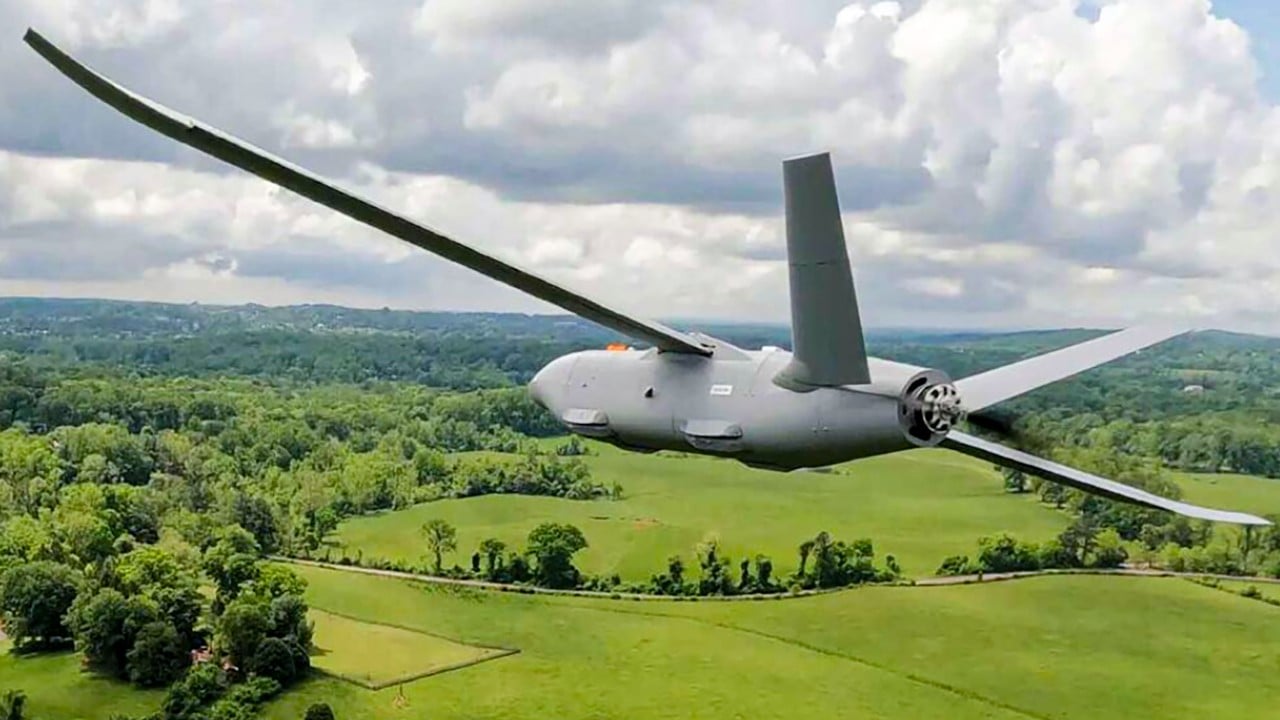
The headlines are intoxicating. US defense contractors setting up shop in Taiwan to manufacture battle-tested drones are supposedly forging an unbreakable shield, cementing supply chain resilience across the Pacific, and arming the island democracy with indigenous deterrence. It sounds clean. It sounds strategic. It sounds like the kind of neat, comforting narrative that defense analysts draft in air-conditioned boardrooms thousands of miles away from the Taiwan Strait.
It is also dangerously wrong. You might also find this connected coverage insightful: Stop Blaming the Contractor for the Breach Everyone Saw Coming.
I have spent the last decade watching legacy defense initiatives collapse under the weight of their own geopolitical vanity. Every time a Western prime contractor announces a localized production line offshore, the defense press treats it like the second coming of the Arsenal of Democracy. They talk about shared know-how, localized component sourcing, and agile manufacturing. They completely ignore the raw, unfiltered physics of modern hardware logistics under the shadow of the world's most heavily militarized coastline.
Shifting drone assembly to Taiwan does not build supply chain resilience. It builds a localized single point of failure that sits inside an adversary's primary artillery fan. As extensively documented in detailed reports by ZDNet, the effects are notable.
Let us dismantle the lazy consensus piece by piece.
The Geographic Fallacy of Localized Production
The central argument of the pro-transfer camp goes something like this: if you build unmanned systems on the island, you eliminate the perilous trans-Pacific shipping lanes required to deliver finished military hardware during a crisis. You shorten the lines. You put the weapons where the operators breathe.
This logic mistakes proximity for security.
Taiwan is roughly one hundred miles off the coast of mainland China. Its entire landmass falls comfortably within the kinetic envelope of short-range ballistic missiles, long-range multiple launch rocket systems, and swarming land-attack cruise missiles. When you anchor high-value advanced manufacturing infrastructure—clean rooms, precision optic calibration bays, composite curing autoclaves—within striking distance of a dominant adversary, you are not creating a decentralized network. You are painting a bullseye on a stationary target.
A drone factory is not a guerrilla bunker. It requires heavy power grids, uninterrupted logistics flows for specialized rare-earth magnets, microcontrollers, and high-density lithium battery cells, and specialized engineering talent pools. The moment hostilities commence, that facility ceases to be a manufacturing asset. It becomes a smoking crater within the first forty-eight hours of a campaign.
By contrast, true supply chain resilience looks like distributed, modular redundancy spread across friendly third-party nations in Southeast Asia or deep within allied continental interiors, paired with pre-positioned stockpiles of finished modular units that require zero assembly under fire. Asking a besieged island to build its own complex attritable assets while under blockade is like asking a firefighter to forge the axe while the roof is already caving in.
The Myth of the Plug and Play Battlefield
Another favorite talking point of the defense establishment is that combat-proven hardware from the plains of Eastern Europe can simply be dropped into the geopolitical theater of East Asia with minor firmware tweaks.
Battle-tested is the most oversold buzzword in modern procurement.
The electronic warfare environment over Ukraine is brutal, saturated, and dominated by high-power static jamming and terrestrial fiber-linked guidance rigs. The electromagnetic spectrum over the Taiwan Strait operates under an entirely different set of physical rules. It is a maritime, littoral, and heavily naval domain characterized by vast expanses of open water, intense surface clutter, multi-spectral naval radar networks, and dense commercial shipping interference.
A drone optimized to evade localized radio-frequency jamming in a rural agricultural sector of Zaporizhzhia will experience catastrophic control degradation when deployed across a choppy, salt-spray-laden strait surrounded by the world's densest maritime commercial traffic. Furthermore, the supply chain for the components inside those drones—specifically secure communication chips, unhackable GPS-denied navigation suites, and thermal imaging cores—are tightly restricted by export controls and concentrated in fragile fabrication nodes.
Setting up final assembly lines in Taipei does not magically manufacture the silicon or the specialized sensors. It merely moves the final screw-turning step to a higher-risk jurisdiction while leaving the critical upstream choke points completely exposed. If a single cargo ship carrying flight controllers from a subcontractor in a neutral zone is interdicted or delayed, the entire local assembly line grinds to a halt. That is not resilience. That is a house of cards with a local paint job.
The Economic Reality of Low-Volume Customization
Let us address the economic delusion. Western defense contractors operate on high-margin, low-volume, bespoke engineering models. They love long development cycles, gold-plated requirements, and cost-plus contracting structures.
Unmanned aerial vehicles designed for modern high-intensity attrition warfare require the exact opposite: hyper-scalable, low-cost, commercial-off-the-shelf integration built on rapid iteration cycles. When you force a high-cost defense prime to establish a boutique manufacturing subsidiary in a high-rent, labor-constrained market like Taiwan, you inflate unit costs while strangling production velocity.
Imagine a scenario where a local facility manages to turn out five hundred sophisticated tactical airframes a month. Against a peer adversary capable of fielding tens of thousands of autonomous systems backed by industrial-scale consumer electronics manufacturing, five hundred units is a rounding error. It is an artisanal boutique operation trying to fight an industrial meat grinder.
The economic incentive for these firms is clear: capture subsidies, lock in long-term government service contracts, and hedge geopolitical bets. But the strategic outcome for the end user is a trickle of expensive hardware that cannot absorb the attrition rates of a peer conflict.
What Actually Works
If we want to stop playing theater and start building actual deterrence, we need to abandon the conceit of localized island manufacturing.
True deterrence in the unmanned domain rests on three brutal truths:
- Pre-Positioned Depots, Not Local Factories: Do not build factories on the front lines; build hardened, subterranean, decentralized bunkers filled with thousands of pre-assembled, modular, firmware-agnostic airframes manufactured safely thousands of miles away.
- Commercial Abstraction: Stop relying on bespoke defense contractors who treat drone manufacturing like aerospace engineering. Shift to commercial drone architectures that can be rapidly modified, reprogrammed, and scaled using consumer-grade components sourced from a diversified global vendor pool.
- Software-Defined Adaptability: Hardware is cheap; software is decisive. The real battle is fought in the frequency-hopping algorithms and autonomous target recognition models that can be pushed via encrypted updates overnight, not in the physical location where the plastic hull was molded.
The push to manufacture Western drones in Taiwan makes for great geopolitical theater and satisfying press releases. It reassures allies through symbolism rather than substance. But war does not care about symbolism. It cares about logistics, scale, and the cold, unyielding math of production under fire.
Stop pretending a factory within missile range is a supply chain solution. Build the stockpile, decentralize the network, and accept that when the shooting starts, you fight with what is already in the bunker, not what is rolling off a local assembly line.


