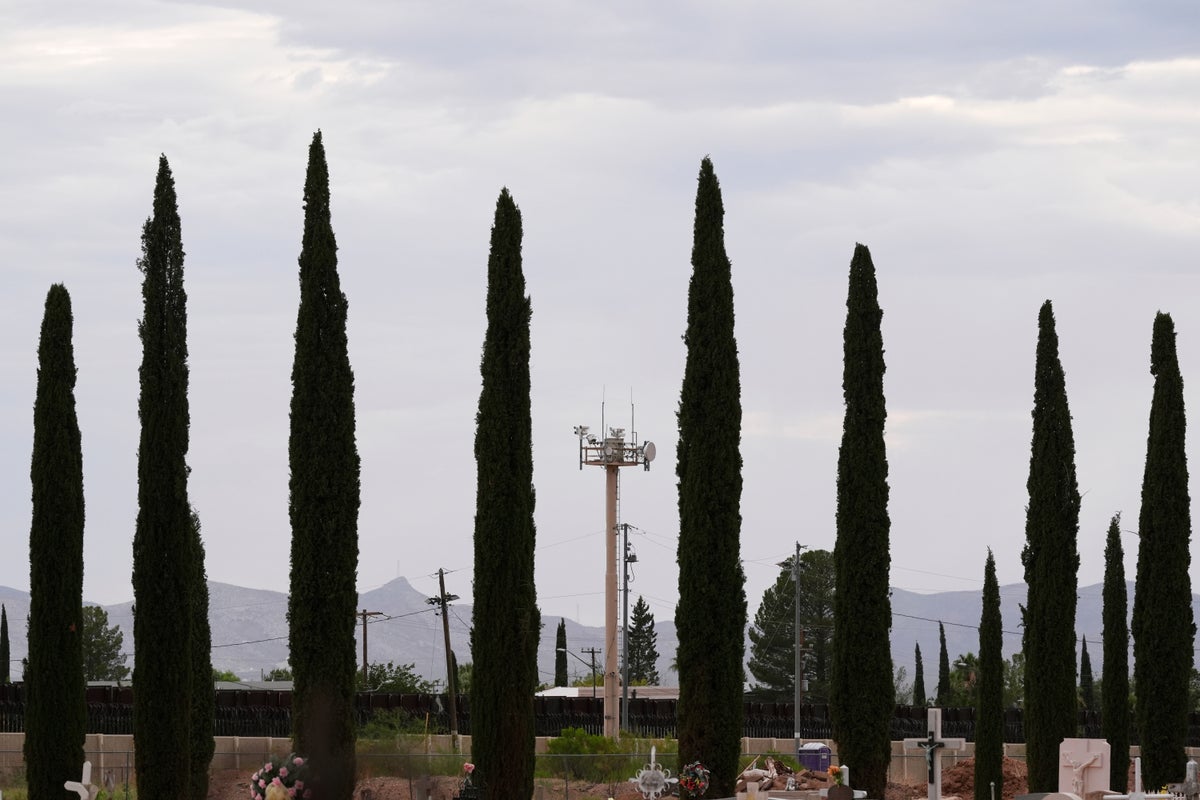
The physical fortification of a nation's perimeter is fundamentally an optimization problem balancing infrastructure costs, personnel deployment, and interdiction efficiency. Under the modern framework executed by U.S. Customs and Border Protection (CBP), this challenge has shifted from basic static containment to automated algorithmic surveillance. Backed by a $46.5 billion congressional budget allocation via the "Big, Beautiful Bill," the current strategy combines 30-to-32-foot steel bollard fencing with a network of autonomous sensor platforms.
To analyze the structural validity of this massive expenditure, one must look past political rhetoric and dissect the operational mechanics, cost structures, and technological dependencies governing the 1,954-mile United States-Mexico border.
The Three Pillars of Modern Border Interdiction
The current execution models border security through three integrated vectors designed to maximize the utility of a fixed labor pool.
- The Physical Delay Vector: The installation of 30-to-32-foot steel bollard barriers at a construction rate of roughly 6 miles per week. As of mid-June 2026, an additional 74 miles have been erected. The primary operational objective of a physical barrier is not total prevention, but rather increasing the time required for an unauthorized crossing ($T_{crossing}$), thereby widening the window for tactical interception.
- The Autonomous Detection Vector: A network of fixed and mobile surveillance towers equipped with optical, infrared, and radar capabilities maintaining an effective range of roughly 8 miles. These systems utilize artificial intelligence to parse data streams locally, filtering out environmental noise (such as wildlife movement or vegetation shift) to flag human anomalies.
- The Maritime and Topographical Modification Vector: Deploying specialized infrastructure to non-walled sectors. This includes 12-to-15-foot cylinder-shaped tactical buoys in deep water channels along the Rio Grande and a heavy reliance on ground-based seismic sensors in rugged terrains where wall construction is physically or legally unfeasible.
The Operational Cost Function and Labor Economics
The fundamental justification for the high-density tech deployment is the optimization of Border Patrol manpower. In standard static defense models, human capital is wasted on passive monitoring—agents sitting in vehicles or command centers watching video feeds.
By offloading the detection and categorization phases to autonomous platforms, CBP attempts to minimize the detection-to-response latency. The operational efficiency can be viewed through a basic cost function where the total cost of interdiction ($C_{total}$) balances capital expenditure ($CapEx$) against long-term operational expenditure ($OpEx$):
$$C_{total} = CapEx_{infrastructure} + OpEx_{labor} + OpEx_{maintenance}$$
The technological framework aims to dramatically lower $OpEx_{labor}$ per apprehension by ensuring that field agents are dispatched exclusively to verified alerts.
However, this structural shift introduces an acute bottleneck: technological vulnerability. The operational lifetime of high-altitude optical sensors, radar systems, and autonomous nodes in extreme desert environments demands significant upkeep. Estimates suggest the annual operations and maintenance budget for this infrastructure will scale to between $200 million and $500 million. Consequently, short-term savings in manual surveillance labor are partially offset by the long-term premium of technical maintenance contracts.
Topographical Segmentation and Technical Limits
The 1,954-mile border cannot be treated as a homogenous line. The current engineering deployment divides the geography into strict categories based on legal, environmental, and physical constraints:
| Sector Type | Primary Infrastructure | Length / Constraints |
|---|---|---|
| High-Density Urban/Flatland | 32-foot steel bollard walls, paved patrol roads, high-intensity lighting. | Standard deployment zone where speed of construction peaks at 6 miles per week. |
| Rugged Terrain | Zero physical walls; high-density autonomous towers, seismic ground sensors. | Roughly 535 miles excluded from wall construction due to severe natural topography. |
| Environmentally Sensitive | Car-stopping barriers, low-profile patrol roads, non-optical detection. | Zones like Big Bend where bipartisan and ecological resistance halted the 30-foot bollard wall. |
| Waterway (Rio Grande) | 12-to-15-foot cylinder-shaped buoy barriers, remote video surveillance. | Variable aquatic environments subject to current fluctuations and legal disputes. |
The decision to completely substitute physical walls with technology across 535 miles of rugged terrain highlights a critical strategic pivot. In these zones, the terrain itself acts as the primary delay vector, allowing CBP to rely entirely on the autonomous detection vector.
Historic Precedents and Systemic Risks
The primary structural risk of the current capital allocation is a failure mode observed in prior federal initiatives. In 2011, the Department of Homeland Security terminated the Secure Border Initiative Network (SBInet)—a plan for a comprehensive "virtual wall" of sensors and towers—after expenditure overruns, systemic software integration glitches, and missed timelines.
The modern iteration faces similar architectural pressures. Relying heavily on edge-computing AI within autonomous towers introduces distinct points of failure:
- Algorithmic Bias and False Positives: Automated categorization models trained on limited datasets run the risk of misidentifying benign movement or failing under volatile weather conditions, causing resource misallocation.
- Data Transmission Bottlenecks: Relaying high-definition infrared and radar telemetry from remote, off-grid locations requires sustained satellite or microwave link uptime.
- Peripheral Saturation: Hard physical barriers do not eliminate crossing attempts; they shift them toward the friction points where the wall ends or where tech dependencies replace physical steel. This creates hyper-localized operational pressure on border communities and ecosystems.
Furthermore, legal challenges from private landowners along the Rio Grande and indigenous populations—such as the Kumiai people near Cuchumá Hill, where construction operations damaged historical monoliths—introduce unpredictable delays. These legal and cultural frictions interrupt the continuity of the physical barrier, creating fragmented security pockets that require disproportionate sensor coverage to monitor.
The strategic trajectory of this $46.5 billion project depends on whether CBP can maintain the operational uptime of its digital architecture without letting maintenance costs swallow the projected labor efficiencies. If the technology fails to seamlessly integrate with field deployment, the infrastructure risks becoming a highly fractured, capital-intensive monument to legacy defense theory rather than an agile intelligence network.