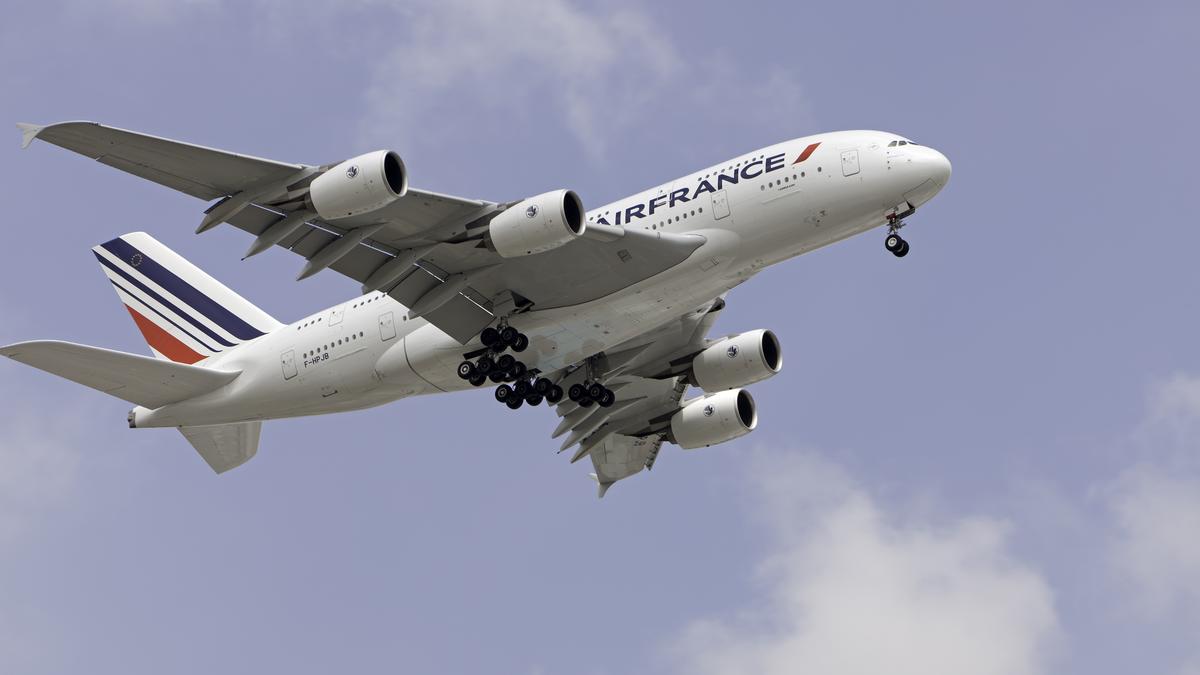
The mid-air diversion of Air France Flight 378 on May 20, 2026, exposes a critical vulnerability at the intersection of commercial aviation logistics and global biosecurity protocols. By forcing a Boeing 777 en route from Paris to Detroit to land in Montreal, United States Customs and Border Protection (CBP) executed a high-cost operational intervention to correct a downstream failure in pre-departure screening. The incident demonstrates that the structural defense layers designed to isolate public health crises are only as strong as the digital filters embedded in airline check-in architectures.
Evaluating this failure requires shifting the focus away from the individual passenger and toward the systematic breakdowns in documentation control, sovereign jurisdictions, and the economic toll of operational friction.
The Layered Defense Model of Biosecurity Enforcement
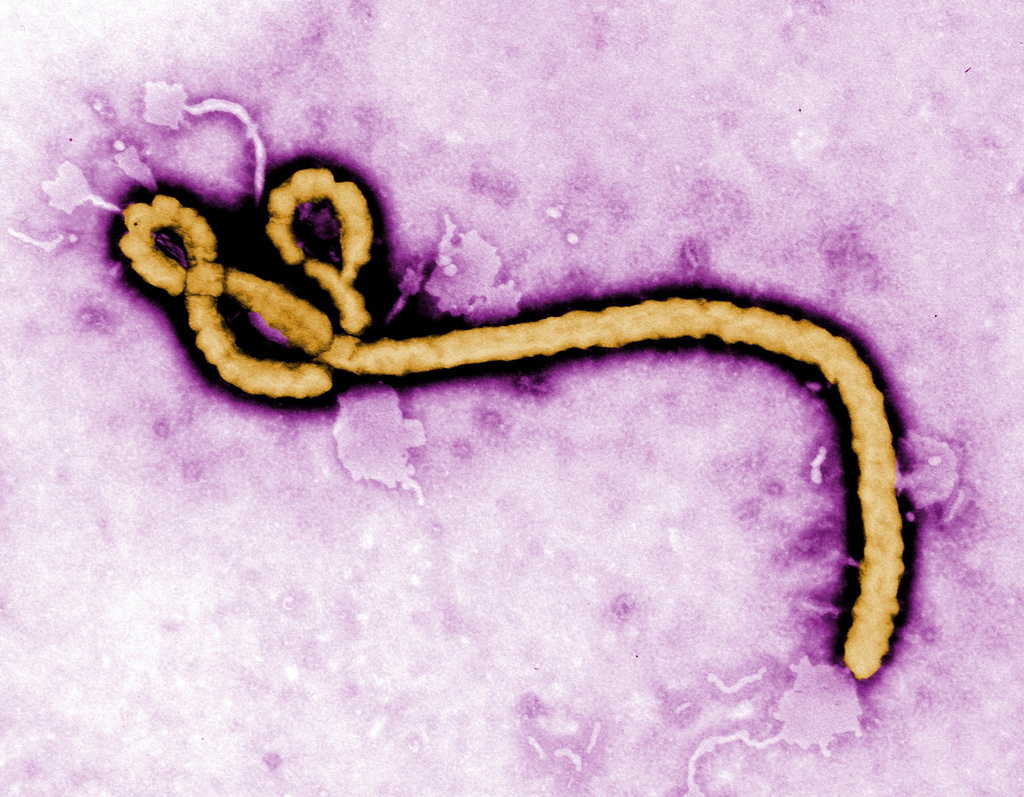
International aviation relies on a series of nested verification systems to ensure compliance with destination-country entry rules. When a public health emergency occurs, the Centers for Disease Control and Prevention (CDC) and the Department of Homeland Security (DHS) modify these requirements dynamically. On May 18, 2026, the CDC enacted a 30-day mandate restricting entry for non-U.S. passport holders who had traveled through the Democratic Republic of Congo (DRC), Uganda, or South Sudan within the preceding 21 days due to an outbreak of the Bundibugyo strain of Ebola.
To understand why Air France Flight 378 was barred from entering U.S. airspace, one must examine the specific mechanics of the three primary security layers that failed to prevent boarding.
[Layer 1: Passport Control/Visa Check]
       ↓ Failure: System accepted traveler with prohibited 21-day itinerary
[Layer 2: Airline APIS Transmission]
       ↓ Failure: Incomplete or delayed screening before takeoff
[Layer 3: Mid-Flight CBP Interdiction]
       ↓ Result: Denied entry to U.S. airspace; mandatory diversion
The Document and Passport Control Gateway
The initial checkpoint occurs at the departure gate or check-in kiosk at Paris-Charles de Gaulle Airport. Airlines utilize software linked to databases like the International Air Transport Association's (IATA) Timatic system. This network cross-references a passenger’s nationality, visa status, and recent travel history against the destination country's current laws. The system failed at this point. A passenger carrying documentation linked to the DRC boarded the aircraft despite the clear 21-day geographic restriction. This breakdown occurs when passport scanners capture basic biographical data but fail to cross-reference previous connecting flights, manual stamps, or independent itineraries that expose recent travel within high-risk zones.
Automated Passenger Information Systems (APIS)
Airlines must transmit passenger manifests to the destination country’s border enforcement agencies through APIS before the aircraft departs or immediately upon takeoff. This mechanism functions as a digital screen, allowing CBP to vet names against watchlists and immigration databases. The fact that Flight 378 was permitted to take off and fly for several hours across the Atlantic indicates one of two systemic bottlenecks: either Air France experienced a delay in transmitting the finalized manifest, or CBP’s automated screening algorithms failed to flag the flagged itinerary until the flight was well into its journey.
Sovereign Airspace Interdiction
The ultimate point of control is the physical refusal of entry into sovereign airspace. When CBP recognized the non-compliance mid-flight, it exercised its authority under federal immigration law to deny the aircraft permission to cross the U.S. border. This decision triggered an immediate operational pivot, forcing the flight crew to coordinate an unplanned landing at Montreal-Trudeau International Airport, the nearest viable international hub equipped to handle the diversion.
The Operational Cost Function of Mid-Flight Diversions
The decision to divert an international widebody aircraft is never just an administrative choice; it carries a massive financial penalty. Forcing a flight to change course creates significant financial losses across multiple operational departments.
- Fuel Burn and Direct Operating Costs: A Boeing 777 or Airbus A350 operating a transatlantic route burns roughly 6,000 to 7,500 kilograms of fuel per hour. The cost of altering a flight path, descending early, landing, idling on the tarmac in Montreal, and then ascending back to cruising altitude to reach Detroit adds tens of thousands of dollars in unbudgeted fuel consumption alone.
- Airport Landing and Handling Fees: Unscheduled landings trigger immediate fees from the local airport authority. Montreal-Trudeau International Airport charges landing fees based on the aircraft’s maximum takeoff weight (MTOW), alongside terminal charges and passenger handling fees for servicing an un-routed flight.
- Crew Duty-Time Hard Caps: Commercial aviation operates under rigid regulatory frameworks governed by bodies like the European Union Aviation Safety Agency (EASA) and the Federal Aviation Administration (FAA). Flight crews are legally bound by maximum flight duty periods. A diversion of this scale extends the duty day, risking a situation where the crew "times out." If a crew exceeds their legal limit, the airline is forced to ground the plane, book hotel rooms for hundreds of passengers, and fly in a replacement crew, exponentially increasing the total cost of the disruption.
The Geopolitical and Public Health Contradiction
The Canadian response highlights a significant policy gap between neighboring G7 nations regarding public health risk management. When the flight landed in Montreal, Canadian authorities did not treat the situation as an immediate biological threat. A Public Health Agency of Canada (PHAC) quarantine officer boarded the plane, evaluated the passenger, and confirmed they were completely asymptomatic.
Because the Bundibugyo strain of the Ebola virus cannot be transmitted by individuals who do not exhibit active symptoms, the clinical risk to the remaining passengers was non-existent.
http://googleusercontent.com/image_content/231
This clinical assessment reveals a sharp disconnect between the U.S. strategy of absolute restriction and the Canadian approach of localized risk management. Canada did not enact an outright travel ban on individuals coming from East and Central Africa during this outbreak. The passenger was allowed to disembark, placed on a return flight to Paris, and the original aircraft was permitted to refuel and fly onward to Detroit.
The U.S. strategy prioritizes sealing the border against administrative policy violations, even when the actual epidemiological risk on the aircraft is zero. This approach creates a system where a single data-entry error at a departure gate in Europe can completely disrupt a major international trade and transit corridor in North America.
Redesigning the Pre-Departure Filter
To prevent costly mid-air diversions and secure international borders against emerging health threats, global aviation must replace its reactive enforcement models with strict, automated pre-departure verification. Relying on manual checks by gate agents at foreign hubs introduces an unacceptable margin for human error.
Airlines must integrate biometric identity data and real-time travel history directly into the digital boarding pass issuance system. If a passenger’s electronic record shows passport activity or a flight connection from a restricted region within the high-risk window, the system must automatically block the issuance of a boarding pass until the traveler is manually cleared by a border agent from the destination country.
Furthermore, clearinghouses like IATA must standardize how health-related travel restrictions are coded in global distribution systems. When nations suddenly shift entry requirements—such as the DHS mandate directing all travelers exposed to the Ebola outbreak to land exclusively at Washington-Dulles International Airport—these rules must instantly lock out booking capabilities to any other port of entry. Shifting the burden of verification entirely to automated pre-boarding protocols protects airlines from severe financial exposure and ensures that public health screenings happen on the ground, rather than through disruptive mid-flight interceptions.