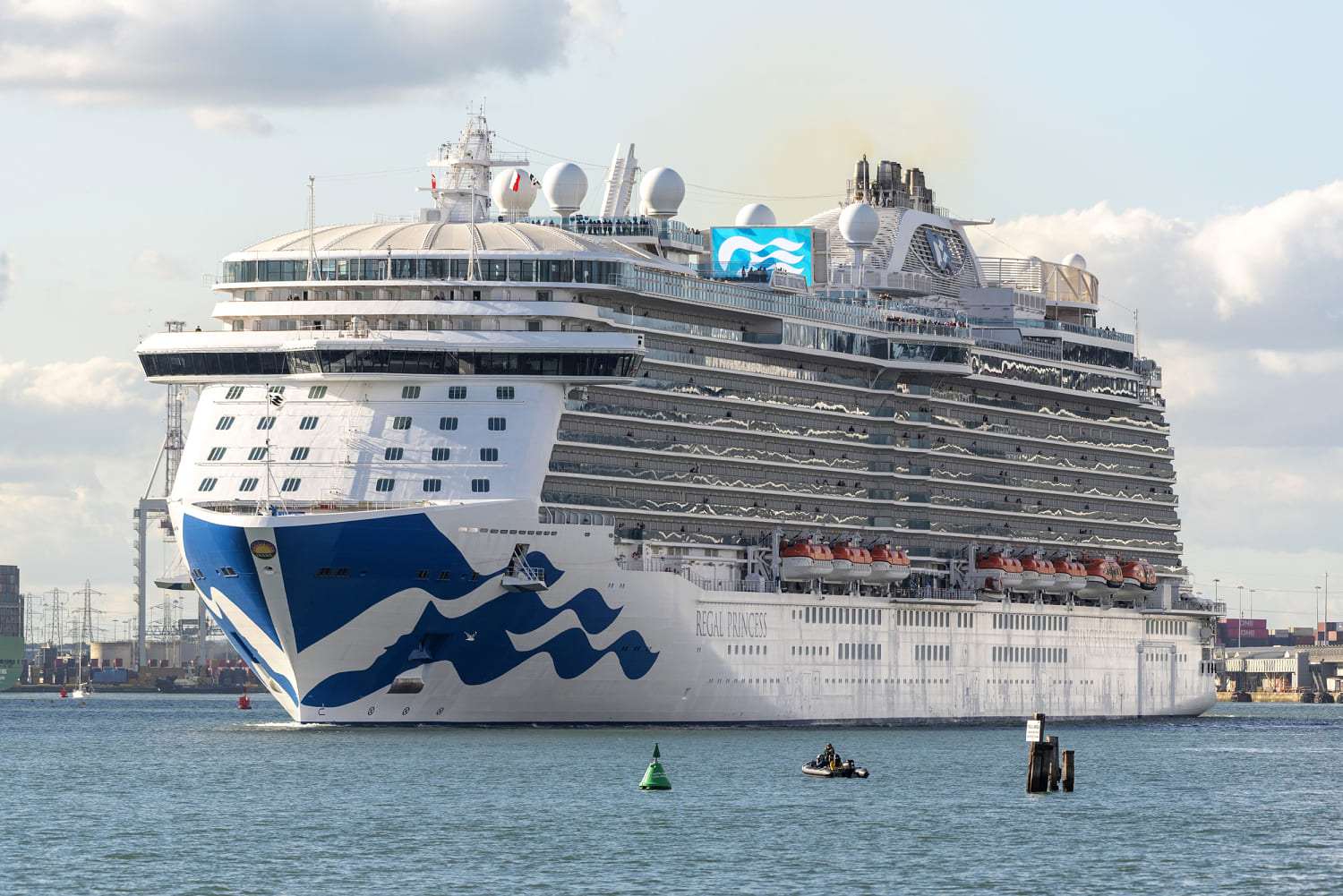
Survival in a man-overboard (MOB) incident is dictated by a brutal intersection of physics, thermal dynamics, and immediate operational response. When a crew member went overboard from the Regal Princess off the coast of Cancún, Mexico, on July 13, 2026, the subsequent eight-hour search-and-rescue operation exposed the systemic complexity of open-ocean recovery. The vessel, which had departed Fort Lauderdale on a seven-day Western Caribbean itinerary, immediately suspended its course to execute standard emergency protocols. Despite the coordinated deployment of onboard assets, localized search patterns, and assistance from nearby vessels like the Carnival Jubilee, the crew member perished.
To understand why MOB events so frequently end in fatalities—even when a massive vessel halts immediately to search—one must look past the headlines and examine the cold, mathematical variables of maritime rescue. Meanwhile, you can read other stories here: The Golden Cage and the Mirage of Desert Sand.
The Physics of the Fall: The First Critical Barrier
Survival is compromised long before the search begins. The physical impact of entering the water from a modern cruise ship is the first, and often most lethal, bottleneck in the survival chain.
Modern cruise ships, including Royal-class vessels like the Regal Princess, feature passenger and crew decks elevated significantly above the waterline. A fall from an upper deck or a crew stateroom balcony can range from 50 to over 100 feet. To understand the full picture, check out the recent analysis by The Points Guy.
- Impact Velocity: A free fall from 80 feet (approximately 24 meters) results in an entry velocity of roughly 54 miles per hour (87 kilometers per hour). At this speed, water acts as a semi-rigid surface.
- Trauma: The deceleration force upon impact regularly causes immediate debilitating trauma, including severe concussions, spinal fractures, and extreme internal hemorrhaging.
- The Drag Effect: If a person falls from a moving vessel, they do not land in static water. The boundary layer of water dragged along by a vessel traveling at 18 to 22 knots creates violent hydrodynamic forces. This drag can pull an individual directly toward the stern, risking catastrophic contact with the ship's propulsion systems or hull appendages.
Even if an individual survives the kinetic impact without catastrophic skeletal damage, they immediately confront the cold shock response. This physiological reaction causes involuntary gasping. If the head is submerged during this initial reflex, drowning can occur within the first sixty seconds.
The Locational Uncertainty Matrix
The primary challenge of ocean rescue is not finding a person; it is finding the coordinates of the person. A vessel traveling at a standard cruise speed of 20 knots covers approximately 34 feet per second.
If a crew member goes overboard and the event is not witnessed in real-time, a delay of just ten minutes before the bridge is notified creates a massive search area. By the time the ship can safely decelerate and begin turning—a process that takes several minutes and miles for a vessel weighing over 140,000 gross tons—the starting point of the search is already a highly degraded estimate.
[Time Delay (Minutes)] ──> [Vessel Distance Covered] ──> [Search Grid Expansion]
         │                                                      │
         ▼                                                      ▼
   (e.g., 10 Min)                (Approx. 3.3 Miles)            (Exponential Search Radius)
The search area expands exponentially due to the Three Forces of Drift:
- Oceanic Currents: Localized sea currents move the victim away from the initial entry point. Off the coast of Cancún, strong Caribbean currents can displace a drifting body at rates exceeding 2 to 3 knots.
- Wind Drift (Leeway): The portion of the victim's body exposed above the water acts as a sail. Wind pushes the individual away from the current's path, creating a complex vector of motion.
- Swell and Wave Action: Waves physically displace the individual while simultaneously obscuring them from visual and radar detection.
Even with immediate GPS plotting of the coordinates where the alarm was raised, rescue teams must calculate a shifting probability map. If the victim is unconscious, they present a minimal profile above the water, rendering thermal imaging and visual spotting from high bridge wings highly ineffective, especially in moderate-to-rough seas.
The Human Factor: Crew vs. Passenger Dynamics
There is a distinct operational difference between passenger and crew MOB events. Cruise line safety management systems (SMS) are highly structured, but they rely heavily on immediate reporting.
Passengers are generally clustered in public spaces, meaning passenger MOB events are more frequently witnessed in real-time, allowing for the immediate deployment of life rings with smoke and light markers. Conversely, crew members often work in isolated technical spaces, mooring decks, or external hull maintenance platforms, sometimes during off-peak night hours.
When a crew member goes missing, the delay between the actual event and the realization that they are absent can stretch into hours. This delay shifts the operation from a "rapid recovery" to an "unresolved search," drastically reducing the probability of a successful rescue.
In this instance, the Regal Princess systematically retraced its path, executing expanding square or sector search patterns for over eight hours. This highly disciplined navigation technique is designed to maximize visual coverage of a calculated drift zone. Despite coordinating with the Mexican navy and leveraging the lookouts of the Carnival Jubilee, the sheer scale of the ocean and the limits of human visibility ultimately dictated the outcome.
Technical Limitations of Active Detection Systems
While international regulations mandate various safety measures, the cruise industry's adoption of automated Man Overboard Detection Systems (MOBDS) remains inconsistent across global fleets.
An effective MOBDS utilizes a combination of thermal cameras, optical sensors, and radar tracking along the ship's perimeter to automatically alert the bridge within seconds of a rail crossing. These systems are engineered to eliminate the critical lag time between the fall and the alarm.
However, these systems face severe operational limitations:
- False Positive Rates: Salt spray, birds, flying fish, and structural shadows frequently trigger automated alarms, leading to alarm fatigue among bridge officers.
- Environmental Degradation: Heavy rain, dense fog, and lens encrustation from salt crusts drastically reduce the efficacy of thermal and optical sensors.
- Maintenance Overhead: Keeping thousands of feet of exterior sensors clean and calibrated on a vessel constantly exposed to corrosive marine environments requires immense operational discipline.
Without functional, calibrated, automated detection systems, ships must rely on manual lookouts using high-powered binoculars and searchlights. This reliance on human eyes reduces the probability of detection to a fraction of a percent in night conditions or active swells.
The Strategic Path Forward for Fleet Operators
Relying on reactive search-and-rescue patterns after an individual has entered the water is a failing strategy. The survival rate drops precipitously with every minute of exposure and drift. To mitigate these risks and protect both crew and passengers, cruise lines must transition from a strategy of search to a strategy of instant localization.
First, operators must invest in mandatory, integrated thermal-optical MOBDS across all vessels, treating these systems not as optional additions but as critical safety infrastructure equivalent to lifeboats.
Second, crew working in external or high-risk areas must be equipped with personal locator beacons (PLBs) integrated into their uniforms. These water-activated devices transmit GPS coordinates directly to the ship's bridge via automatic identification systems (AIS), bypassing the visual search phase entirely and establishing a direct line to the individual within seconds of immersion. Only by shifting the operational focus from visual tracking to automated, instant localization can maritime operators hope to alter the grim physics of open-ocean survival.