The conflict over the Cadiz Water Project—rebranded as the Mojave Groundwater Bank—is fundamentally a dispute over resource velocity. It matches a private entity attempting to monetize an extractive asset against state regulators and environmental metrics that treat groundwater as a finite, non-renewable reserve. While corporate advocates position the project as an innovative infrastructure play designed to intercept evaporating water, independent hydrological modeling reveals an acute structural deficit between artificial discharge and natural recharge.
Analyzing this multi-decade impasse requires breaking down the core mechanisms of the dispute: the mechanics of the aquifer's water balance, the legal and infrastructure friction points that govern extraction, and the precarious financial model supporting the enterprise.
The Hydrological Disconnect: Extraction vs. Recharge
The foundational disagreement over the Cadiz project hinges on a simple mass-balance equation. To evaluate the sustainability of the extraction plan, one must analyze the relationship between the proposed extraction volume and the actual rate of natural replenishment.
+------------------------------------------------------------+
|                    THE MASS-BALANCE DEFICIT                |
+------------------------------------------------------------+
|  Proposed Annual Extraction:  50,000 Acre-Feet             |
|                                                            |
|  Natural Recharge Estimates:                               |
|  - Cadiz Inc. Models:         Est. 32,000 Acre-Feet        |
|  - USGS / National Park:      Est. 5,000 - 16,000 Acre-Feet|
+------------------------------------------------------------+
|  Net Structural Overdraft:    18,000 to 45,000 Acre-Feet/Yr|
+------------------------------------------------------------+
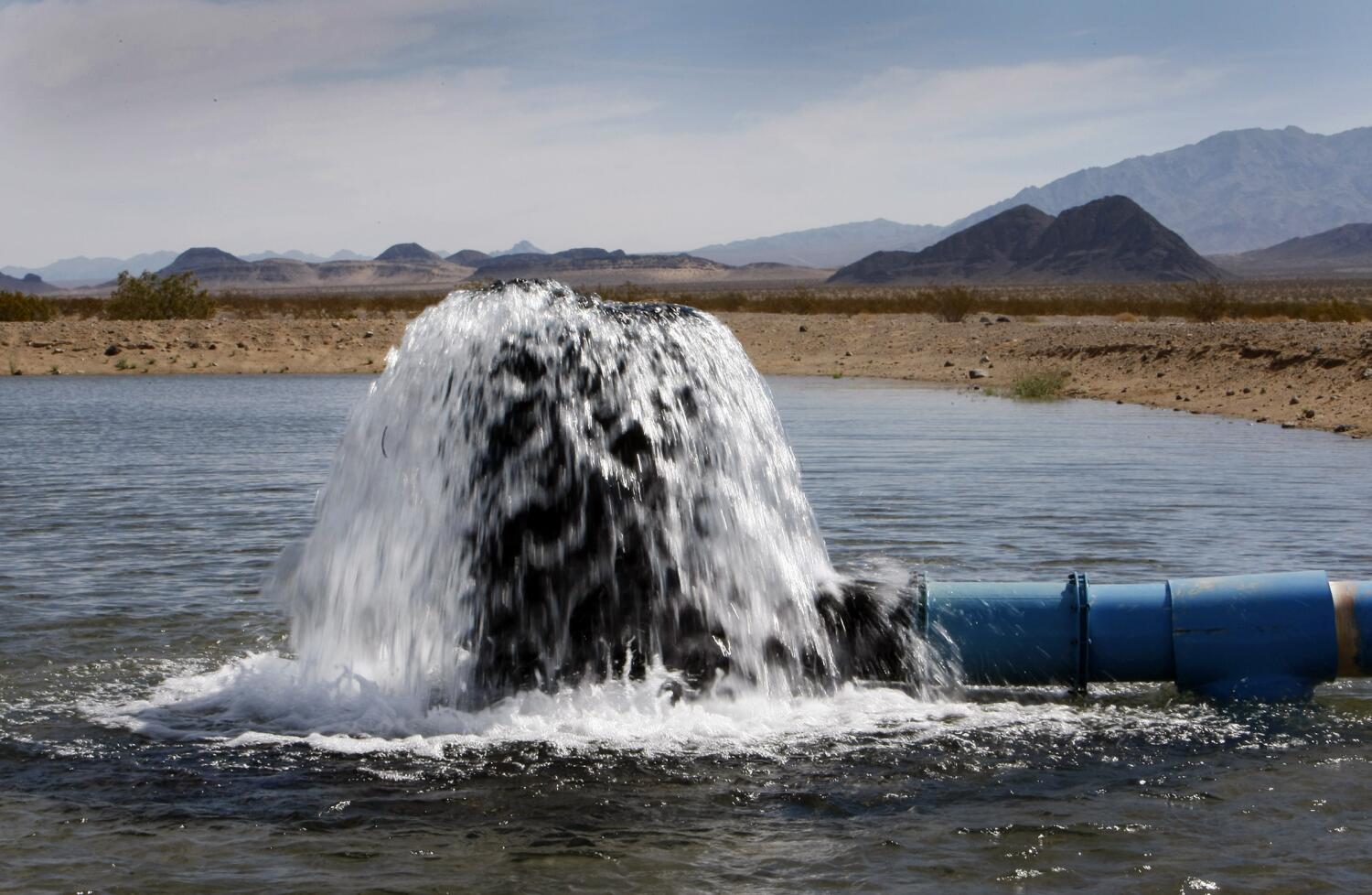
Cadiz Inc. intends to extract an average of 50,000 acre-feet of groundwater per year over a 50-year horizon from the Fenner Valley and Orange Blossom Wash watersheds. This equates to roughly 16 billion gallons of water annually. The structural legitimacy of this operation relies entirely on which data set defines the recharge rate:
- The Corporate Conservation Hypothesis: Project proponents argue that the underlying aquifer holds between 17 million and 34 million acre-feet of water. They assert that natural recharge reaches up to 32,000 acre-feet per year. Under this framework, groundwater naturally flows downhill toward the Bristol and Cadiz dry lakes, where it meets highly saline brine and evaporates. The project is framed as an intervention to intercept this water before it becomes non-potable and dissipates.
- The Empirical Overdraft Reality: Independent analyses by the U.S. Geological Survey (USGS) and the National Park Service place the natural recharge rate much lower, between 5,000 and 16,000 acre-feet per year. This discrepancy means the project's proposed extraction rate exceeds natural replenishment by a factor of three to ten.
When artificial discharge outpaces natural recharge to this degree, the system shifts from a sustainable yield model to groundwater mining. The immediate consequence of this deficit is a drop in the local water table, creating a cone of depression. As the water table falls, the hydraulic head that feeds remote desert springs—such as Bonanza Springs—is compromised. These surface water features are hydrologically linked to the deeper aquifer; lowering the regional water table reduces the pressure that forces water to the surface, threatening the surrounding ecosystem.
Infrastructure Bottlenecks and Jurisdictional Friction
To transform extracted groundwater into liquid capital, the project requires an infrastructure link to transport water from the private wellfield in San Bernardino County to municipal buyers in Southern California and Arizona. This creates a critical logistical and legal bottleneck.
The original strategy relied on a 43-mile pipeline built along an existing federal railroad right-of-way owned by the Arizona and California Railroad. By co-locating the pipeline within this pre-existing easement, the project aimed to bypass the lengthy federal environmental reviews typically required under the National Environmental Policy Act (NEPA).
This pathway exposed the project to volatile shifts in federal regulatory interpretation:
- The 2015 Exclusionary Ruling: The Bureau of Land Management (BLM) ruled that the pipeline did not directly support railroad operations, meaning it fell outside the scope of the original 1875 right-of-way grant. This decision required a full federal environmental review.
- The 2017 Regulatory Reversal: The Trump administration's BLM issued an administrative U-turn, revoking the previous guidance and clearing the pathway for pipeline construction within the right-of-way without extra federal NEPA oversight.
- The Judicial Correction: Federal courts intervened in 2019, ruling that the federal government's quick approval violated statutory limits and ignored the interconnected nature of the regional hydrology.
The regulatory barrier has since shifted from federal lands to state jurisdiction. Under California's Sustainable Groundwater Management Act (SGMA) and Senate Bill 307, any project moving groundwater from desert basins must prove it will not cause adverse environmental impacts to natural resources or indigenous cultural sites.
The California State Lands Commission holds a veto over the project's northern pipeline route. In late 2024, the commission unanimously denied a critical pipeline lease. Without state approval to cross public lands or access state-regulated conveyance systems like the Colorado River Aqueduct, the physical assets of the wellfield remain isolated from the broader market.
Financial Sustainability and Market Viability
The viability of a capital-intensive water project depends heavily on its balance sheet and its ability to secure long-term purchase agreements. An analysis of the project's financial metrics reveals significant structural vulnerabilities.
The project faces high capital expenses to build out its pipeline network, but its developer operates under extreme financial pressure. Financial evaluations in 2026 highlight these risks:
- Accumulated Capital Deficit: The developer has accumulated a historic deficit of over $670 million, with recent annual net losses exceeding $36 million.
- Imminent Debt Maturities: The company faces over $60 million in corporate debt maturing in mid-2027, severely limiting its financial flexibility.
- Credit and Viability Indicators: Investment research firms have downgraded the stock to their lowest ratings, citing poor growth and momentum. The firm's negative Altman Z-Score indicates a high probability of distress within a two-year horizon.
+------------------------------------------------------------+
|                    FINANCIAL RISK PROFILE                  |
+------------------------------------------------------------+
|  Accumulated Deficit:         $676.1 Million               |
|  Fiscal Year Net Loss:        $36.6 Million                |
|  Matured Corporate Debt:      $60.6 Million (June 30, 2027)|
|  Altman Z-Score:              -5.5 (High Distress Zone)    |
+------------------------------------------------------------+
To counter these financial headwinds, the project has tried to reposition its business model. By rebranding as a regional groundwater bank, the company hopes to attract capital from neighboring states like Arizona and secure federal funding through the Water Infrastructure Finance and Innovation Act (WIFIA).
However, this strategy faces a major structural obstacle: the physical chemistry of the water asset. The groundwater in the Cadiz valley contains naturally occurring hexavalent chromium at concentrations that exceed California's strict drinking water standard of 10 parts per billion.
To make this water marketable to urban districts, the company must build and run advanced treatment facilities to remove the contaminant. This processing requirement adds a fixed operational cost to every acre-foot of water produced, reducing the project's profit margins compared to cheaper, traditional water options.
Strategic Outlook
The future of the project depends on a clear trade-off: the developer must either secure a pathway through California's strict environmental laws or successfully pivot its business model to serve the broader Colorado River Basin before its debt matures.
Given the unified opposition from California state agencies, tribal nations, and environmental coalitions, the current operating model faces a dead end. The strategic path forward requires abandoning the simple model of exporting desert groundwater. Instead, the project must shift toward a true storage-and-recovery framework. This means using the empty space in the aquifer to store excess water during wet years, rather than continuously mining a vulnerable and slow-to-replenish natural resource.