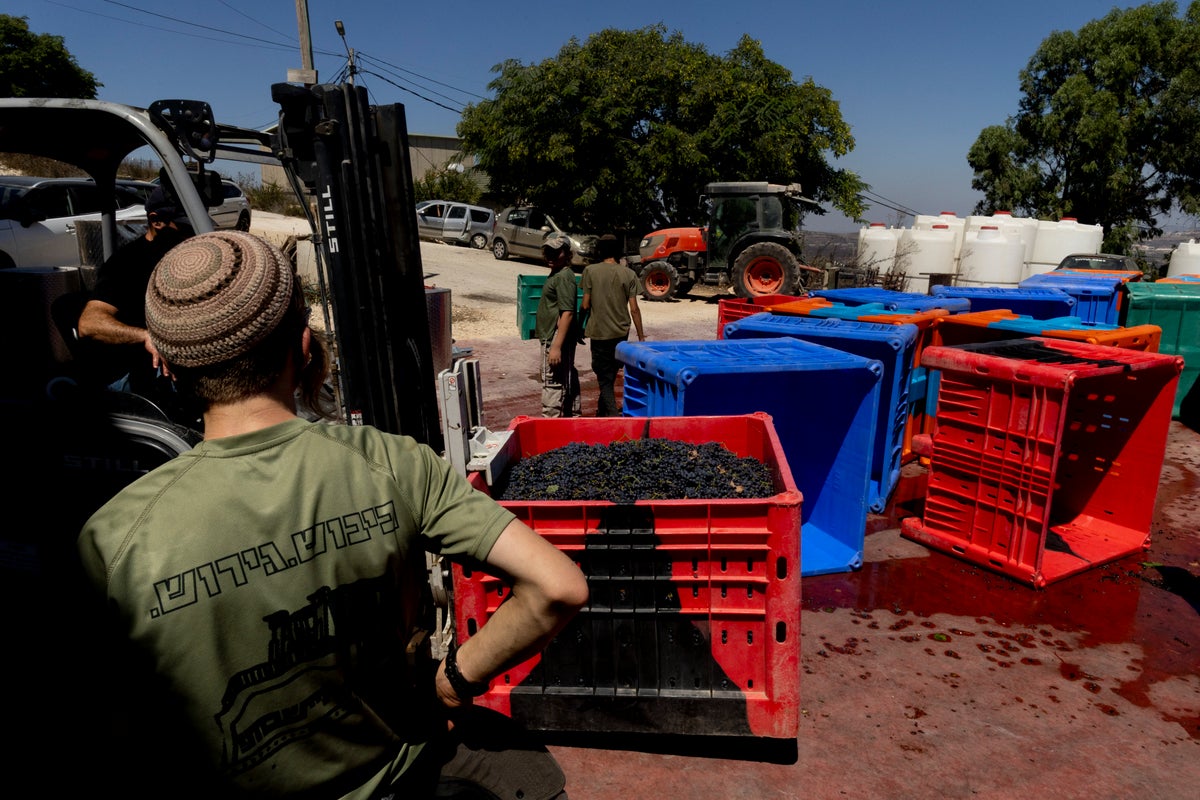
International trade policy has shifted from diplomatic posturing to operational economic exclusion following a coordinated announcement by the United Kingdom, France, Canada, and nine other nations targeting commerce originating from Israeli settlements in the occupied West Bank. This collective maneuver transitions the dispute from bilateral diplomatic friction into a multi-jurisdictional compliance architecture. Dissecting the mechanics of this coalition requires analyzing the economic vulnerabilities of the settlements, the regulatory compliance hurdles facing Western importers, and the structural countermeasures available to the Israeli state.
The Architecture of the Twelve Nation Coalition
The coalition relies on a synchronized legislative and regulatory framework designed to sever the economic lifelines of commercial entities operating beyond the 1967 Green Line. While individual states approach implementation through national decrees or alignment with broader European Union mechanisms, the core objective remains uniform: criminalizing or penalizing the financial and material support of settlement infrastructure. For an alternative look, check out: this related article.
The coalition divides into three operational tiers based on the depth of their punitive measures:
- Primary Enforcers: The United Kingdom, France, and Canada have instituted comprehensive bans covering physical commodities, agricultural exports, and corporate financing services tied directly to settlement development.
- Active Implementers: States such as Ireland, the Netherlands, Belgium, Spain, and Norway have progressively enacted standalone trade restrictions or accelerated ongoing legislative bans against settlement-produced goods.
- Supportive Jurisdictions: Denmark, Finland, Iceland, Poland, Portugal, and Sweden have committed to diplomatic and regulatory backing to close enforcement loopholes across European distribution channels.
This tiered configuration prevents corporate routing maneuvers, ensuring that goods cannot easily bypass prohibitions by entering the coalition via a lenient intermediary state. Related analysis regarding this has been provided by NBC News.
The Provenance Problem and Supply Chain Friction
Enforcing a geographic trade ban on West Bank settlement goods introduces severe operational bottlenecks for customs authorities. Historically, agricultural exports, manufactured items, and industrial inputs produced within West Bank industrial zones or agricultural cooperatives are labeled generically under unified export codes or stamped as originating from Israel.
To operationalize the embargo, customs agencies within the twelve coalition nations must establish rigorous certificate-of-origin verification protocols. Importers face the burden of proving that supply chains are entirely detached from disputed territories. This requirement transforms standard customs declarations into forensic audits.
- Entity-Level Screening: Financial institutions and regulatory bodies must screen corporate registries to identify firms maintaining operations, subsidiaries, or asset holdings inside settlement jurisdictions.
- Material Traceability: Supply chain managers must map raw material inputs down to the municipal level, isolating agricultural yields harvested or processed on land seized after 1967.
- Penal Exposure: Financial institutions facilitating capital flows for real estate, construction, or municipal infrastructure within the settlements face immediate regulatory liability under newly expanded sanctions statutes.
The friction generated by these compliance checks creates an indirect market exclusion. Even for goods that technically originate within sovereign Israeli territory, risk-averse multinational corporations often sever all trade ties to avoid accidental non-compliance penalties.
Strategic Countermeasures and Geopolitical Fallout
The targeted state possesses a finite set of strategic levers to absorb or deflect the economic impact of the coalition's actions. The government in Jerusalem views these trade restrictions through an existential and electoral lens, prompting immediate retaliatory steps designed to impose diplomatic and consular costs on the participating nations.
Diplomatic friction has manifested through the restriction of consular access, the exclusion of coalition representatives from regional security coordination forums, and targeted travel prohibitions against specific foreign lawmakers. Economically, the localized loss of export revenue for settlement-based enterprises—primarily in viticulture, horticulture, and advanced manufacturing—is partially buffered by state subsidies and domestic market absorption. However, the broader macroeconomic danger to Israel lies in the risk of supply chain decoupling spreading from settlement-specific enterprises to mainstream technology and industrial sectors.
The primary systemic vulnerability for the coalition rests on enforcement consistency. If corporate auditing proves porous, or if secondary trading hubs absorb redirected settlement goods, the economic sting of the policy will dissipate. Conversely, if compliance mechanisms operate with high fidelity, the cost of maintaining territorial expansion will escalate significantly for the governing administration.
Align corporate compliance frameworks with multi-jurisdictional customs verification standards immediately, ensuring that enterprise resource planning systems automatically isolate and flag any vendor registry associated with disputed territorial coordinates.