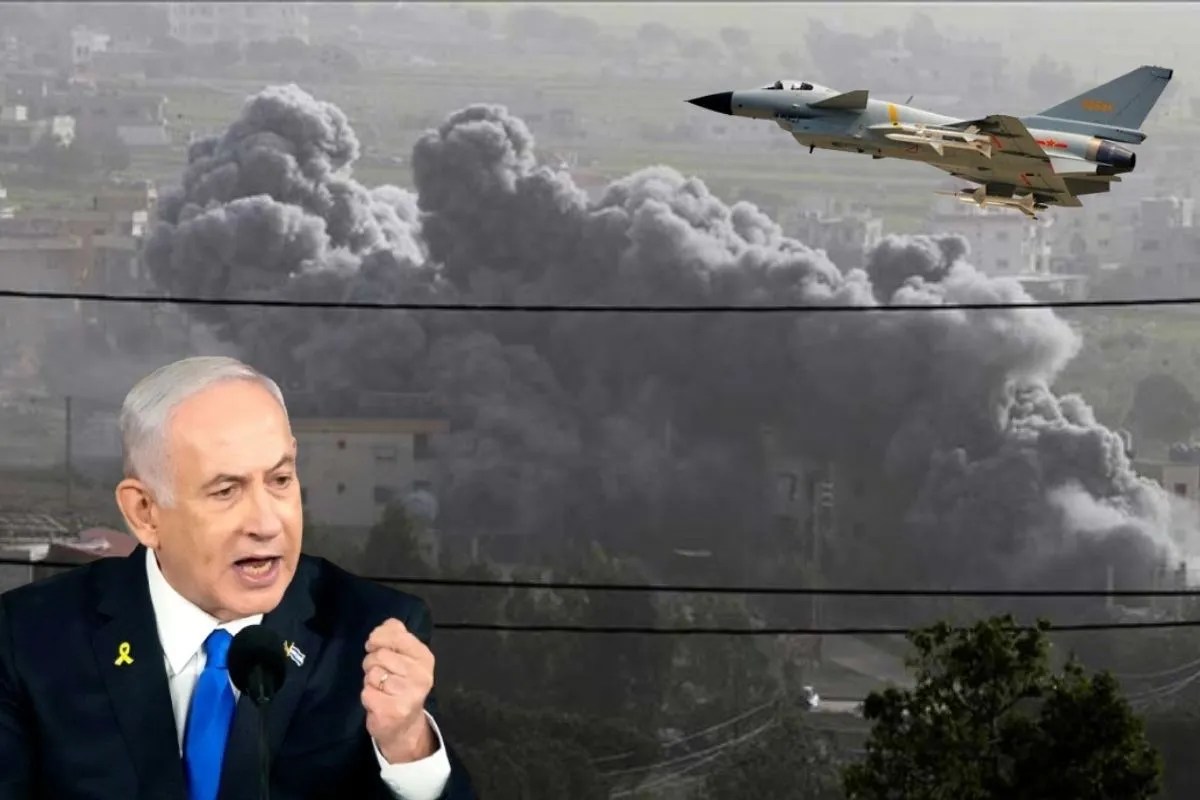
Targeted decapitation strikes against mid-to-high tier militant leadership alter operational dynamics in asymmetrical warfare far more through informational disruption than immediate tactical attrition. When Israel executed a precision strike in southern Lebanon eliminating Abu Hassan Ali, a senior Hezbollah commander, the event transcended a routine tactical engagement. It exposed the structural vulnerabilities of decentralized command networks operating under severe sensor-to-shooter asymmetry. Analyzing this event requires stripping away conventional media framing and examining the operational mechanics, command-and-control dependencies, and strategic feedback loops governing the northern frontier of Israel.
The Structural Vulnerability of Command Nodes
Asymmetrical organizations like Hezbollah rely on cellular autonomy coupled with vertical ideological alignment. However, operational scale demands centralized logistical routing, asset allocation, and synchronization of fire support. Abu Hassan Ali occupied a critical nexus within this architecture. Senior field commanders function as operational routers. They translate strategic directives from the high command into localized tactical execution.
When a node of this magnitude is excised, the immediate consequence is not total organizational paralysis, but a sharp spike in friction. Operational velocity drops because subordinate units must either halt maneuvers to await explicit re-authorization or assume higher risk through decentralized initiative. The targeted elimination of a commander who manages regional missile deployments or tactical formations forces an immediate reorganization of communication protocols. To prevent similar targeting, surviving personnel resort to low-signature, analog, or heavily restricted communication channels. This defensive posture drastically degrades coordination efficiency across adjacent sectors.
The cost function of leadership replacement in high-attrition environments follows a steep logarithmic curve. While junior fighters are easily substituted, experienced tactical commanders require years of operational seasoning, localized terrain knowledge, and vetted trust networks. Replacing a senior commander like Abu Hassan Ali creates a vacuum filled either by a veteran pulled from a secure rear echelon or an accelerated junior officer lacking equivalent crisis management experience. Both alternatives introduce strategic drag.
The Calculus of Deterrence and Escalation Dominance
Strategic friction along the blue line is governed by a persistent game of threshold management. Both state militaries and non-state actors operate within a bounded escalation space designed to inflict political and military costs without triggering total war.
Israel's tactical doctrine relies on establishing escalation dominance through preemptive or reactive decapitation. The core objective is twofold:
- Impose a high attrition rate on technical expertise that cannot be rapidly replenished.
- Force the adversary's leadership into a defensive crouch where resource allocation shifts from offensive posture maintenance to internal security and counter-surveillance.
Conversely, Hezbollah's strategic utility depends on maintaining a persistent, low-cost threat vector that ties down Israeli military resources, disrupts northern civilian infrastructure, and sustains domestic and regional deterrence credibility. Every targeted strike alters this calculus by shifting the risk-reward ratio for leadership survival. When senior commanders are systematically targeted, the organizational response typically oscillates between two extremes: immediate retaliatory escalation to re-establish deterrence, or strategic absorption and tactical withdrawal.
The mechanics of this dynamic dictate that localized kinetic actions rarely remain isolated. They trigger cascading adaptations in rocket deployment timelines, air defense positioning, and intelligence-gathering countermeasures.
Information Asymmetry and Sensor-to-Shooter Velocity
The operational success of high-precision strikes in densely populated or rugged terrain depends entirely on real-time sensor-to-shooter integration. Southern Lebanon presents a complex operational environment characterized by complex terrain, urban intermixing, and deeply entrenched civilian infrastructure.
Executing a precision strike against a specific individual within this environment requires a continuous intelligence cycle:
- Persistent Surveillance: Unmanned aerial vehicles, signals intelligence intercepts, and human intelligence assets maintain continuous coverage of suspect movement vectors.
- Data Fusion: Real-time processing correlates disparate data streams to confirm target identity, location accuracy, and collateral risk parameters within a compressed decision window.
- Kinetic Execution: The handoff from intelligence confirmation to ordnance delivery must occur before the dynamic target shifts position or enters protected human shields.
The elimination of Abu Hassan Ali highlights an advanced intelligence surveillance and reconnaissance capability capable of penetrating secure communication loops and tracking high-value individuals down to the tactical level. For the targeted organization, this reality necessitates a fundamental restructuring of operational security. Reliance on electronic signatures becomes a liability, forcing a regression to older, slower forms of field communication that inherently restrict the speed and complexity of military operations.
The Strategic Horizon
The removal of a senior tactical commander does not alter the fundamental strategic deadlock in southern Lebanon. It accelerates the rate of operational friction, forces structural adaptations in command-and-control, and tests the resilience of decentralized logistics networks. As long as the underlying political and territorial disputes remain unresolved, kinetic actions against high-value targets will serve primarily as tactical friction points within a protracted war of attrition. Future operational trajectories will depend on whether leadership losses force a structural contraction of front-line forces or provoke a calculated escalation designed to test the adversary's red lines.