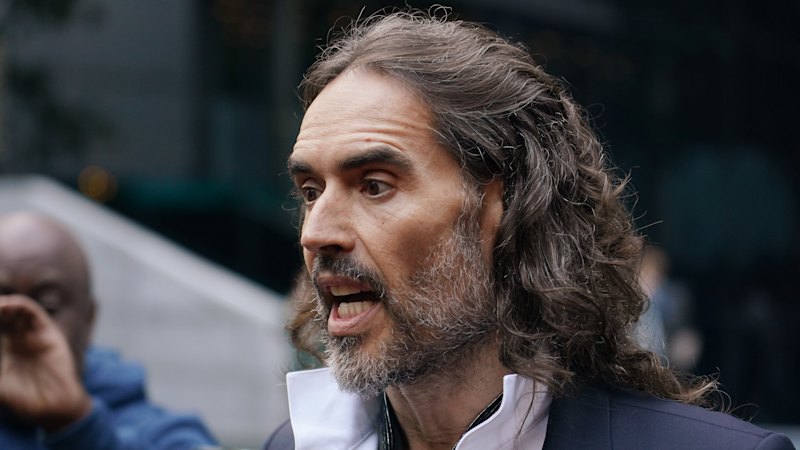
When Russell Brand publicly lamented that his former friends abandoned him following severe sexual assault and emotional abuse allegations, he tapped into a familiar celebrity defense mechanism. The reality behind his sudden social isolation has very little to do with personal loyalty and everything to do with corporate risk management. In modern entertainment, friendships are rarely severed out of pure moral outrage; they are terminated by lawyers, publicists, and insurance underwriters the moment an individual becomes an uninsurable liability.
To understand why Brand’s phone stopped ringing after the joint investigation by The Times, The Sunday Times, and Channel 4’s Dispatches aired in September 2023, you have to look past the emotional framing of betrayal. Brand built a career on being an agent of chaos, a persona that mainstream institutions eagerly monetized when he was generating box office returns and high ratings. For years, his boundary-pushing behavior was treated as an eccentric marketing asset rather than a red flag. The moment the allegations became public—spanning from 2006 to 2013, the absolute peak of his mainstream fame—the calculus flipped overnight.
The Corporate Firewall of Celebrity Friendships
In Hollywood and the British media establishment, high-profile friendships are often bound together by shared representation, overlapping production deals, and mutual brand equity. When a major scandal breaks, the immediate retreat of peers is rarely a spontaneous emotional reaction. Instead, it is the result of a coordinated crisis-containment protocol executed by third parties.
Consider how the industry actually operates behind closed doors. A-list talent does not manage their own public associations in a vacuum. When an investigation of this magnitude drops, talent agencies immediately audit their rosters to assess contagion risk. If Actor A is photographed having coffee with Brand, or publicly defends him on a podcast, Actor A’s upcoming studio project faces immediate scrutiny from distributors and brand sponsors.
Publicists issue strict, unambiguous directives to their clients. Silence is the default setting. Distance is the primary currency.
Brand’s frustration with his former circle reflects a fundamental misunderstanding—or a deliberate misrepresentation—of how transactional those relationships always were. The comedians, actors, and media executives who once shared stages and green rooms with him were operating within a shared commercial ecosystem. Once Brand was excised from that ecosystem—dropped by his talent agency Tavistock Wood, abandoned by his publisher Bluebird, and distanced by the BBC and Channel 4—maintaining a public or even private connection to him ceased to have any professional utility. In an industry built on optics, proximity to a toxic asset is treated as an endorsement.
The Economics of Deplatforming and the Pivot to Rumble
The narrative of total abandonment also ignores a critical financial reality. While Brand lost his legacy media contracts and saw his YouTube monetization suspended, he was hardly left destitute or entirely without allies. Instead, he executed a rapid, calculated migration to alternative media platforms, most notably Rumble, where his audience did not just remain intact—it grew more fervent.
This is the modern blueprint for surviving mainstream cancellation. The playbook is straightforward and increasingly predictable:
- Reframe institutional accountability as a coordinated attack. By characterizing the investigative journalism of multiple newsrooms as a "coordinated media attack" designed to silence his political commentary, Brand successfully shifted the conversation from the specific allegations to a broader culture war narrative.
- Monetize the grievance. Alternative platforms actively court controversial figures because outrage and perceived censorship drive massive subscription numbers and engagement metrics.
- Cultivate a new, ideologically aligned circle. As mainstream Hollywood doors slammed shut, doors in the independent media, conspiracy-adjacent, and right-wing commentary spaces swung wide open.
Brand’s lament about being abandoned by his old friends serves a dual purpose within this new business model. First, it reinforces his positioning as a martyr who was cast out by a corrupt elite because he dared to speak truth to power. Second, it creates an emotional bond with his subscriber base, positioning his viewers as his only remaining loyalists. The isolation isn't just a personal hardship; it is the central pillar of his current brand identity.
The Open Secret Myth and Industry Complicity
Perhaps the most glaring omission in Brand’s public reflections on his sudden exile is the historical context of how he operated during the years in question. When mainstream figures distance themselves from a disgraced peer, they often adopt a posture of shock and betrayal. Yet, in the aftermath of the 2023 investigation, numerous industry insiders acknowledged that Brand’s reputation for aggressive sexual behavior was widely known within comedy and television circles long before any formal complaints were filed.
This dynamic exposes the deep hypocrisy of the entertainment industry's moral panics. During the late 2000s, networks and studios actively profited from Brand’s hyper-sexualized, boundary-crossing persona. He was given prime-time slots, major film roles, and lucrative stand-up specials precisely because he was unpredictable and edgy. Production companies routinely enabled difficult or predatory behavior from top talent so long as the revenue outweighed the legal exposure.
Let’s look at how a hypothetical production environment handles a volatile star at the height of their fame. If a lead talent generates millions in ad revenue, junior staffers who complain about inappropriate behavior are often quietly reassigned, paid off with non-disclosure agreements, or told that "that’s just how he is." The entire apparatus bends to protect the cash cow.
However, the moment the public relations cost exceeds the financial return, that same apparatus turns on the talent with ruthless efficiency. The executives who once laughed off complaints become the loudest voices condemning the behavior. The friends who once benefited from the star's cultural relevance suddenly claim they never really knew him. Brand is experiencing the exact same transactional ruthlessness that once protected him, only now the machinery is working in reverse.
Why Public Apologies Rarely Work Anymore
A common question surrounding high-profile scandals is why the accused rarely attempts a path of genuine contrition and rehabilitation. In Brand’s case, he vehemently denied all allegations, maintaining that his past relationships were always consensual, even while admitting to past promiscuity and addiction struggles.
From a purely strategic standpoint, entering the apology tour circuit in the post-MeToo era is almost always a losing proposition for celebrities facing severe allegations. When the accusations cross the threshold from offensive jokes or cultural insensitivity into criminal territory—such as rape and sexual assault—there is no PR roadmap back to mainstream acceptance. Studios cannot insure a lead actor facing active police investigations. Advertisers will not touch a podcast hosted by someone accused of violent crimes.
Therefore, admitting fault or expressing remorse offers zero commercial upside. It validates the accusers, invites civil litigation, and alienates the only audience willing to financially support the accused: the contrarians and anti-establishment skeptics who view mainstream media investigations as inherently fraudulent.
By doubling down on his innocence and framing his exile as a badge of honor, Brand preserved his remaining revenue streams. His vocal complaints about losing his friends are not a plea to be let back into the Hollywood club. He knows the club's doors are bolted shut. Instead, those complaints are a performance aimed squarely at the millions of followers who pay his bills on alternative platforms.
The Reality of Post-Scandal Relationships
When the dust settles on a major celebrity fallout, the true nature of fame is laid bare. Celebrity friendships are largely built on shared status, mutual elevation, and convenience. When one party suffers a catastrophic drop in status, the foundational logic of the relationship evaporates.
Some of Brand’s former associates likely cut ties out of genuine disgust upon reading the detailed accounts in the Times investigation. The visceral nature of the allegations—which included claims from a woman who was 16 at the time of her relationship with a then-30-year-old Brand—forced many people to re-evaluate past interactions through a much darker lens. For those individuals, walking away was an ethical necessity, not a PR calculation.
Others, however, simply followed the wind. In an industry driven by fear of cancellation by association, silence is the safest harbor. Comedians and actors who built their own brands on progressive values found it impossible to publicly reconcile their past associations with Brand against the stark reality of the allegations. Even private expressions of support carry the risk of leaking to the press, which can derail a career overnight.
Brand’s public mourning of these lost relationships ignores the fundamental rule of the game he played for twenty years. Fame is a conditional contract. The industry gives you wealth, status, and a sprawling network of influential peers, and in return, you remain profitable and legally manageable. The second you breach those terms, the contract is voided, and the network vanishes.


