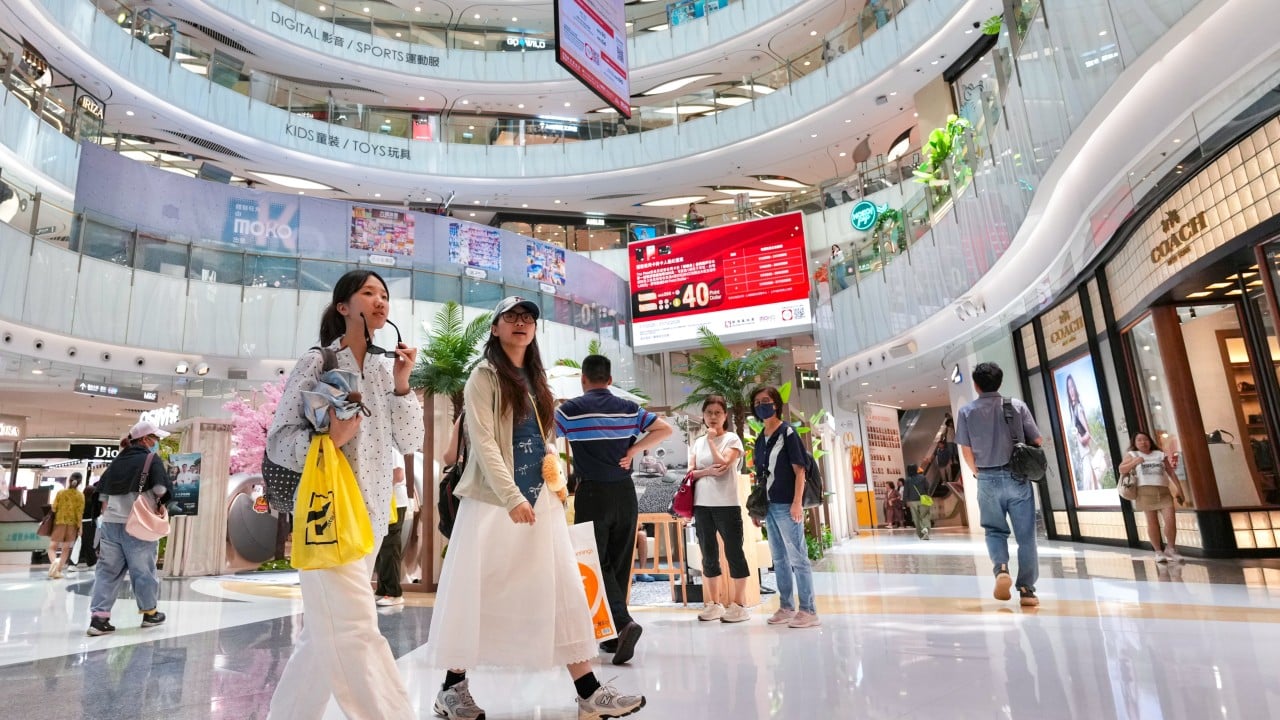
Hong Kong headline retail sales grew 8.6% year-on-year in April 2026, reaching HK$31.4 billion ($4 billion). While this marks the 12th consecutive month of expansion, evaluating this performance solely through a single trailing metric obscures a structural deceleration and an intensifying divergence between consumption categories. Market expectations projected 13.7% growth for the period; the realized expansion represents a sharp deceleration from the 12.8% recorded in March and the 19.3% in February.
To evaluate the long-term viability of Hong Kong's retail recovery, the sector must be analyzed through a distinct structural framework. Demand is split into two independent pillars: the Inbound Visitor Capital Infusion and the Domestic Consumption Base. Isolating the mechanisms driving each pillar reveals that macro-level indicators are masking deep microeconomic vulnerabilities.
The Inbound Capital Velocity Equation
The headline expansion was primarily catalyzed by inbound tourism volume. Data from the Hong Kong Tourism Board reveals a 10% year-on-year increase in visitor arrivals for April, totaling 4.22 million individuals. Cumulative metrics for the first four months of 2026 reached 18.52 million arrivals, with mainland Chinese visitors accounting for 75.5% (over 14 million) of the total aggregate.
While volume expanded linearly, spending behavior did not. Long-haul market arrivals grew by 20%, but the total retail spending per capita remains constrained by changing tourism demographics and an asymmetric currency peg. The relationship between volume and absolute revenue can be expressed as a function of capital velocity:
$$Total\ Inbound\ Spend = V \times P \times \alpha$$
Where:
- $V$ represents raw visitor volume.
- $P$ represents the propensity to spend within physical retail channels.
- $\alpha$ represents the purchasing power parity coefficient, heavily suppressed by the strength of the Hong Kong Dollar via its peg to the US Dollar.
High-value, low-frequency luxury categories capture the bulk of inbound capital inflows. Sales of jewellery, watches, clocks, and valuable gifts advanced 19.8% in value during April. Concurrently, electrical goods and consumer durables grew 21.9%. These categories benefit from structural price advantages on high-ticket items, where tax exemptions offset the unfavorable currency conversion rates for inbound travelers.
The Domestic Stagnation Bottleneck
While luxury and tourist-facing segments recorded significant gains, categories tied directly to local domestic consumption revealed underlying friction. Department store sales contracted by 6.7%, footwear and apparel accessories declined 1.9%, and Chinese drugs and herbs fell 8.5%.
This internal contraction points to a structural leakage of domestic purchasing power, driven by two distinct macroeconomic phenomena:
- The Cross-Border Arbitrage Incentive: The proximity of Shenzhen and the wider Greater Bay Area creates a price differential that incentivizes Hong Kong residents to execute outbound weekend spending trips. Domestic capital is systematically exported, starving localized brick-and-mortar retail outlets of high-margin recurring revenue.
- Asset Market Wealth Effects: While the property and asset markets have shown initial stabilization—including a 32.5% surge in property sales transactions—the transmission mechanism from asset recovery to everyday consumer confidence experiences a prolonged lag. Households are prioritizing balance-sheet repair over discretionary localized spending.
The Asymmetric Volume and Value Compression
A critical limitation of typical retail reporting is the failure to adjust nominal value against real volume. April provisional statistics indicate that while total retail sales value grew by 8.6%, the real sales volume—netting out the effect of price changes—grew by only 6.4%.
This 220 basis point spread indicates that price inflation and elevated supply chain costs, rather than raw consumption density, are artificially inflating nominal performance numbers. In March, the spread was also pronounced, with value growing 12.8% against a volume expansion of 9.8%. Over a longer horizon, relying on inflation-driven nominal growth compresses gross margins for operators who face rigid fixed costs in real estate and labor.
The Digital Channel Migration
The brightest spot within the structural reallocation of capital is the acceleration of the e-commerce infrastructure. Online retail sales surged 30.6% year-on-year to HK$3 billion in April, accounting for 9.7% of total retail values. For the first four months of 2026 combined, online transactional value maintained a 30.2% growth rate.
This structural shift signals a permanent transformation in consumer habits:
- Fixed Overhead Mitigation: Retailers capitalizing on digital channels are successfully bypassing Hong Kong’s notoriously high commercial real estate rents, enabling more competitive pricing structures.
- Cross-Border Integration: The rise in digital transactions reflects a seamless penetration of mainland-compatible digital payment ecosystems, making it easier to capture inbound tourist intent before arrival.
Defensive Asset Classes Versus Cyclical Contractions
The performance across individual retail sectors indicates an economy in a highly specific phase of transition, characterized by distinct winners and structural laggards.
| Retail Category | Value Change (YoY) | Primary Structural Driver |
|---|---|---|
| Motor Vehicles & Parts | +46.1% | Policy incentives for electric vehicles and pent-up replacement cycles. |
| Electrical & Consumer Durables | +21.9% | Product cycles and high-margin tourist electronic acquisition. |
| Jewellery, Watches & Valuables | +19.8% | Inbound luxury capital deployment from mainland and long-haul visitors. |
| Supermarkets | +3.0% | Inelastic baseline demand matching marginal population growth. |
| Department Stores | -6.7% | Direct exposure to localized outbound spending and e-commerce leakage. |
| Chinese Drugs & Herbs | -8.5% | Shift in tourist purchasing preferences toward wellness experiences over traditional commodities. |
| Fuels | -11.7% | Global price volatility paired with a domestic fleet transition to electric alternatives. |
Strategic Playbook for Retail Operators
The macro-level narrative of an 8.6% expansion masks a complex operating reality. Base effects from the previous year will begin to distort year-on-year comparisons in the second half of 2026, likely compressing growth to low single digits.
To preserve enterprise value, retail operators must shift away from broad-market expansion assumptions and deploy highly targeted operational plays:
- Asymmetric Resource Allocation: Commercial real estate strategies must transition away from traditional department store footprints toward high-density experience centers designed to capture transient tourist traffic.
- Digital Integration Priority: Capital expenditures must favor online fulfillment architectures over physical store expansions, aiming to push digital channel contribution past 15% of the total revenue mix to hedge against local domestic leakage.
- Currency Peg Hedging: Luxury brands must dynamically adjust regional pricing strategies to account for the strong Hong Kong Dollar, protecting gross margins against alternative luxury hubs in the Asia-Pacific region.