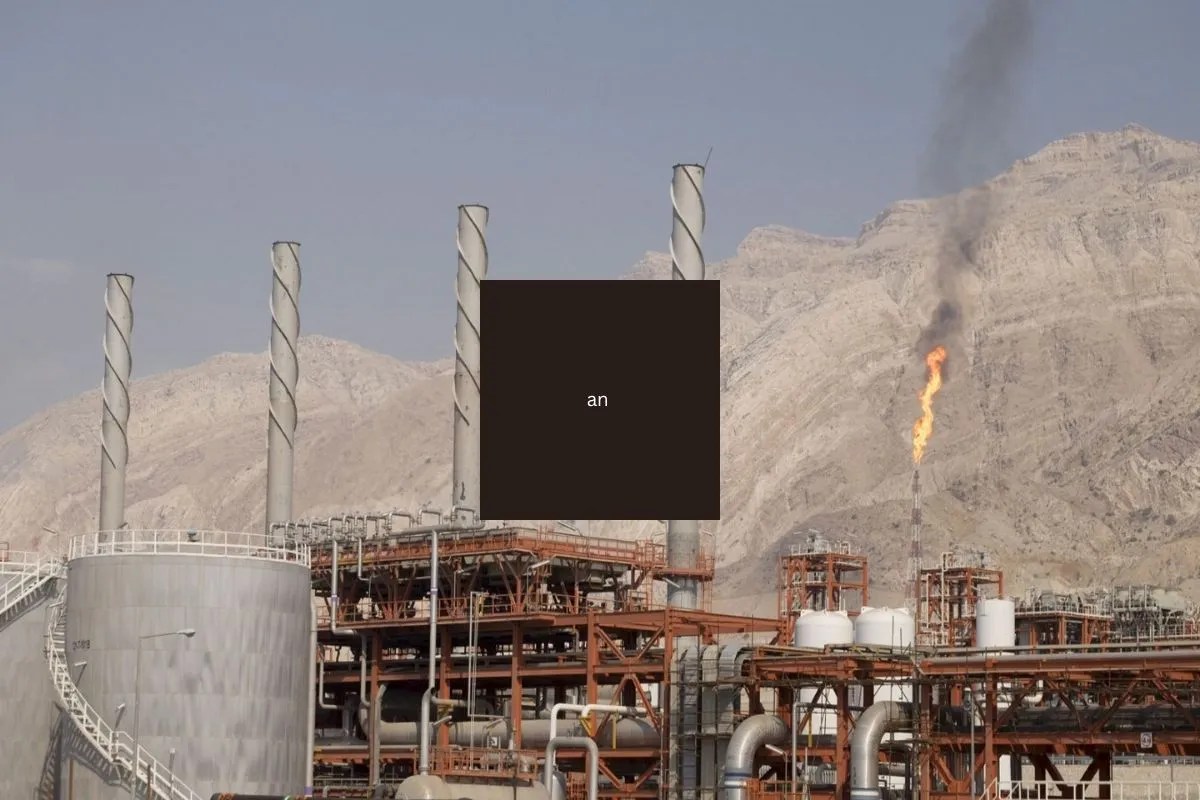
Geopolitical pressure cooker dynamics in the Middle East frequently force state energy apparatuses to publicize subsurface discoveries as strategic counterweights to macroeconomic strangulation. The announcement by Iranian Oil Minister Mohsen Paknejad regarding a natural gas deposit in the southern Fars province arrives while the national energy grid absorbs structural deficits. Evaluating the real utility of this deposit requires separating the arithmetic of raw volumetric metrics from the operational reality of extraction economics under severe sanctions and post-conflict infrastructure damage.
The Mathematical Breakdown of the Fars Province Deposit
The newly located field contains over 7.5 trillion cubic feet (Tcf) of total gas in place, with an estimated recovery factor yielding roughly 5.7 Tcf of extractable volume. To contextualize this scale against existing national assets, Iranian authorities evaluated the find against a single phase of the South Pars development block, equating the recoverable output to roughly fifteen years of production from that specific unit.
The technical composition of the resource alters its immediate economic viability. Official statements emphasize that the deposit consists of sweet gas, characterized by minimal hydrogen sulfide and impurity concentrations. This chemical profile dictates the downstream cost function:
- Sweet gas eliminates the prerequisite installation of complex, capital-intensive amine sweetening units at the wellhead.
- Operating expenditure for sour gas processing infrastructure typically demands corrosion-resistant metallurgical specifications, which are difficult to procure under active trade embargoes.
- The presence of co-extracted gas condensates introduces liquid hydrocarbon streams that command higher market values per barrel equivalent than dry gaseous fuel, adding tangible cash-flow potential once extraction commences.
The Structural Deficit Versus Subsurface Additions
To understand why a 5.7 Tcf recoverable addition does not instantly stabilize the domestic grid, one must examine baseline consumption metrics. Prior to the infrastructure disruptions that began in late February, national daily extraction hovered near 650 million cubic meters, translating to an annual consumption and production throughput of over 8 Tcf. Domestic demand absorbs over ninety percent of total output, leaving minimal structural surplus.
Recent military engagements and infrastructure strikes degraded daily production capacity by approximately a quarter, creating acute winter shortage warnings and forcing public rationing appeals. While state engineers work to restore roughly 100 million cubic meters per day of lost capacity, the temporal lag between discovering a subsurface reservoir and achieving first commercial gas flow spans multiple years. Greenfield development requires seismic imaging interpretation, exploratory drilling, pipeline spur construction, and pressure-maintenance compressor station assembly—all elements heavily dependent on foreign technology transfers that remain legally blocked by international enforcement regimes.
Sanction Mechanics and Capital Constraints
The timing of the Fars province disclosure directly intersects with intensifying financial isolation measures pursued by Western administrations. Planned asset freezes and secondary trade penalties target the institutional architecture required to fund large-scale energy projects. Without access to international project finance, syndicated loans, or proprietary oilfield services corporations, domestic operators must rely entirely on indigenous capital allocation.
This creates a resource allocation bottleneck. The capital expenditure necessary to drill production wells and lay gathering pipelines must compete with direct fiscal demands for urban reconstruction and military maintenance. Consequently, monetization of the gas condensates and dry gas streams remains contingent upon structural shifts in foreign policy or the ability to secure bilateral development credit from non-aligned industrial partners capable of supplying compression technology without utilizing dollar-denominated clearing systems.
Prioritize the immediate rehabilitation of compromised capacity at South Pars and Asaluyeh processing hubs over greenfield Fars province development, as brownfield restoration yields immediate volumetric relief to the domestic grid at a fraction of the capital expenditure required for new field deployment.