Tehran’s newly announced "professional mechanism" to regulate traffic through the Strait of Hormuz transforms the world’s most critical energy chokepoint from a kinetic flashpoint into a bureaucratic instrument of economic warfare. By declaring that only commercial vessels "cooperating" with the Iranian military may utilize a designated transit route, Iran’s legislative and military leaders are shifting away from the crude threat of total physical closure. Instead, they are implementing a system of selective access designed to fracture the international maritime coalition, collect specialized fees from non-adversarial states, and explicitly bar operators associated with the United States' "Project Freedom."
This strategy exploits a fundamental asymmetric reality: Iran does not require naval supremacy to dictate the terms of global trade. By leveraging geography, localized anti-access/area-denial (A2/AD) capabilities, and the threat of catastrophic maritime insurance inflation, Tehran is establishing a sovereign regulatory regime over an international waterway. This mechanism challenges the foundational principles of freedom of navigation while forcing global shipping firms to choose between compliance with Iranian edicts or participation in high-risk, US-escorted transit operations.
The Strategic Logic of Selective Access
The traditional Western assessment of the Strait of Hormuz assumes a binary operational state: either the strait is open, or it is closed via minefields, anti-ship cruise missiles (ASCMs), and fast-attack craft. Iran’s new mechanism demonstrates that this binary model is obsolete. Tehran is executing a strategy of "managed friction" designed to alter the risk calculus of international shipping without triggering a full-scale military retaliation from the United States or its allies.
The operational core of this mechanism relies on three distinct variables:
- Political Categorization: Vessels are segmented by national flag, beneficial ownership, and destination. Operators linked to "adversary" nations—specifically the United States and Israel—are denied entry to the designated safe route. Conversely, vessels bound for nations maintaining diplomatic engagement with Tehran, such as China and India, are granted cleared passage.
- Fiscal Extractivism: Iran intends to levy specialized fees for "professional services" rendered along its designated route. This monetizes the maritime blockade, forcing international shipping companies to directly fund the Iranian state apparatus in exchange for safe transit warranties.
- Tactical De-escalation: By offering an official, state-sanctioned route for compliant vessels, Tehran shifts the burden of escalation onto Washington. If the United States attempts to force unapproved tankers through the strait under "Project Freedom," any resulting kinetic engagement can be framed by Tehran as a defense of its regulatory sovereignty rather than an unprovoked act of aggression.
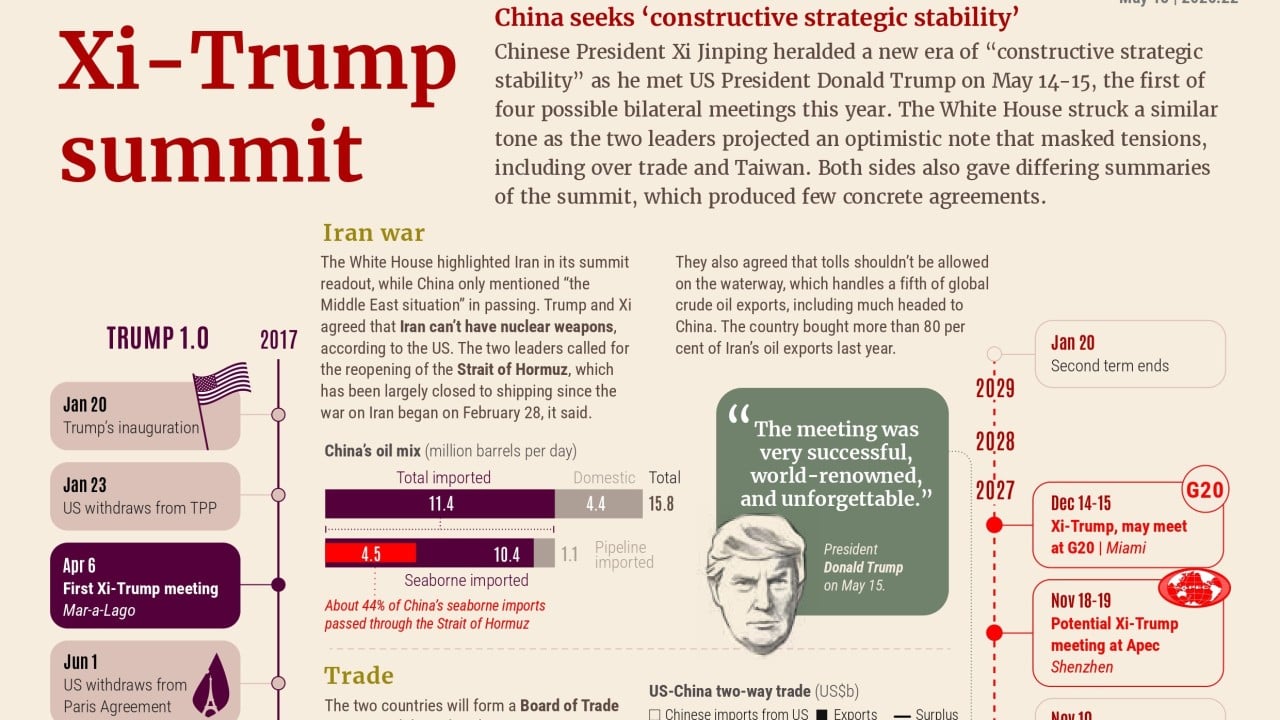
This framework allows Iran to bypass the economic penalties of a total blockade, which would alienate its primary economic lifeline, China. Beijing relies heavily on Persian Gulf crude, receiving a substantial portion of the 80 to 89 percent of oil transiting the strait destined for Asian markets. A total closure would inflict severe economic damage on China, destroying Tehran's diplomatic leverage. Selective access solves this dilemma, keeping Chinese energy corridors open while creating an operational bottleneck for Western logistics.
The Cost Function of Maritime Risk
To understand why this regulatory mechanism is highly effective, one must analyze the mathematical realities of maritime logistics. The economic viability of commercial shipping is dictated by fixed operating costs, fuel consumption rates, and protection and indemnity (P&I) insurance premiums. When a sovereign state introduces systematic uncertainty into a narrow maritime corridor, it directly alters the insurance cost function.
$$C_{\text{total}} = C_{\text{fixed}} + C_{\text{fuel}} + I_{\text{base}} \cdot e^{\alpha \cdot R_t}$$
Where:
- $C_{\text{total}}$ is the total voyage cost.
- $I_{\text{base}}$ represents the baseline insurance premium.
- $R_t$ represents the real-time geopolitical risk variable.
- $\alpha$ represents the sensitivity coefficient determined by maritime underwriters.
When commercial traffic through the strait collapsed to single-digit daily transits during heightened hostilities, it was not because the physical passage was blocked by destroyed hulls. It was because the exponential spike in $R_t$ drove P&I war-risk premiums to prohibitive levels, making uncoordinated voyages economically unfeasible.
Iran's new mechanism acts as a risk-mitigation tool for cooperating entities. By paying Tehran's specialized service fees, shipping lines effectively purchase a reduction in $R_t$, stabilizing their total voyage costs. For non-cooperating vessels, the risk remains uncapped. No commercial captain will risk an unauthorized transit without absolute ironclad guarantees of military protection, meaning that any state wishing to bypass Iran's mechanism must commit permanent, high-cost naval assets to direct escort duties.
The Asymmetric Weaponization of Supply Chains
The strategic value of controlling Hormuz extends far beyond the price of a barrel of Brent crude. The modern global economy features highly optimized, low-inventory supply chains that are acutely vulnerable to localized delays. Tehran understands that a protracted disruption in the strait acts as a macro-economic multiplier, triggering downstream industrial shocks.
The Agricultural Fertilizer Bottleneck
The Persian Gulf is a primary exporter of sulfur, a critical byproduct of oil and gas refining. The global chemical fertilizer industry consumes 60 to 70 percent of worldwide sulfur supplies to produce phosphoric acid and ammonium sulfate. A prolonged disruption of shipping through Hormuz restricts the outward flow of these raw materials. Within 60 days, this supply contraction triggers a supply deficit in global fertilizer manufacturing, leading to increased input costs for major agricultural producers in North America and Europe, ultimately driving up global food prices.
High-Tech Microchip Manufacturing Vulnerabilities
Advanced semiconductor fabrication requires substantial volumes of high-purity sulfuric acid for silicon wafer processing and microchip etching. The chemical plants that produce these specialized electronics-grade reagents rely on the steady influx of elemental sulfur transiting through the Strait of Hormuz. Disruptions in the strait increase manufacturing costs in primary East Asian technology hubs, demonstrating that Middle Eastern maritime security directly dictates the production capacity of high-tech industries in Taiwan and South Korea.
Limits of Military Power and Project Freedom
The United States’ attempt to counter Iranian dominance through "Project Freedom"—a naval campaign intended to escort stranded tankers—reveals the structural limitations of conventional naval power in restricted waters. The Strait of Hormuz is roughly 21 nautical miles wide at its narrowest point, with the shipping lanes consisting of two two-mile-wide channels separated by a two-mile buffer zone. This narrow geometry strips modern naval vessels of their primary advantages: distance, speed, and maneuverability.
Within this operational theater, the Iranian Revolutionary Guard Corps (IRGC) deploys a highly redundant A2/AD network featuring:
- Shore-Based Anti-Ship Cruise Missiles: Mobile ASCM batteries hidden along the rugged Iranian coastline can launch saturated salvos, overwhelming the Aegis combat systems of escorted naval groups.
- Unmanned Aerial and Subsurface Vehicles: Low-cost loitering munitions and autonomous underwater vehicles introduce multi-domain threats that require expensive, finite air-defense interceptors to neutralize.
- Smart Naval Mines: The deployment of bottom-dwelling, acoustic, and magnetic-influence sea mines creates a persistent hazard that requires extensive time-consuming minesweeping operations, paralyzing commercial traffic regardless of naval presence.
This tactical reality explains why the United States paused the offensive phase of its operations. The cost-exchange ratio is heavily tilted in Iran's favor. Firing a two-million-dollar air defense missile to intercept a twenty-thousand-dollar Iranian drone is financially and logistically unsustainable over a prolonged war of attrition. Consequently, while the US naval blockade of Iranian ports inflicts significant financial damage on Tehran, it cannot completely eliminate Iran's capacity to disrupt the waterway.
The Fragmented Geopolitical Response
The divergence in state reactions to Iran's regulatory mechanism highlights the fragmentation of the international rules-based order. The United States and its closest allies view the mechanism as an illegal infringement on international maritime law, specifically the United Nations Convention on the Law of the Sea (UNCLOS), which guarantees the right of transit passage through international straits.
However, China's strategic calculus is entirely different. Beijing prioritizes supply security over legal abstractions. If compliance with Iran's regulatory route guarantees the uninterrupted flow of crude oil to its industrial centers, Chinese state-owned shipping companies will comply, pay the required fees, and bypass the Western-led security framework. This dynamic isolates the United States and its immediate partners, as non-aligned economic powers choose the path of least commercial resistance rather than participating in a high-risk maritime coalition.
This creates a dangerous precedent where a regional power can successfully rewrite maritime law through the calculated application of asymmetric leverage. Other nations commanding strategic maritime chokepoints are observing this model, noting that the international community's appetite for sustained, high-cost conflict in vital shipping lanes is severely limited.
The Strategic Path Forward
Commercial shipping operators must recognize that the historical era of unhindered, low-risk transit through the Strait of Hormuz has ended. The waterway is now permanently politicized. Navigating this environment requires a fundamental reengineering of corporate and state strategies.
Global logistics enterprises must diversify their transit matrices, shifting dependencies away from single-point chokepoints. For energy supplies, this means increasing investment in cross-peninsular pipelines, such as Saudi Arabia's East-West Pipeline or the UAE's Habshan–Fujairah pipeline, despite their volume limitations relative to the strait's total capacity. For technology and agricultural supply chains, firms must establish strategic stockpiles of sulfur and sulfuric acid derivatives to build a minimum 90-day operational buffer against maritime disruptions.
Politically, the United States cannot rely solely on tactical naval escorts to break the Iranian mechanism. Washington must leverage its ongoing blockade of Iranian ports as a diplomatic bargaining chip. The naval blockade, which costs Tehran an estimated 500 million dollars per day in lost commercial activity, represents the only point of leverage capable of forcing Iran to dismantle its selective access regime. A comprehensive diplomatic resolution must treat freedom of navigation not as a military mission to be executed daily, but as a non-negotiable baseline for the relaxation of economic counter-pressures. Until such an agreement is reached, the global economy must adapt to a fragmented maritime landscape where safe passage is no longer a guaranteed right, but a sovereign commodity bought from Tehran.