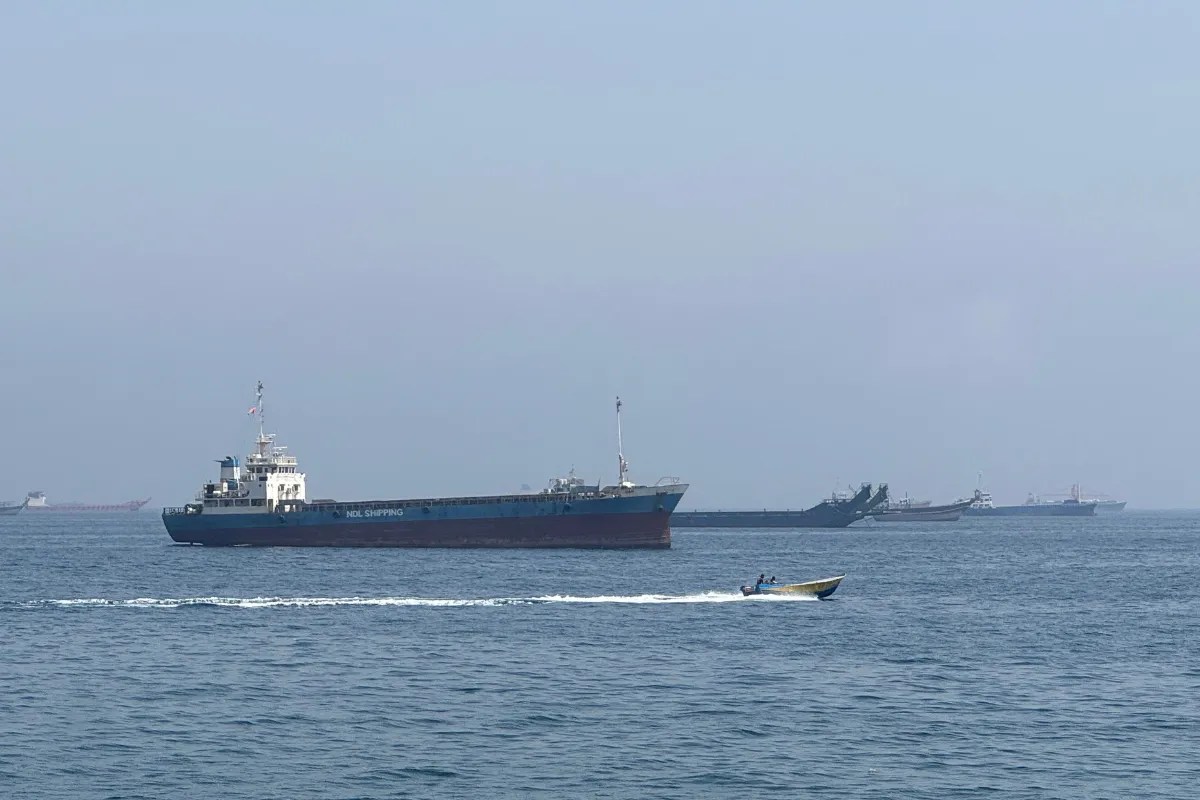
Geopolitical volatility within critical maritime corridors transforms localized kinetic strikes into systemic global supply chain failures. When an oil tanker sustains projectile damage near Oman close to the Strait of Hormuz, the operational impact extends far beyond immediate hull integrity. The incident triggers a cascading recalibration of marine insurance premiums, transit speeds, asset deployment, and sovereign risk assessments. Understanding the mechanics of such disruptions requires breaking down maritime transit corridors into structural components, cost functions, and vulnerability vectors.
The Structural Mechanics of Maritime Chokepoints
Global energy distribution relies heavily on high-density marine bottlenecks. The Strait of Hormuz represents a prime example where volume concentration creates absolute strategic vulnerability.
[Production Fields] ---> [Strait of Hormuz Chokepoint] ---> [Global Refineries]
                                  |
                                  +---> [Kinetic Disruption Event]
                                              |
                                              +---> Immediate Hull Damage
                                              +---> Trajectory Loss / Drift
                                              +---> Route Divergence & Delays
                                              +---> Insurance Premium Spikes
When a projectile impacts a vessel navigating these restricted waters, two primary operational failures occur simultaneously: physical asset degradation and navigational trajectory loss.
Physical Asset Degradation
Modern crude and product carriers feature double-hull architecture designed to withstand high-energy impacts without immediate cargo loss. However, superstructure hits or engine room penetrations disable propulsion and steering control. A compromised vessel losing power inside a narrow shipping lane transforms from an active commercial asset into a stationary navigational hazard. Salvage operations under active threat conditions introduce severe operational friction. Port authorities and vessel operators must balance environmental containment risks against the immediate necessity of clearing the fairway.
Navigational Trajectory Loss
Restricted traffic separation schemes govern movement through the Persian Gulf and the Gulf of Oman. When a vessel becomes unmanageable due to projectile damage, adjacent traffic must execute emergency maneuvers or halt transit entirely. The resulting operational bottleneck restricts the throughput capacity of the entire corridor, amplifying transit times even for undamaged vessels.
The Economic Cost Function of Kinetic Disruption
Market pricing mechanisms react instantly to perceived physical risk. A kinetic strike on commercial shipping within a vital energy corridor alters the economic calculus for shipowners, charterers, and underwriters through three distinct vectors.
Premium Volatility and War Risk Surcharges
Underwriters adjust risk models based on proximity to hostile incidents. Hull and machinery insurance, alongside kidnapping and ransom or war risk riders, experience immediate repricing. A single confirmed strike prompts insurers to implement additional premiums per voyage for vessels entering the high-risk zone. For a Very Large Crude Carrier carrying two million barrels of oil, even a fractional percentage increase in hull valuation risk translates to hundreds of thousands of additional overhead costs per transit.
Asset Re-routing and Opportunity Costs
When the risk threshold crosses corporate compliance limits, operators pause transits or seek alternative routing. Circumventing high-risk zones via longer paths or waiting out security evaluations in designated holding anchorages increases fuel consumption and ties up capital assets. The opportunity cost of delayed delivery schedules ripples through spot charter markets, driving up freight rates globally.
Inventory Buffer Depletion
Refineries and state stockpiles absorb the initial friction of delayed maritime shipments. Supply chain continuity depends on precise JIT (Just-In-Time) delivery schedules. When transit predictability drops, downstream actors must draw down strategic reserves to maintain continuous operations. This inventory depletion forces aggressive buying behavior in spot markets later in the cycle, creating artificial price spikes independent of base crude production levels.
Vulnerability Vectors in Modern Maritime Logistics
Commercial shipping operates on an assumption of benign or legally regulated environments. The reality of asymmetric gray-zone conflicts exposes structural blind spots in civilian maritime operations.
Information Asymmetry and Threat Detection
Commercial tankers possess limited defensive sensor suites compared to naval combatants. While radar and AIS transponders track surrounding surface traffic, passive identification of low-observable airborne projectiles or uncrewed surface threats remains challenging. Crews depend on early warning broadcasts from regional maritime trade information centers. When an attack occurs without prior warning, the time window for defensive maneuvering or counter-measures is effectively zero.
Crew Safety Paradigms versus Commercial Pressures
Operating in contested waters pits human safety protocols against economic incentives to maintain schedule integrity. Shipowners face difficult operational choices when evaluating threat levels. Standard operating procedures dictate standoff distances and safe zones, but commercial charter agreements often penalize unwarranted delays. This tension can lead to delayed risk mitigation adjustments until an actual kinetic event forces regulatory intervention.
Regulatory and Flag State Response Latency
Commercial vessels operate under diverse flag states, each with distinct jurisdictional protections and emergency response protocols. When an attack occurs, coordination between the master of the vessel, the flag state administration, regional naval task forces, and the owning entity involves bureaucratic friction. This latency slows down coordinated intelligence sharing and unified deterrence postures.
Strategic Operational Recommendations
Mitigating the systemic fallout from maritime chokepoint attacks requires a shift from reactive insurance absorption to proactive asset hardening and route resilience.
Tanker operators should integrate enhanced optical tracking systems and passive acoustic detection to improve situational awareness in high-risk sectors. Establishing pre-approved alternative holding zones and dynamic routing protocols ensures that masters can pivot away from compromised lanes without waiting for protracted shore-based authorization.
Energy importers must decouple critical supply chains from single-corridor dependencies by expanding overland pipeline capacity and maintaining diversified strategic petroleum reserves. Underwriters should move away from broad, reactive premium hikes across entire ocean basins, deploying granular, telemetry-based risk pricing that rewards vessels utilizing active hardening measures and hardened bridge teams.