The European Union’s €200 million ($232 million) fine against Temu under the Digital Services Act (DSA) is not a simple consumer safety enforcement action; it is a structural assault on the cross-border e-commerce business model. By penalizing PDD Holdings’ flagship international marketplace, European regulators are challenging the structural arbitrage that allows ultra-low-cost platforms to operate at scale. The regulatory mechanism deployed by the European Commission targets the fundamental operational mechanics of decentralized supply chains, transforming compliance from a cost-center into an existential operational constraint.
Understanding this enforcement action requires moving past the headlines of "unsafe toys" and analyzing the structural friction between algorithmic retail and strict jurisdiction-based legal frameworks.
The Cross-Border Arbitrage Model and Regulatory Friction
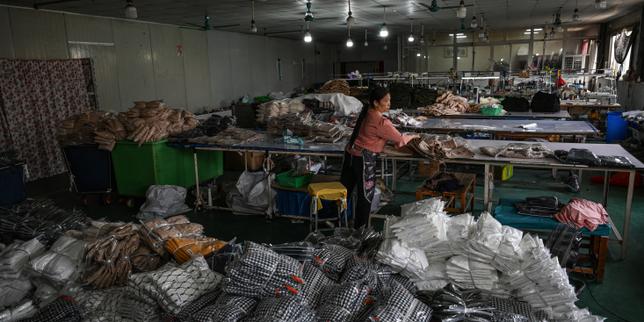
Temu’s market entry strategy relies on an unbundled supply chain configuration. Unlike traditional retailers that purchase inventory, manage quality control at centralized distribution hubs, and import goods as the importer of record, Temu operates as a pure cross-border facilitator.
[Direct-from-Factory Chinese Sellers]
         │
         ▼
[Temu Algorithmic Discovery & Recommender Engine]
         │
         ▼
[De Minimis Air Freight Shipping]
         │
         ▼
[Individual EU Consumer (Importer of Record)]
This structural configuration creates three systemic regulatory blind spots:
- Decentralized Accountability: Because individual factory owners in China act as the technical merchants, there is no centralized legal entity within the European single market to hold accountable under traditional product liability frameworks.
- The Velocity Deficit: Traditional customs enforcement relies on static bulk shipments. The volume of individual direct-to-consumer parcels bypasses deep physical inspections, relying on automated, high-velocity customs clearing.
- Asymmetric Compliance Costs: For a domestic EU manufacturer, compliance with European Standard EN 71 (governing toy safety) requires rigorous laboratory testing, chemical certifications, and administrative overhead. For an unvetted third-party seller operating via a cross-border marketplace, the localized cost of compliance is effectively zero until an enforcement action occurs.
The DSA was specifically engineered to close these gaps by shifting liability from the elusive third-party seller to the platform's infrastructure.
Deconstructing the Violation: Systemic Risk Inversion
The European Commission’s core finding focuses on a failure to execute a thorough structural risk assessment. Under Article 34 of the DSA, Very Large Online Platforms (VLOPs)—defined as platforms with more than 45 million active monthly users in the EU (Temu currently commands between 92 million and 130 million)—must systematically identify, analyze, and mitigate systemic risks arising from the design or operation of their services.
The regulatory failure discovered by European authorities can be categorized into three operational breakdowns.
1. The Breakdown of the Recommender Optimization Function
Temu's core value proposition is an algorithmic discovery engine that prioritizes user engagement, purchase conversion velocity, and absolute price competitiveness. The optimization function of this algorithm natively excludes compliance parameters. Because the system rewards high-volume, low-margin products, non-compliant manufacturers who save capital by skipping safety tests naturally outcompete compliant alternatives.
The European Commission noted that Temu failed to evaluate how its recommender systems and influencer-driven promotional networks actively accelerated the dissemination of illegal goods. The algorithmic engine acted as a force multiplier for unverified inventory.
2. Failure of Mystery Shopping Benchmarks
Regulatory investigations utilized a "mystery shopping" methodology to audit platform integrity. The empirical data returned by these audits demonstrated structural, rather than incidental, non-compliance:
- Electrical Hazard Rates: Consumer electronic power chargers systematically failed basic isolation and voltage leak tests, presenting immediate risks of electrical fire or electrocution.
- Chemical and Mechanical Failures in Toys: High percentages of infant toys violated European chemical thresholds—such as excessive boron or phthalate levels—and presented immediate mechanical asphyxiation risks due to weak structural joints holding small components.
3. Chronic Underestimation in Corporate Risk Management
Executive Vice-President Henna Virkkunen explicitly stated that Temu’s internal October 2024 risk assessment lacked specificity and empirical grounding. In practice, the platform treated risk mitigation as an administrative reporting task rather than an operational constraint.
Temu's system relied heavily on reactive enforcement—removing listings after notification—rather than proactive algorithmic filtering. This reactive posture is highly inefficient when dealing with dynamic merchant rotation, where a banned seller can instantly re-register under a different corporate shell.
The True Cost Function of the Sanction
Temu has publicly labeled the $232 million penalty as "disproportionate," arguing that the evaluation reflects outdated 2024 systems. However, looking at the financial mechanics of the DSA reveals that this fine is highly strategic, acting as a warning shot prior to maximum escalation.
Under the DSA framework, the financial penalties follow a clear escalation ladder:
| Enforcement Tier | Financial Impact | Operational Condition |
|---|---|---|
| Initial Base Penalty | €200 Million ($232 Million) | Issued for past systemic failures in platform risk assessment and governance. |
| Escalated Non-Compliance | Up to 6% of Global Annual Turnover | Applied if structural remedies are not enacted or if platform violations persist. |
| Daily Behavioral Fines | Periodic penalty payments | Levied on a recurring daily, weekly, or monthly basis to compel immediate compliance. |
For PDD Holdings, a $232 million cash outlay is readily absorbable. The true risk lies in the structural remediation timeline. The European Commission has mandated that Temu submit an enforceable "action plan" by August 28, 2026. Regulators will then have a two-year evaluation window to determine if the structural modifications are sufficient.
If the platform fails to alter its systemic risk profile, the progression to a 6% global turnover penalty would translate to a multibillion-dollar operational tax, completely erasing the margin advantages gained through its lean logistics infrastructure.
Structural Headwinds: The Compounding Regulatory Wall
The DSA fine does not exist in isolation. It converges with concurrent regulatory transformations across Europe designed to eliminate the economic advantages of direct-from-China e-commerce.
The first critical headwind is the elimination of the de minimis customs loophole. Historically, parcels entering the EU valued under €150 were exempt from customs duties. This allowed millions of small packages to bypass rigorous customs declarations. The introduction of flat structural fees on low-value e-commerce parcels, combined with proposed legislative changes to abolish the threshold entirely, systematically destroys the shipping unit economics of ultra-cheap cross-border commerce.
The second headwind is the upcoming revision of the EU Toy Safety Directive. This legislative update will transition from a directive into a uniform regulation, explicitly closing the legal loophole for third-party non-EU sellers. E-commerce platforms will be legally classified as economic operators, making them directly liable for the safety profiles of goods hosted on their infrastructure when no other EU-based representative exists.
Strategic Playbook for Platform Reconfiguration
To survive within highly regulated consumer blocs, the platform must transition from a passive marketplace into an active supply-chain governor. This transition requires three immediate operational reconfigurations:
Algorithmic Compliance Integration
The recommender system must be re-engineered to include a compliance weight ($W_c$) within the ranking optimization formula. Products from merchants lacking verified European Union Declaration of Conformity (CE marking) document uploads must face automatic visibility suppression, regardless of their price-to-conversion performance.
Decentralized Escrow and Liability Pools
The platform must establish a mandatory compliance escrow account for third-party merchants. A percentage of gross merchandise value (GMV) must be held in escrow to cover potential regulatory fines, product recalls, and testing costs. This financial architecture forces merchants to internalize the cost of compliance, naturally pricing out bad actors.
Upstream Verification Hubs
Rather than relying on reactive mystery shopping by regulators, the marketplace must deploy automated, upstream auditing at domestic consolidation warehouses within China before products are cleared for international air freight. Any merchant failing basic documentation validation or random physical lot testing must face immediate, platform-wide onboarding suspension.
The period of unregulated, frictionless cross-border retail arbitrage has reached its structural limit. Platforms that fail to embed local regulatory realities directly into their algorithmic architecture will find their business models priced out by systemic enforcement costs.