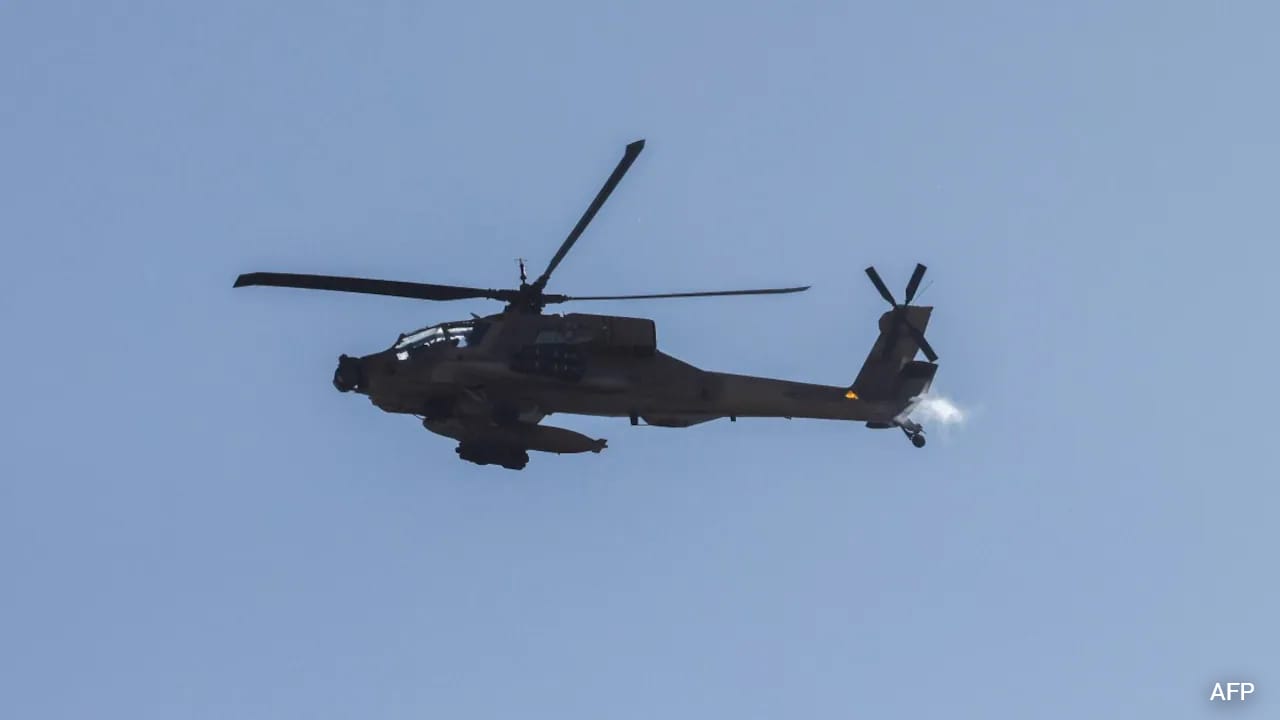
When an AH-64 Apache attack helicopter assigned to Fort Hood went down in a central Texas field near Salado, killing both crew members and initiating an uncontrolled grass fire, the public narrative immediately defaulted to speculation. Routine training flights involving complex military hardware are subject to strict systemic variables that standard news reporting routinely ignores. Deconstructing this incident requires replacing vague commentary with a structured examination of operational risk factors, mechanical complexity, and the constraints governing rotary-wing flight operations in arid environments.
The Operational Risk Architecture
Military aviation safety relies on managing an intricate matrix of human performance, mechanical reliability, and environmental variables. Training sorties are designed to push crews and aircraft to operational thresholds, which inherently elevates the exposure coefficient.
To evaluate why accidents occur during routine training, analysts must examine three core pillars:
- Environmental Stressors: High ambient temperatures, arid terrain, and thermal updrafts alter aerodynamic lift coefficients and tax engine cooling systems. Central Texas training corridors frequently present high-density altitude conditions that reduce engine efficiency.
- Cognitive Load Management: The AH-64 cockpit requires split-second task prioritization between flight stabilization, sensor management, and weapon systems simulation. Crew resource management dictates how effectively information is shared between the pilot in the rear seat and the co-pilot gunner in the front position.
- Maintenance and Flight Hours Ratio: High operational tempos place a heavy burden on ground maintenance crews, compressing the window for preventative diagnostics between multi-sortie days.
When these variables intersect unexpectedly, the margin for recovery narrows drastically. A transient mechanical anomaly that is manageable at cruising altitude becomes catastrophic if it manifests during low-altitude tactical maneuvers.
The Mechanical and Kinetic Profile of Rotary Wing Failures
The AH-64 Apache is a tandem-seat, twin-engine attack platform engineered for high maneuverability and survivability. However, its design priorities—heavy armor, redundant flight control systems, and high-power General Electric turboshaft engines—result in a high wing-loading profile.
When a structural or propulsion failure occurs close to the ground, the physics of rotary-wing flight leave little time for autorotation entry.
- Energy Dissipation: Ground impact velocity dictates the severity of the structural compromise. Eyewitness descriptions of a violent impact indicate high downward vertical velocity coupled with forward momentum, bypassing the energy-absorbing structural attenuation designed into the crew seats.
- Secondary Hazards: Aviation fuel dispersion upon impact frequently converts mechanical failure into thermal hazards. The Salado incident ignited a fast-moving grass fire that necessitated local structural evacuations and the deployment of aerial retardant tankers, illustrating how the geographic footprint of an aviation accident extends well beyond the initial point of impact.
The Investigation Protocol and Diagnostic Bottlenecks
Determining the root cause of a military aviation mishap is a methodical, multi-week engineering process led by specialized military investigators, such as the Army's Criminal Investigation Division alongside aviation safety centers.
The investigative workflow faces distinct analytical hurdles:
- Perishable Evidence: Fire damage destroys critical composite materials, wiring harnesses, and avionics before forensic teams can secure the perimeter.
- Flight Data Recorder Recovery: Modern Apaches utilize advanced multiplex data buses that record hundreds of flight parameters per second. Extracting and decrypting this data requires pristine recovery of crash-survivable memory modules.
- Human Factors Analysis: Toxicology reports, pre-accident sleep logs, and maintenance sign-off sheets must be cross-referenced against the physical wreckage to isolate whether the failure mode was mechanical, physiological, or environmental.
Strategic Fleet Implications
Every high-profile military helicopter crash triggers an immediate review of standard operating procedures across related operational units. Groundings or fleet-wide safety stand-downs are tactical instruments used by command elements to verify whether an incident represents an isolated human or mechanical error or a systemic fleet-wide vulnerability.
Commanders must constantly balance operational readiness against exposure risk. Halting training flights preserves airframes and personnel but degrades tactical proficiency across combat aviation brigades. The strategic response to the Salado crash will depend entirely on whether forensic data points toward a fleet-wide component defect or localized environmental and operational factors. Implement rigorous diagnostic tracking on high-hour turboshaft components and mandate expanded simulator hours for low-altitude emergency recovery procedures to mitigate future exposure.


