Switzerland's procurement of 32 KNDS DONAR 10x10 wheeled self-propelled howitzers represents a structural shift in land warfare doctrine, abandoning static, high-mass armored defense in favor of dynamic, automated attrition optimization. The €919 million contract signed by the federal armaments office, armasuisse, replaces the country's legacy fleet of M109 KAWEST tracked howitzers, which have underpinned Swiss indirect fire capabilities since the 1960s. This transition is not merely a modernization cycle. It is a calculated reassessment of artillery metrics, trading raw volume and heavy chassis armor for highly rapid execution, automation, and continuous movement.
The strategic rationale behind this procurement relies on clear mathematical equations defining survival in modern, peer-to-peer conflict. Historically, artillery survivability was a function of physical armor thickness and entrenched positions. In contemporary high-intensity theaters, counter-battery radar systems detect incoming projectiles instantly, calculating the firing coordinates before the first round impacts. Consequently, the survival function of an artillery asset has shifted from armor mass to a strict time-to-displacement matrix, rendering legacy platforms like the M109 obsolete. Discover more on a related issue: this related article.
The Mathematical Impossibility of Legacy Survival
The vulnerability of the Swiss Army’s outgoing M109 KAWEST systems stems from an inability to balance the three variables of the classic counter-battery equation: time-to-fire, total engagement duration, and displacement velocity.
To survive an adversary's counter-battery response, a howitzer must complete its firing mission and move outside the blast radius of incoming enemy rounds before those rounds arrive. This relationship is governed by a strict operational window: More journalism by The Verge delves into comparable views on this issue.
$$T_{\text{total}} = T_{\text{set}} + T_{\text{fire}} + T_{\text{stow}} + T_{\text{displace}}$$
Where:
- $T_{\text{set}}$ is the time required to halt, orient, and lay the gun.
- $T_{\text{fire}}$ is the duration of the active firing cycle.
- $T_{\text{stow}}$ is the time to secure the piece for travel.
- $T_{\text{displace}}$ is the physical transit time required to clear the counter-battery zone.
For legacy platforms like the M109, $T_{\text{set}}$ and $T_{\text{stow}}$ represent major temporal bottlenecks. The platform requires manual deployment of spades or stabilizing elements, physical aiming confirmation, and manual handling of charges and shells. This extends the pre- and post-fire vulnerabilities into minutes.
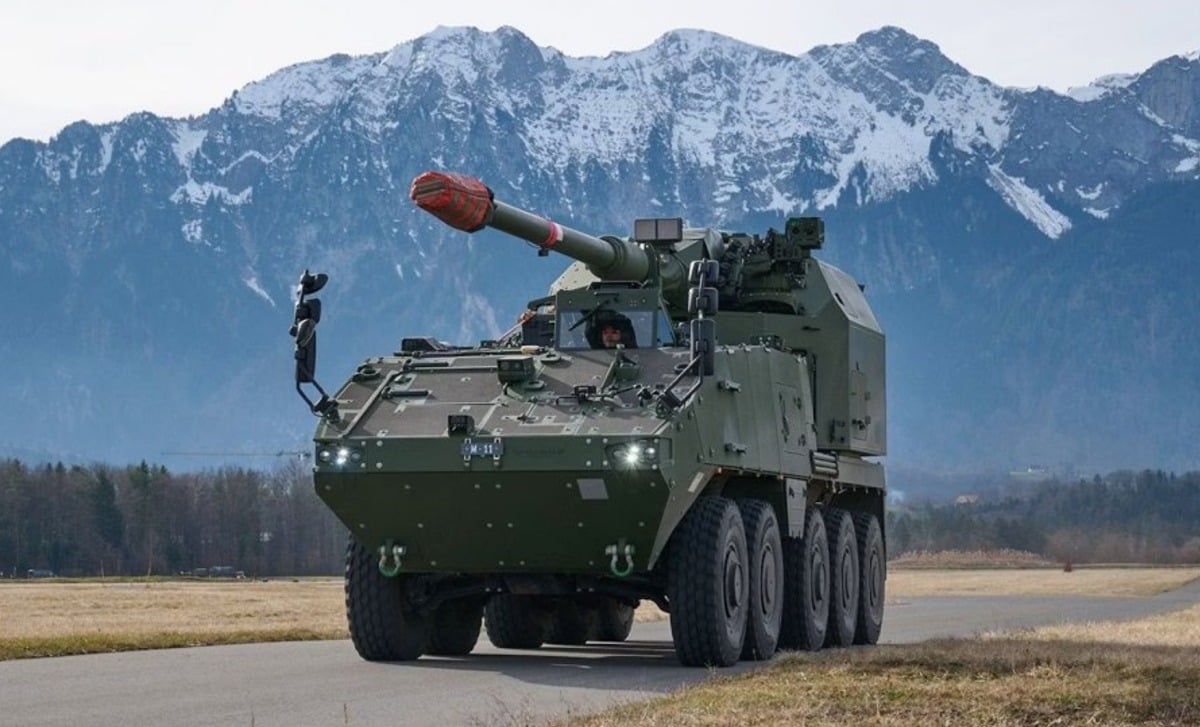
The DONAR system eliminates $T_{\text{set}}$ and $T_{\text{stow}}$ entirely by executing the entire sequence from an active, rolling state. By mounting the automated Artillery Gun Module (AGM) onto a multi-link suspension 10x10 Piranha IV chassis developed by GDELS-Mowag, the system achieves mechanical stabilization through hydraulic dampening rather than static anchoring. The system fires from an unanchored state, allowing it to execute "shoot-and-scoot" protocols where the vehicle is accelerating away from the firing position before the final shell reaches its apogee.
The Mechanized Efficiency of Automated Fire Control
The core technology enabling this compressed timeline is the integration of an unmanned, fully autonomous turret module. While traditional self-propelled howitzers require five to eight crew members to handle ammunition, manually load charges, and set fuzes, the DONAR scales operational personnel down to two.
This human-to-machine substitution relies on three synchronized subsystems within the AGM:
The Inductive Fuze Programming Matrix
As a projectile enters the loading tray, the fire control computer uses the NATO Armaments Ballistic Kernel to inductively program the electronic fuze within milliseconds. This eliminates the manual hand-setting of fuzes, reducing human error and maximizing rate-of-fire consistency.
The Automated Projectile and Charge Handling System
The unmanned turret stores 30 primed 155mm projectiles and 144 modular charge zones. A robotic loader selects the designated shell type—whether conventional high-explosive, base-bleed for extended range, or sensor-fuzed anti-armor munitions like the SMArt 155—and pairs it with the correct number of propellant modules.
The 360-Degree Continuous Laying Drive
Unlike legacy systems that suffer from restricted traverse arcs due to chassis tipping risks, the 10x10 wheel configuration distributes the recoil force of the 155mm/L52 gun across five axles. This allows a complete 360-degree firing arc at varying elevations without the risk of structural rolling or chassis damage.
The direct result of this automated architecture is the execution of Multiple Rounds Simultaneous Impact (MRSI) missions. In an MRSI engagement, the system fires consecutive rounds at different trajectories and varying propellant volumes. The first round is fired at a high, steep angle with a heavy charge, while subsequent rounds are fired at flatter trajectories with lower velocities.
The fire control computer calculates these paths precisely so that all shells arrive at the exact same target coordinates at the exact same microsecond. A single DONAR platform can deliver up to six rounds simultaneously, achieving the target-area shock value of an entire traditional artillery battery using just a single vehicle.
Industrial Offset and Geopolitical Integration
The financial structure of the contract highlights the strict defense policy goals of the Swiss Federal Council's June 2025 Armament Policy Strategy. The acquisition features a highly distributed supply chain designed to satisfy domestic industrial requirements while cementing defense technology ties with neighboring European nations.
[Prime Contractor: KNDS Deutschland]
       │
       ├──► [Artillery Gun Module (AGM) production in Germany]
       │
       └──► [Subcontractor: GDELS-Mowag in Switzerland]
                 │
                 └──► [Piranha IV 10x10 Chassis & Assembly]
By retaining the chassis manufacturing and final vehicle integration within Switzerland via GDELS-Mowag, armasuisse secures significant domestic economic offset. This dual-nation industrial model provides two main strategic benefits:
- Sovereign Maintenance Capability: The domestic production of the Piranha IV chassis ensures that the Swiss Armed Forces can maintain, repair, and overhaul the primary mobility component of their artillery fleet without relying on foreign facilities during a crisis.
- Interoperability and Standardization: The AGM module shares deep subsystem commonality with the RCH 155 platforms purchased by Germany, the United Kingdom, Qatar, and Ukraine. This shared technical footprint simplifies the collective European supply chain for spare parts, ammunition development, and barrel replacements.
Structural Trade-offs and Operational Limits
The DONAR platform is not a flawless solution for all combat scenarios. Its selection involves clear compromises that Swiss planners have accepted in exchange for mobility and automation.
The primary limitation rests in the sheer volume of available ammunition. The AGM turret houses exactly 30 rounds of 155mm ammunition. In high-intensity defensive operations, an automated rate of fire exceeding eight rounds per minute will deplete the onboard magazine in less than four minutes of sustained engagement.
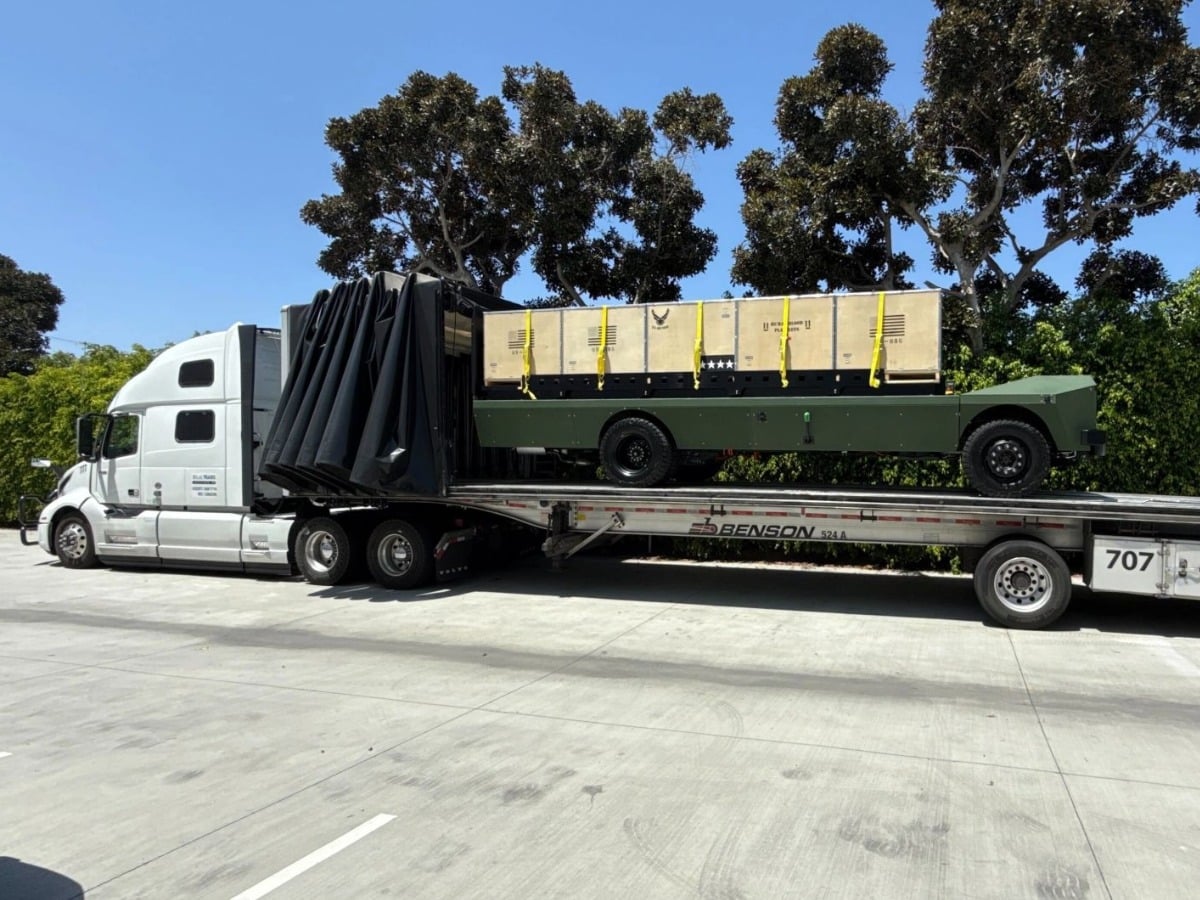
To mitigate this bottleneck, the contract includes 32 specialized ammunition loading containers. These support vehicles are engineered to match the off-road mobility of the Piranha IV and utilize automated transfer mechanisms to replenish the howitzer's turret under armor. However, this creates a secondary vulnerability: the artillery unit's operational endurance is completely tied to the survival of its logistical tail. If the replenishment vehicles are interdicted by drone strikes or counter-battery fire, the DONAR becomes combat-ineffective after a single major engagement.
A second trade-off involves the physical footprint of a 10x10 wheeled vehicle. While wheeled platforms offer superior transit speeds on paved networks (exceeding 80 km/h) and lower lifecycle maintenance costs compared to tracked platforms, they exhibit a higher ground pressure profile. In alpine mud, deep snow, or heavily cratered terrain, a 36x-ton wheeled vehicle faces mobility constraints that a tracked vehicle, with its distributed footprint, would easily navigate. The Swiss reliance on this platform assumes that future defensive operations will utilize the country's highly developed alpine road infrastructure rather than sustained off-road maneuvering.
Strategic Forecast
The deployment timeline outlines a methodical validation process. The delivery of a single finalized prototype in 2027 initiates a intensive qualification phase throughout 2028. This long-term testing window allows the Swiss military to integrate the system's digital command architecture into their existing tactical communication networks before mass manufacturing begins.
When serial deliveries commence in 2031, the Swiss Army will field a drastically smaller but vastly more lethal artillery force. Replacing 133 legacy M109 units with just 32 DONAR platforms represents a 76% reduction in hull count. However, the combination of automated loading, continuous shoot-and-scoot capability, and MRSI algorithms means these 32 platforms will deliver higher target saturation and vastly superior survivability metrics than the outgoing fleet.
The final strategic move for Swiss defense planners requires transitioning away from traditional forward-deployed artillery positions. To fully exploit the DONAR architecture, batteries must be managed as decentralized, fluid assets that operate independently across the alpine network, using real-time drone targeting data to strike and move before adversary sensors can register their presence.