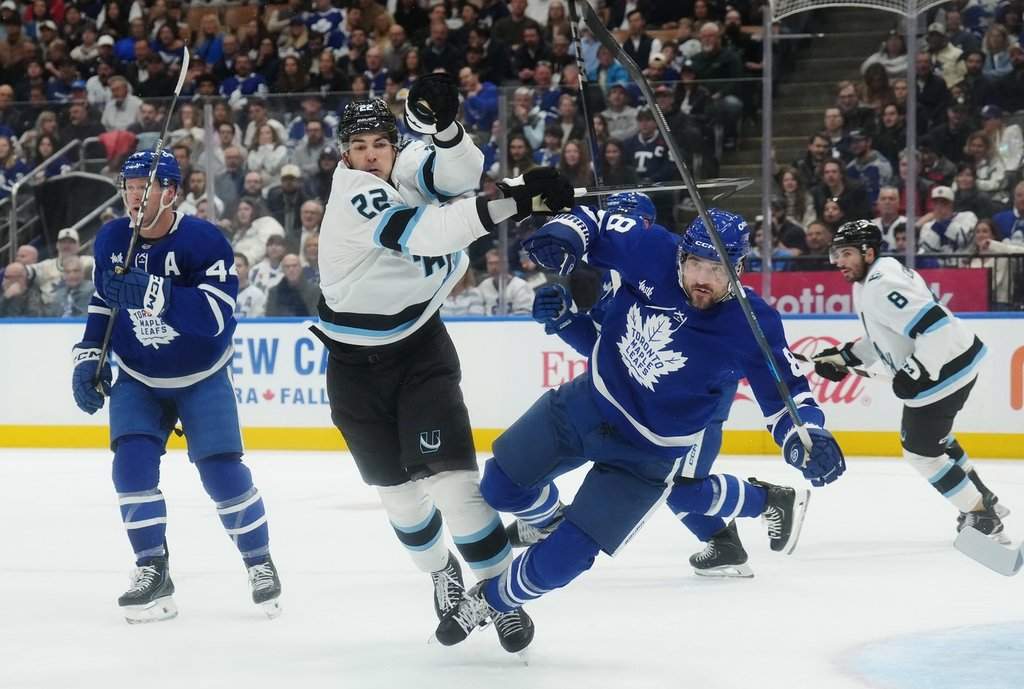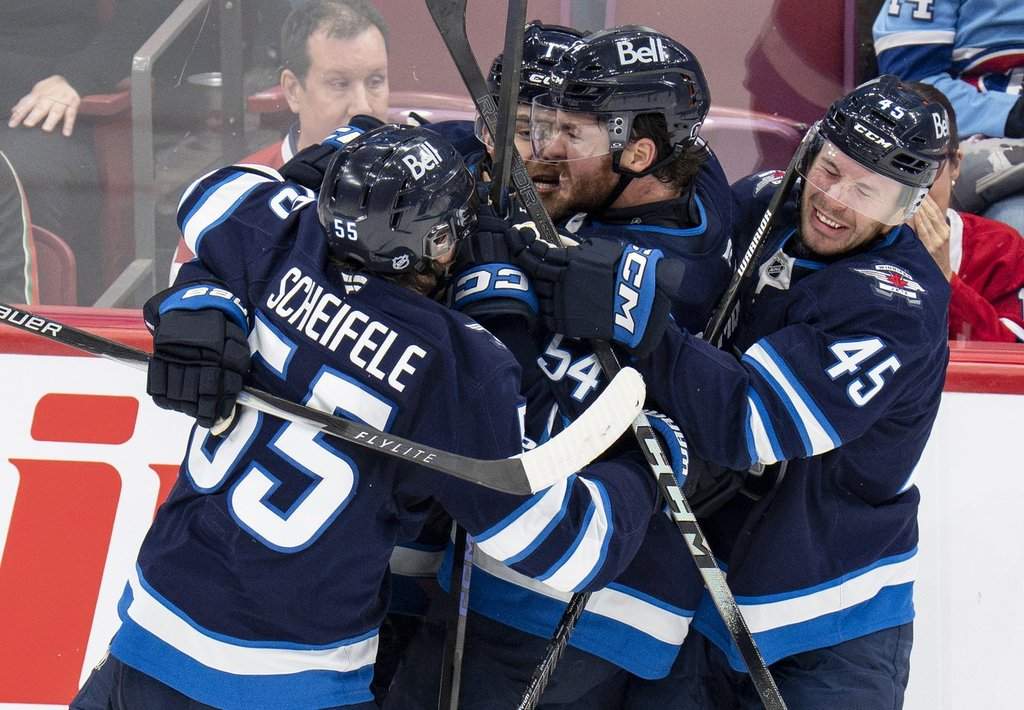
Chaos.
That is the only honest word for what happens to a human nervous system when nine goals are crammed into sixty minutes of professional ice hockey, and the clock refuses to bleed out fast enough for the team clinging to a single-digit lead.
If you look at the box score from the night the Anaheim Ducks held off the Vancouver Canucks for a 5-4 victory, the ink looks clean, sterile, and entirely deceptive. It reads like a standard regular-season ledger—a list of goal scorers, power-play percentages, shots on goal, and time on ice. A box score tells you what happened, in the same way an autopsy report tells you what happened to a person without ever mentioning how fiercely they fought to keep breathing. It misses the burning lungs in the third period. It misses the taste of copper in the back of a defenseman’s throat after blocking a ninety-mile-an-hour slap shot with the inside of his knee. It misses the silent, suffocating terror of watching a comfortable cushion dissolve into a one-goal frantic scramble against a Vancouver roster built to punish hesitation.
I have sat in the lower bowl of arenas during games like this, close enough to hear the hollow thwack of composite sticks slashing at shins and the ragged, wheezing curses of players collapsing onto the bench after a ninety-second shift trapped in their own defensive zone. When you are down at ice level, you realize quickly that hockey is not played on a grid; it is played inside a pressure cooker. And on this night, Anaheim did not merely win a hockey game. They survived an interrogation of their identity.
The Illusion of a Comfortable Lead
To understand why a 5-4 scoreline carries so much psychological scar tissue, you have to understand the cruelest trap in sports—the multi-goal lead against a high-octane opponent.
Think of a lead in the National Hockey League not as money locked safely in a vault, but as ice cubes held in a bare fist. You can squeeze as hard as you want, grit your teeth, and swear you will not let go, yet the simple friction of time and heat ensures that what you are holding is constantly shrinking. Against a team like the Vancouver Canucks, whose offensive engine thrives on transition speed, heavy cycle work along the boards, and elite finishing talent, a two-goal or three-goal margin is nothing more than an invitation for panic.
Early on, Anaheim played with the loose, electric confidence of a young team that had nothing to lose and everything to prove. They attacked the neutral zone with speed, forced Vancouver’s defensemen to turn their hips toward their own goal, and capitalized on those microscopic lapses in coverage that separate a highlight-reel finish from a harmless dump-in. Every time the red light flashed behind the Vancouver net, the building erupted with a kind of surprised euphoria. Five goals against a structured Pacific Division rival is no small feat; it requires crisp east-west passing, net-front traffic that blinds the goaltender, and a willingness to shoot the puck before the passing lanes close.
Yet ask any veteran who has logged a thousand games in the league, and they will tell you that scoring five goals often breeds a subtle, dangerous disease. Your forwards start cheating toward the offensive blue line a half-second too early, hungry for a sixth. Your defensemen stop taking the extra stride to absorb a hit while making a clean breakout pass, opting instead to blindly chip the puck off the glass and pray it clears the zone.
And Vancouver smelled blood.
Inside the Third-Period Meat Grinder
Consider a hypothetical scenario—a composite picture drawn from dozens of real NHL locker rooms—to see what happens on the bench when a 5-2 or 5-3 cushion suddenly shrinks to 5-4 with eight minutes remaining on the clock.
Picture a twenty-two-year-old Anaheim center, call him Leo, sitting at the end of the bench. His jersey is soaked dark with sweat, clinging to his shoulder pads like wet canvas. His thighs feel like they have been injected with wet cement. Two minutes ago, he was thinking about post-game recovery shakes and where to grab dinner. Now, Vancouver has just pulled their goaltender for an extra attacker, turning the final two minutes of regulation into a six-on-five shooting gallery.
The coach taps Leo on the shoulder. You’re up.
Suddenly, the stadium noise vanishes, replaced by the deafening thud of his own pulse against his eardrums. In that moment, the entire season—all the off-season sprints, the video sessions, the bruised ribs—distills down to a single, terrifying mandate: win one faceoff, clear one puck, survive forty-five seconds.
That is the invisible reality of the third period between Anaheim and Vancouver. When the Canucks pushed back, scoring four times to drag themselves within a single bounce of overtime, the geometry of the ice seemed to tilt toward the Ducks' net. Vancouver’s top units began operating with surgical desperation, snapping the puck around the perimeter, drawing Anaheim’s defenders out of their tight defensive box, and firing heavy point shots into a forest of sticks and shin pads.
You could feel the tension radiating from the glass. Every whistle felt like a reprieve from an execution. Every icing call against Anaheim—preventing their exhausted five-man unit from changing while Vancouver threw fresh, rested superstars onto the ice—felt like a slow-motion catastrophe.
Why Holding On Matters More Than Blowing Out
Why do fans and analysts obsess over games like this? Why does a messy, white-knuckle 5-4 win carry more weight in a team’s developmental arc than a pristine 4-0 shutout?
Because blowouts teach you how to celebrate, while one-goal survivals teach you how to endure.
For a franchise like the Anaheim Ducks, navigating the treacherous waters of a rebuild and fighting for relevance in a brutal Western Conference, learning how to close out a game is the hardest lesson in the curriculum. Talent gets you the five goals. Talent produces the silky backhand passes, the laser wrist shots from the slot, and the power-play execution that lights up the scoreboard. Anyone who watches Anaheim regularly knows their young core possesses raw, undeniable skill that can overwhelm an opponent in flashes.
Character, however, is what prevents the fourth Vancouver goal from becoming the fifth.
Let us be completely honest about the mechanics of late-game defense: it is ugly, painful, and deeply unglamorous. Nobody grows up practicing shot-blocking in their driveway. No kid dreams of diving face-first onto frozen rubber to deflect a slap shot off their collarbone while a two-hundred-pound forward cross-checks them in the lower back. Yet in the final minutes against Vancouver, that exact brand of self-preservation amnesia is what saved Anaheim.
Think of late-game defensive structure like a submarine hull diving past its recommended depth limit. You do not need the submarine to move fast anymore; you just need the rivets to hold while the ocean tries to crush you from every angle at once. Every time an Anaheim defender stayed glued to his post at the back door, refusing to chase a Vancouver decoy behind the net, a rivet held. Every time the Anaheim goaltender swallowed a rebound into his chest rather than letting it kick out into the high-danger slot, the hull stayed intact.
The Anatomy of Vancouver’s Relentless Push
It would be dishonest to tell this story without giving Vancouver their due, because a hero is only as compelling as the monster at the door.
The Canucks are built to turn minor mistakes into major tragedies. Their comeback surge was not a fluke born of lucky bounces; it was the predictable result of relentless forechecking pressure and elite puck possession. When Vancouver trails late, they play with a controlled fury that forces opponents into bad decisions. They overload one side of the ice, baiting defenders into pinching down the wall, and then whip a cross-ice seam pass to an open shooter on the weak side.
Watching them dissect Anaheim’s coverage for four goals was a masterclass in offensive persistence. Each Vancouver goal chipped away at Anaheim’s composure, planting seeds of doubt that have ruined countless young teams over the decades. We have all seen that exact movie before: the underdog builds a lead, the heavyweight lands a counterpunch, the underdog freezes in the headlights, and within ten minutes the heavyweight walks away with both points in the standings.
I will admit, watching the momentum swing in the third period, it is nearly impossible not to expect the collapse. Sports fans are conditioned by heartbreak to wait for the other shoe to drop. When Vancouver cut the deficit to a single goal, the historical weight of past blown leads hung heavy in the air. You start looking at the clock every three seconds. You start bargaining with the hockey gods just to get the puck across the red line so someone can dump it deep and buy six precious seconds of breathing room.
The Seconds That Define a Season
Yet the collapse never came.
In the dying moments, as Vancouver swarmed the crease with six skaters and an empty net at the far end of the rink, Anaheim’s young roster refused to fracture. Instead of panicking and throwing blind backhand passes up the middle of the ice—the cardinal sin of desperate hockey—they absorbed the contact, pinned the puck along the half-wall, and forced Vancouver to burn valuable seconds digging it out of skates.
Look closely at what happened in those final shifts, and you see the blueprint of a team growing up in real time:
- Discipline under fire: Avoiding the retaliatory hook or trip when legs are burning and sticks are flying everywhere.
- Goaltending poise: Tracking pucks through three layers of traffic when a single deflection means sudden-death overtime.
- Faceoff execution: Winning a clean draw in the defensive zone so the winger can ring the puck around the glass and out of danger.
When the final horn finally blared, slicing through the roar of the crowd and freezing the clock at 0.0, there were no extravagant celebrations. No one leaped into the glass. The Anaheim players simply glided together toward their crease, helmets bumping, gloves tapping chests, exhaling a collective breath they seemed to have been holding for twenty minutes.
Two points in the standings look identical in April whether you win by five goals or survive by one. The record books will simply note that Anaheim defeated Vancouver 5-4, logging another entry in the long, grueling marathon of an eighty-two-game season.
Out on the ice, though, lingering near the crease as the Zamboni doors swung open to scrape away the carved-up snow and sweat, a young team stood a little taller—knowing they had stared straight into the teeth of a storm, felt the ice cracking beneath their skates, and refused to fall through.