The geographical re-expansion of the New World screwworm, scientifically classified as Cochliomyia hominivorax, across Central America and Mexico marks a structural failure in biological containment. With regional surveillance documenting more than 500 human infections alongside tens of thousands of agricultural cases, the epidemiological equilibrium established by mid-century eradication programs has collapsed. Understanding this vector-borne threat requires moving past sensationalized narratives to examine the underlying biological mechanics, the economics of vector control, and the transmission vectors driving human pathology.
The Vector Life Cycle and Pathogenic Mechanics
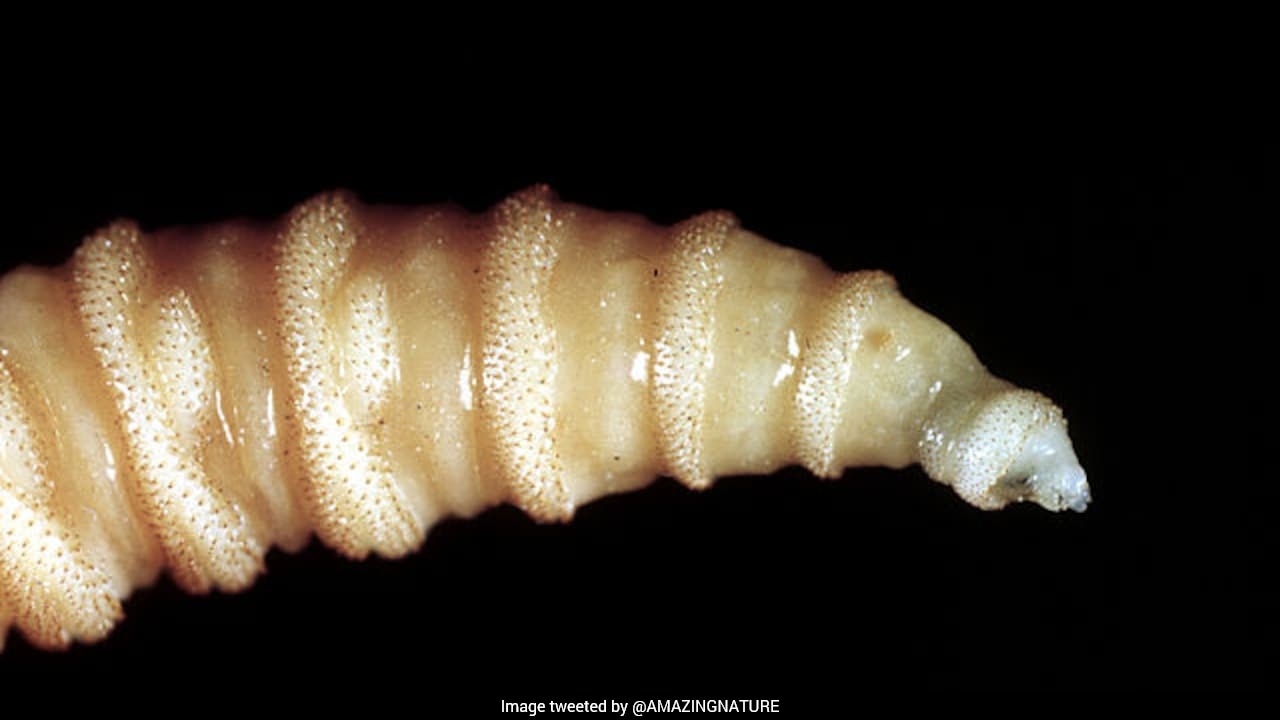
Cochliomyia hominivorax functions as an obligate parasite whose lifecycle depends entirely on the consumption of living mammalian tissue. The adult female fly, distinguished by distinct anatomical markers and a habit of mating precisely once during its lifecycle, seeks out warm-blooded hosts for oviposition.
The infestation sequence follows a strict operational timeline:
- Olfactory Attraction: The female fly detects volatile organic compounds emitted by necrotic tissue, blood, or minor skin breaches. Openings as negligible as a tick bite, a surgical incision, or an unhealed scratch serve as adequate entry points.
- Oviposition: The female deposits between 200 and 300 eggs directly on the margins of the wound. A single female can yield up to 3,000 eggs across its 10- to 30-day lifespan.
- Larval Excavation: Within approximately 24 hours, the eggs hatch into first-instar larvae. These organisms possess sharp mouthhooks and secrete proteolytic enzymes that liquefy host tissue, allowing them to burrow vertically and laterally into muscle, cartilage, and bone.
- Pupation: After roughly seven days of continuous tissue consumption, the third-instar larvae detach from the wound, drop to the soil, and pupate before emerging as adult flies to restart the cycle.
Left untreated, the compounding tissue destruction creates deep myiasis capable of causing systemic infection, severe blood loss, and mortality.
Epidemiological Profiling of Human Cases
Recent clinical data from public health surveillance in Mexico reveals distinct demographic and physiological vulnerabilities among human hosts. While animal hosts—particularly cattle, sheep, and goats—bear the vast majority of the epidemiological burden, human cases highlight specific risk factors that dictate clinical outcomes.
The distribution of infections is heavily skewed by environmental exposure and baseline health metrics:
- Age and Comorbidities: Clinical cohorts indicate an average patient age of approximately 61 years, with a high prevalence of underlying chronic conditions such as diabetes, peripheral vascular disease, or dermatological disorders that impair skin integrity.
- Anatomical Site Selection: Over half of all documented human infestations occur on the lower extremities, specifically the legs and feet, where chronic venous stasis ulcers or minor trauma often go unnoticed by patients with reduced peripheral sensation. The remaining cases disproportionately impact the head and neck, including the nasal cavities, oral mucosa, and aural passages, driven by nocturnal exposure when victims are unable to swat away adult flies.
- Gender Disparity: Roughly 72 percent of recorded cases affect men, a statistical variance directly correlated with occupational exposure in agricultural, livestock, and outdoor labor sectors.
The Failure of the Biological Barrier
The containment of Cochliomyia hominivorax historically relied on the Sterile Insect Technique (SIT), pioneered in the mid-20th century. This intervention model operates on a straightforward mathematical principle: mass-rearing millions of male screwworm flies, sterilizing them via irradiation, and releasing them into target zones. Because female screwworm flies mate only once, competition between sterile and wild males drastically reduces the proportion of fertile eggs, driving population collapse over successive generations.
For decades, a designated biological barrier maintained in Panama successfully prevented the northward migration of endemic populations from South America. However, ecological disruptions, funding bottlenecks in regional surveillance, and increased livestock transit permitted the barrier to be breached. Once the parasite established self-sustaining populations in Central America and Mexico, the sheer volume of animal movement overwhelmed existing sanitary checkpoints.
The re-detection of the parasite in United States livestock—evidenced by confirmed animal cases in Texas and New Mexico—demonstrates that geographical borders provide negligible resistance to airborne vectors supported by dense animal reservoirs. Although locally acquired human cases have not been documented north of the Mexican border, the presence of agricultural vectors re-establishes a baseline vulnerability that federal agencies have not faced in generations.
Operational Protocols for Clinical Mitigation
Mitigating the risks posed by the resurgence of Cochliomyia hominivorax requires an integrated One Health approach spanning veterinary oversight, human healthcare diagnostics, and personal prophylaxis. The absence of localized human transmission in the United States does not insulate border populations, making adherence to strict clinical and behavioral standards paramount.
For healthcare providers operating in or receiving patients from affected zones, diagnostic protocols must account for atypical presentation:
- Immediate Physical Extraction Constraints: Clinicians must avoid attempting manual or crude extraction of live larvae without specialized pharmacological paralyzing agents, as mechanical tearing can leave mouthhooks embedded, triggering severe secondary bacterial infections or septic shock.
- Chain of Custody for Specimens: Extracted larvae must be preserved immediately in leak-proof containers containing isopropyl alcohol rather than discarded into general waste streams, ensuring definitive entomological identification and preventing environmental propagation.
- Prophylactic Environmental Controls: Individuals residing in or traveling through endemic regions must deploy chemical and physical barriers, including EPA-registered insect repellents, permethrin-treated garments, fine-mesh window screening, and the immediate occlusive dressing of any minor cutaneous lesion.
Strategic Forecast and Containment Trajectory
The containment of the current resurgence depends entirely on the operational scaling of sterile insect production facilities and the strict enforcement of inter-state and international livestock quarantine protocols. Without a synchronized tri-national strategy between the United States, Mexico, and Central American states to re-establish an impenetrable sterile fly barrier, the vector will continue to exploit climate adaptations and expanding host densities. Public health systems must transition from reactive case management to aggressive, preemptive veterinary surveillance at the southern border to neutralize agricultural reservoirs before they translate into widespread human morbidity.