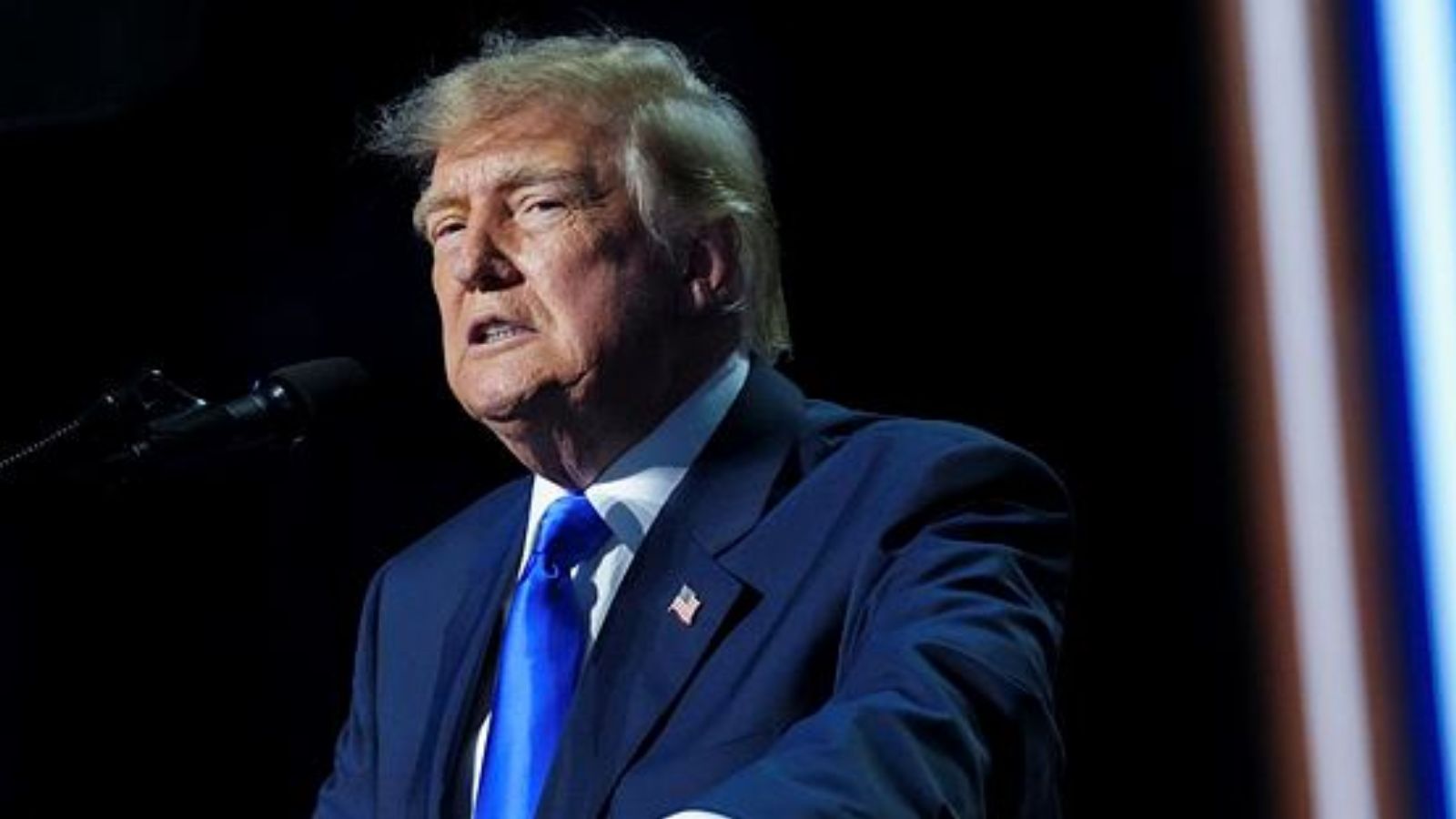
Collective memory in modern political communication operates under a rigid set of structural incentives. When a high-profile figure interacts with a watershed national tragedy, the resulting public statements rarely function as objective historical recountings. Instead, they act as defensive perimeter strategies designed to anchor the individual within the mythology of the event. The decision by political leadership to bypass the twenty-fifth-anniversary commemoration at Ground Zero in favor of an independent address at the Pentagon, coupled with escalating personal anecdotes of physical peril during the 2001 attacks, exposes a predictable pattern of narrative calibration. This dynamic requires a forensic breakdown of how public figures retrofit personal biographies to meet the psychological demands of political survival.
The Mechanics of Narrative Evolution
The primary driver behind shifting historical accounts lies in the friction between static past events and dynamic political positioning. Over a quarter of a century, public statements regarding personal exposure to the September 11 attacks have transformed from generalized expressions of civic grief into hyper-specific accounts of physical rescue and immediate operational leadership.
This evolution follows a distinct operational lifecycle:
- Phase One (Immediate Aftermath): Public expressions rely on broad observation, focusing on urban resilience and general devastation witnessed from a distance.
- Phase Two (Mid-Tier Political Integration): Narratives incorporate localized proximity, asserting visual confirmation of structural impact and immediate site visits.
- Phase Three (Mature Political Positioning): Accounts expand to include direct physical endangerment, such as rescue operations involving emergency personnel or threats of secondary structural collapse.
The operational risk of this third phase is verification failure. When archival records, contemporary journalistic documentation, and eyewitness testimony from municipal rescue workers fail to corroborate structural claims—such as being bodily carried away from an unstable zone by firefighters—the narrative incurs a severe credibility cost. Yet, within modern political ecosystems, the short-term utility of asserting central placement within a historic crisis routinely outweighs the long-term cost of documentary contradiction.
The Spatial Logistics of Commemoration
The friction surrounding the twenty-fifth anniversary centers heavily on physical geography and protocol constraints. The National September 11 Memorial and Museum enforces a strict nonpartisan protocol that has barred political figures from delivering public remarks at Ground Zero since 2012. This operational rule creates a zero-sum choice for a sitting executive seeking a major platform: comply with a format that denies direct verbal participation, or relocate the address to an alternative symbolic venue.
Choosing the Pentagon redirects the commemorative optics. It trades the specific urban trauma of lower Manhattan for a military-defense nexus, altering the semiotics of the day. While institutional defenders argue that the Pentagon represents an equally valid site of national sacrifice, political analysts recognize the functional utility of venue substitution. By avoiding a site where political speech is structurally suppressed, leadership retains message control, converting a restricted memorial attendance into an independent staging ground for a curated address.
The Cost Function of Mythmaking
The utility of self-centering memory can be evaluated through a cost-benefit framework. The immediate benefit is narrative dominance; by inserting personal peril into the public discourse via high-profile platforms like the White House Ellipse, the subject successfully diverts media cycles away from institutional consensus and toward individual testimony.
Conversely, the systemic costs manifest across three vectors:
- Verifiable Friction: Investigative debunks by independent fact-checkers and historical archives generate persistent friction, forcing defensive communications cycles on platforms like Truth Social.
- Stakeholder Alienation: Direct contradictions from municipal rescue unions and emergency personnel alienate the specific demographic of first responders whom these commemorative events are designed to honor.
- Protocol Degradation: Turning solemn institutional anniversaries into battlegrounds over personal validation diminishes the unifying function of national remembrance.
Strategic Execution and Operational Forecast
The collision between political self-mythology and historical verification points to a broader transformation in how national trauma is utilized for platform maintenance. When institutional guardrails prevent public figures from occupying the physical center of a shared historic space, alternative staging grounds are engineered to project centrality.
Future commemorative cycles will see an acceleration of this dynamic. As living witnesses diminish in number, the burden of historical preservation shifts entirely to documentary evidence. Political strategies that rely on uncorroborated personal heroism will face automated, real-time archival challenges that make narrative adaptation increasingly difficult to sustain. The playbook moving forward requires distinguishing the pragmatic necessity of institutional presence from the performative hazards of biographical inflation.