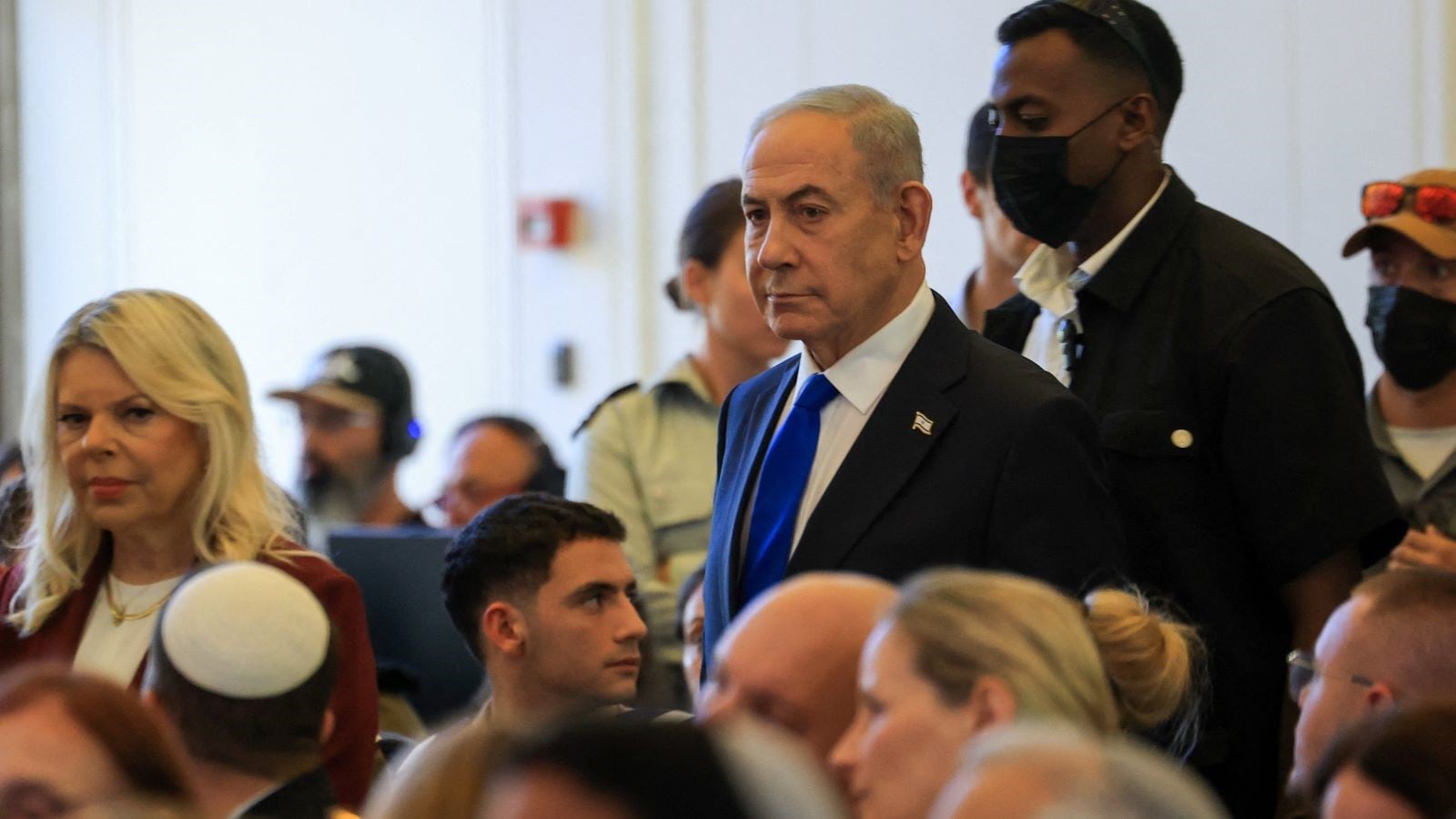
A suitcase sits open on a bed in Jerusalem. Inside are the heavy, dark suits of diplomatic necessity, pressed and ready for the stifling humidity of Washington, D.C. The flight manifest for Kanfei Nesher—the Israeli equivalent of Air Force One—is drawn up. The security details are briefed. The choreography of a high-stakes transatlantic transit is, by its very nature, a machine of infinite moving parts.
Then, a telephone rings. A funeral in South Carolina has been delayed. The machine grinds to a sudden, screeching halt.
History is rarely written in bold strokes by grand, sweeping movements. More often, it is dictated by the mundane friction of calendars, the fragile nature of human mortality, and the sudden shift of a memorial service. When the Israeli Prime Minister’s Office announced that Benjamin Netanyahu would no longer board his flight to the United States, the official reason given was precise: the late Senator Lindsey Graham’s funeral had been rescheduled to the end of the month.
But in the theater of global statecraft, a postponed trip is never just a matter of a changed date. It is a sudden intake of breath in a room where everyone was waiting for the music to start.
Consider the momentum that was building before that phone call. The planned itinerary was a complex lattice of tribute and hard-nosed bargaining. Netanyahu was set to fly out on a Saturday night. The journey carried the weight of a first official visit to Washington since the outbreak of direct conflict with Iran. It was an opportunity to stand over the casket of Lindsey Graham—a man who had been a fierce, unwavering bridge between the American conservative establishment and the Israeli security apparatus—and to look toward what comes next.
What comes next was supposed to happen in the capital. A meeting with U.S. President Donald Trump was on the horizon.
To understand the invisible stakes of this sudden delay, one has to look at the shadow cast by the phone calls preceding it. Just days earlier, Netanyahu had reached out to congratulate Trump on the monumental milestone of America’s 250th independence anniversary. The words exchanged were warm, culminating in a mutual agreement to sit down face-to-face. But beneath the congratulatory warmth lay the icy realities of geopolitics. Behind the scenes, Trump had already begun signaling a desire for Israel to wind down its military presence in southern Syria and Lebanon, warning that prolonged deployment risked tipping an already volatile region into deeper chaos.
Imagine the strategic calculus inside the Prime Minister's residence. You are preparing to navigate a delicate diplomatic tightrope. On one hand, you have a long-standing ally urging a swift conclusion to military maneuvers. On the other hand, US-mediated talks between Israel and Lebanon are actively resuming in Rome, attempting to iron out the fine print of a fragile framework agreement.
Every hour matters. Every face-to-face interaction carries the potential to alter the trajectory of a war.
Then, the funeral moves. The anchor for the entire trip is pulled up and dropped a few weeks down the calendar. Because state visits require a public architecture—a formal reason to land, a ceremony to attend—the shifting of a memorial service ripples outward, unraveling the private meetings attached to its fringes.
The immediate result is a strange, suspended animation. The diplomats in Rome continue to argue over map lines. The security teams stand down. The suitcase is unpacked, the suits returned to the closet.
It is easy to view these developments through the cold lens of press releases and official statements. It is easy to say that a trip delayed is merely a trip deferred. But timing is the only currency that truly matters in international relations. A meeting that happens today carries an entirely different weight than a meeting that happens three weeks from now, after the facts on the ground have shifted, after new artillery has been fired, and after the political winds have had time to change direction.
For now, the silence from the tarmac speaks louder than the engines that were supposed to roar into the night sky. The conversation in Washington will have to wait, leaving the world to watch the Mediterranean coast, where the decisions continue to be made in the quiet, tense rooms of a country still very much at war.