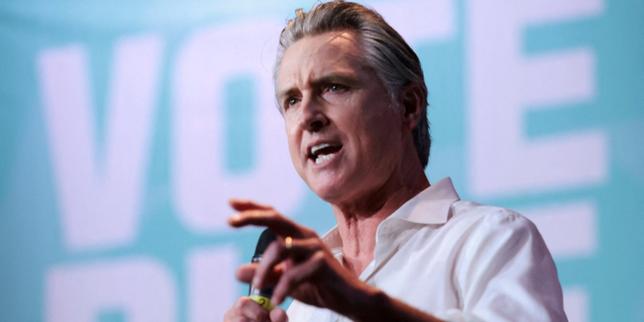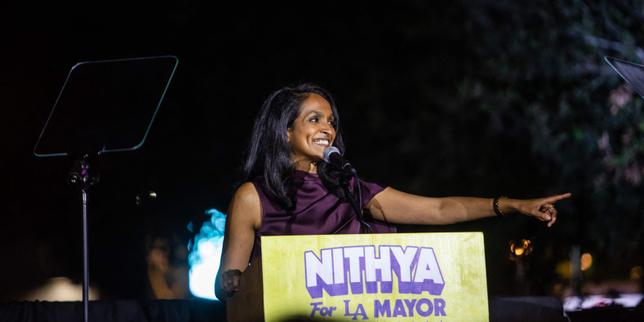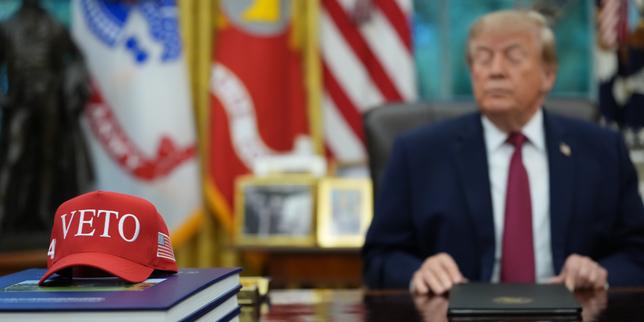
Two days. That is all it took for the concrete to turn back into wet sand.
On a Wednesday morning in early November 2026, the verdict of the American electorate seemed settled, heavy, and final. Across the country, tens of millions of citizens had stood in fluorescent-lit gymnasiums and church basements, fed their paper ballots into optical scanners, and watched the numbers climb on glowing television maps. Donald Trump had initially greeted the outcome of the 2026 midterm elections with an uncharacteristic, almost serene acceptance. The system had worked, or at least, it had worked well enough to pass without an immediate firestorm. If you enjoyed this piece, you should check out: this related article.
Then came Friday. And with Friday came the familiar, metallic taste of an old argument pulled back from the grave.
Suddenly, the midterms were no longer accepted. They were "rigged." The word did not arrive as a whisper or a cautious legal inquiry; it detonated across social media feeds and rally microphones with the force of a practiced reflex. For anyone watching from the outside, the whiplash was dizzying. How does an election transform from legitimate to fraudulent in forty-eight hours without a single new ballot box being discovered in the trunk of a car? For another look on this development, refer to the recent update from BBC News.
To understand what happened between Wednesday and Friday, you have to stop looking at the podium and start looking at the kitchen table.
The Architecture of Doubt
Consider a hypothetical voter—let’s call him Arthur. Arthur is sixty-two, lives in a mid-sized manufacturing town in Pennsylvania, and has worked the same logistics job for thirty years. He is not a political operative. He does not read appellate briefs. On Tuesday, November 3, 2026, Arthur took his lunch break to vote. He trusted the young woman who checked his signature on the tablet. He watched his ballot drop into the locked bin. When he saw the initial reaction from Mar-a-Lago accepting the results, Arthur felt a quiet, stabilizing relief. His side had won some, lost some, and the country was moving forward.
Then Arthur turned on his phone on Friday night.
When a leader retracts acceptance and introduces the charge of a rigged election, it does not merely change a political talking point. It reaches backward in time and alters Arthur’s memory of Tuesday afternoon. Suddenly, the young woman with the tablet looks suspicious. The hum of the optical scanner sounds like a glitch.
This is the invisible cost of the post-election pivot. In democratic politics, concession and acceptance are not polite formalities; they are the load-bearing walls of the entire building. Think of an election like a high-stakes poker game played among three hundred million people. Everyone agrees to the rules before the cards are dealt. You might hate the dealer, and you might despise the person sitting across from you, but as long as everyone agrees the deck wasn't stacked, the table stays upright when the hand is over. If one player waits until the chips are counted, nods at the winner, and then suddenly flips the table two days later screaming that the cards were marked, the game doesn't just end. The room itself becomes uninhabitable.
Why does this happen? Why accept the score on Wednesday only to declare the scoreboard broken on Friday?
History offers a remarkably consistent pattern. When political movements are built around a singular, infallible figure, defeat—or even a partial setback in a midterm cycle—creates an existential crisis. A midterm election is traditionally a referendum on the party in power, a mid-course correction delivered by voters frustrated with the price of groceries, the pace of legislation, or the general temperature of the national conversation. In 2026, just as in 2018, 2022, and every cycle stretching back to the nineteenth century, the electorate delivered a mixed, complicated message.
Acceptance requires absorbing that complexity. It requires admitting that some voters in suburban districts changed their minds, or that local candidates failed to connect. Declaring the election rigged, however, offers an instant, seductive escape hatch. It turns a political failure into a moral victory. You did not lose because your message fell short; you were robbed because you were too dangerous to the establishment.
When Facts Become Optional
The mechanics of how these claims take root are surprisingly mundane, yet devastatingly effective. In the immediate aftermath of the 2026 midterms, state election officials—many of them Republicans overseeing deeply conservative counties—began the slow, unglamorous work of certifying results. Canvassing boards audited paper trails. Mail-in ballots, which take longer to process in states where legislatures forbid pre-processing before Election Day, trickled into the final tallies.
In a healthy information ecosystem, this slow trickle is boring. It is democracy doing its paperwork.
In a fractured ecosystem, that paperwork becomes the raw material for a thriller. A routine shift in vote margins as urban precincts finish counting becomes "a midnight dump." A clerical error in a single county—immediately caught and corrected by bipartisan poll workers—becomes proof of a coordinated national conspiracy.
I have spent years reporting from county election offices, watching weary civil servants drink lukewarm coffee at two in the morning while they reconcile poll books down to the single digit. There is nothing glamorous about them. They are retired schoolteachers, local accountants, and neighborhood volunteers who take immense, quiet pride in getting the math right. When the rhetoric shifts from acceptance to accusation, those ordinary people bear the brunt of it. Their phones begin ringing with threats. Their names appear on message boards. The human infrastructure of democracy—the tens of thousands of neighbors who make voting possible—begins to crack under the weight of suspicion.
It is terrifying to watch in real time because there is no clean factual antidote to a pre-emptive narrative. Once the premise is established that any unfavorable result is evidence of fraud, evidence itself ceases to function. If an audit finds no discrepancies, the audit is declared part of the cover-up. If a judge dismisses a lawsuit for lack of standing or evidence, the judge is labeled corrupt. The logic forms a closed loop, airtight and impervious to reality.
The Slow Erosion of the Quiet Majority
What makes the 2026 reversal particularly sobering is the precedent it cements. In 2020, the refusal to accept election results was treated by many as a singular, unprecedented shock—a fever that would eventually break once the institutional guardrails held. By 2022, the tactic had become a template used by dozens of down-ballot candidates. Now, in 2026, the delayed rejection—accepting the outcome until the political calculus shifts, and then declaring it rigged—reveals that the tactic has evolved into a permanent feature of the landscape.
Look closely at what this does to the people caught in the middle.
Return for a moment to Arthur in Pennsylvania. By Sunday evening, after forty-eight hours of relentless commentary echoing the claim that the midterms were stolen, Arthur is no longer relieved. He is angry. Worse, he is exhausted. He begins to wonder why he bothered taking his lunch break to stand in line at all.
And that, right there, is the sharpest irony of crying fraud without proof. While the rhetoric is designed to rally supporters and keep them fiercely loyal, its long-term effect is often cynicism and disengagement. If the system is truly rigged from top to bottom, why participate? Why donate? Why knock on doors in the rain? History shows that when leaders convince their followers that the ballot box is broken, those followers eventually stop showing up to use it. They retreat into bitterness, leaving the field entirely to the people they oppose.
Democracy does not collapse all at once, like a building imploding on a Sunday morning. It erodes like a coastline. A wave hits on Wednesday, pulling away a few inches of sand. Another wave hits on Friday, taking a little more. Nobody notices the exact moment the foundation becomes unsafe, because the house is still standing, the lights are still on, and the people inside are still arguing about who owns the furniture.
The Weight of a Signature
Somewhere in a county warehouse in Pennsylvania, or Georgia, or Arizona, millions of paper ballots from November 2026 are sitting in sealed cardboard boxes. Each one has a number. Each one was verified by human eyes, checked against a registration roll, and tallied by machines tested in front of observers from both major parties.
Those boxes do not care about Friday’s press release. They do not care about television ratings, fundraising emails, or the fragile egos of politicians who cannot bear a divided Congress. They simply sit in the dark, holding the quiet, verifiable truth of what millions of ordinary citizens actually decided when nobody was watching them behind the curtain.
The tragedy is not that the boxes are vulnerable. The tragedy is how easily we can be persuaded to stop believing what is inside them.
On a crisp morning in late November, a county clerk locks the heavy metal door to that warehouse, tests the handle twice to make sure the deadbolt has caught, and walks out into the cold air, hoping someone still cares that the numbers add up.