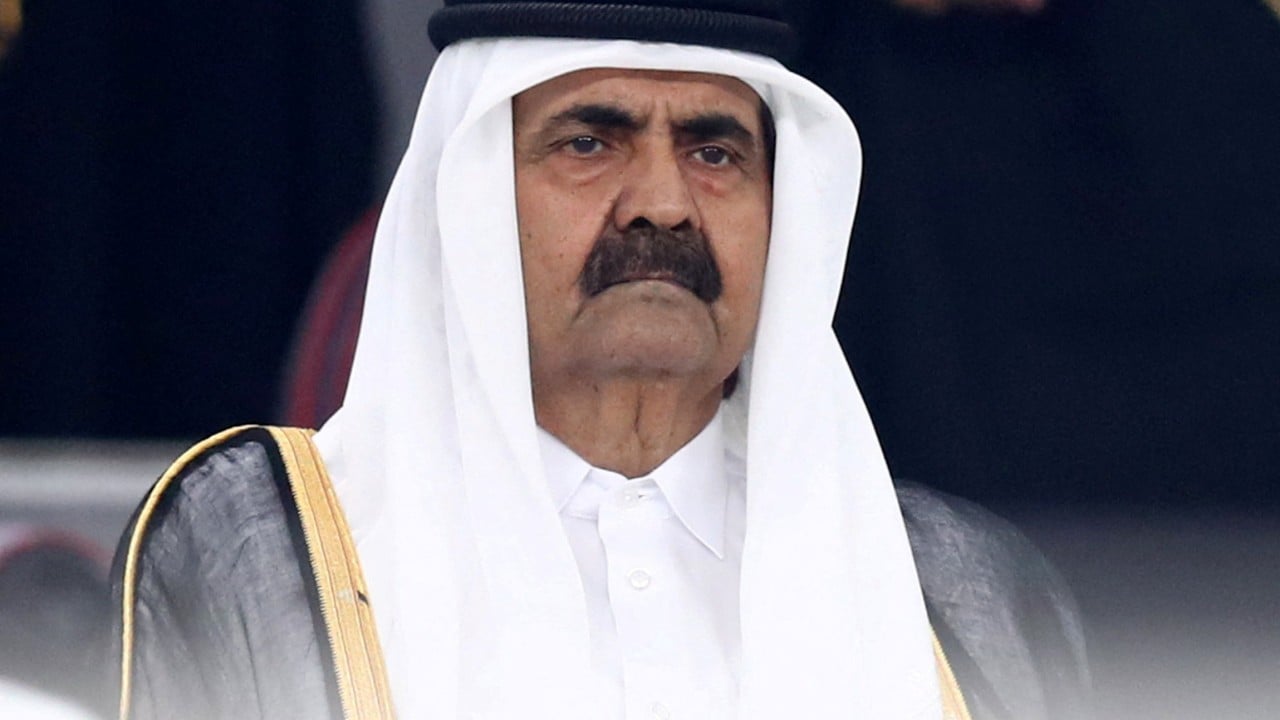
The death of Sheikh Hamad bin Khalifa Al Thani at the age of 74 marks the conclusion of one of the most structurally successful exercises in state building, resource monetization, and geopolitical arbitrage in modern history. Ruling as Emir from 1995 until his voluntary abdication in 2013, Sheikh Hamad inherited a highly vulnerable peninsula with negligible international leverage and transformed it into an indispensable global node.
Standard historical accounts attribute Qatar’s rise to the simple possession of natural resource wealth. This is a analytical error. The true driver of Qatar’s rise was the execution of a highly calculated, three-pronged operational strategy designed to bypass regional geographic constraints and maximize global leverage.
The Hydrocarbon Arbitrage: Bypassing Regional Pipelines
When Sheikh Hamad assumed power in 1995 via a bloodless palace coup, Qatar sat on the world’s third-largest natural gas reserve, the North Field. However, the asset was structurally stranded. At the time, global gas distribution depended entirely on overland pipelines. This dependence subjected smaller producers to transit risks, regional political vetoes, and regional pricing monopolies.
Sheikh Hamad systematically bypassed this geographic bottleneck by implementing a massive capital expenditure program focused on Liquefied Natural Gas (LNG) technology.
[Stranded North Field Reserves]
       │
       ▼ (Capital Intensive Liquefaction)
[Super-Chilled LNG (-162°C)]
       │
       ▼ (Specialized Q-Max & Q-Flex Tankers)
[Globalized Marine Arbitrage (East Asia / Europe)]
By cooling gas to $-162^\circ\text{C}$ and converting it into a liquid, Qatar decoupled its energy export market from regional infrastructure. This operational transition relied on three specific mechanisms:
- Technology Partnerships: Qatar partnered with major Western multinational energy corporations, importing the technical expertise required to build complex liquefaction trains.
- Scale and Logistics: The construction of specialized LNG carrier fleets—such as the massive Q-Max and Q-Flex vessels—lowered the per-unit transport cost of gas, making Qatari LNG competitive in distant markets like Japan, South Korea, and Western Europe.
- The Capital Flywheel: This infrastructure turned the hydrocarbon sector's gross value added from approximately 11 billion Qatari Riyals in 1995 to over 403 billion Qatari Riyals by the end of his reign. Under his stewardship, Qatar’s GDP grew more than twenty-fourfold, reaching a peak per capita income exceeding $$86,000$.
This infrastructure insulated Qatar from physical blockade risks and allowed the state to amass capital independent of regional land trade.
The Geopolitical Hedging Framework: Dual-Track Alignment
A small state adjacent to much larger military powers face a fundamental security dilemma. Sheikh Hamad’s solution was not traditional balancing, but a highly deliberate dual-track foreign policy designed to maximize strategic optionality.
The strategy was built on two contrasting pillars:
1. Hard Security Underwriting
In 2003, Qatar welcomed the relocation of the United States military's regional headquarters to the Al Udeid Air Base. This move turned the base into the primary logistics hub for US military operations in the Middle East. By funding and hosting this infrastructure, Sheikh Hamad secured a physical security guarantee from the world's preeminent military power, effectively deterring potential kinetic threats from regional neighbors.
2. Multi-Vector Diplomatic Engagement
Simultaneously, Qatar cultivated deep ties with actors hostile to Western interests, including Iran (with whom Qatar shares the North Field/South Pars gas field), the Palestinian group Hamas, and various political Islamist factions across the region.
This dual-track approach was not an ideological contradiction. It was a calculated strategy to position Qatar as an indispensable intermediary. Whenever Western powers required backchannel negotiations, de-escalation, or hostage releases, Doha was the only capital capable of hosting the talks. This diplomatic posture transformed Qatar from a vulnerable target into an essential diplomatic utility.
The Sovereign Wealth Engine: Diversifying Out of Depleting Assets
A major structural risk of resource-dependent economies is Dutch Disease—where a resource boom strengthens the local currency to the point of rendering other domestic sectors uncompetitive, alongside the ultimate threat of resource depletion. In 2005, Sheikh Hamad established the Qatar Investment Authority (QIA) to counter this systemic vulnerability.
The QIA operated on a clear mandate: convert volatile, immediate gas revenues into highly stable, yield-bearing global assets. The fund targeted trophy real estate, financial institutions, and blue-chip corporations in major Western capitals, with a notable concentration in London.
By acquiring prominent stakes in Barclays, Volkswagen, and Harrods, the QIA achieved two strategic objectives:
[Volatile Hydrocarbon Rents]
       │
       ▼ (Sterilization via Sovereign Wealth Fund)
[Global Diversified Portfolio (QIA)]
  ├── Liquid Blue-Chip Equities
  ├── Core Real Estate (London, Paris, New York)
  └── Strategic Infrastructure Stakes
       │
       ▼
[Long-Term Financial Preservation & Diplomatic Soft Power]
This strategy sterilized inflows of capital to prevent domestic inflation, while embedding Qatari capital so deeply into the financial centers of Western powers that any disruption to Qatari stability would carry a direct financial cost for those nations.
Soft Power Engineering: Information and Sports Capital
Beyond hard defense and financial diversification, Sheikh Hamad realized that long-term sovereignty for a micro-state required a high global profile. Anonymous wealth is easily confiscated; highly visible wealth is far more difficult to target.
Media Sovereignty
In 1996, Sheikh Hamad financed the launch of the Al Jazeera satellite news network. By abolishing domestic press censorship and dismantling the Ministry of Information, he created a media platform that revolutionized information flow in the Middle East. Al Jazeera provided a platform for dissident voices across the region, functioning as a powerful instrument of regional influence that challenged neighboring regimes while cementing Doha as the media hub of the Arab world.
Sports Diplomacy
The bid to host the 2022 FIFA World Cup, secured in 2010, was the culmination of a multi-decade sport investment strategy. While critics focused on the immense financial cost of the infrastructure, the project served a deeper strategic purpose. Hosting the most-watched global sporting event forced international integration, built domestic infrastructure ahead of schedule, and made the defense of Qatar’s sovereignty a matter of global attention.
The Limits of Sovereignty
The strategic framework designed by Sheikh Hamad carried significant structural trade-offs. The dual-track alignment strategy created friction with neighboring states, which accused Qatar of backing destabilizing political movements. This tension eventually led to the diplomatic and economic blockade of Qatar between 2017 and 2021 by a coalition of regional powers.
Furthermore, the state's extreme reliance on a massive expatriate labor force to build its ambitious infrastructure projects exposed Qatar to intense international scrutiny over its labor management practices, revealing the reputational risks inherent in rapid, top-down development.
Ultimately, Sheikh Hamad's final strategic move occurred in June 2013, when he voluntarily abdicated in favor of his son, Sheikh Tamim bin Hamad Al Thani. This transition broke with the regional norm of rule-until-death and successfully transferred a highly consolidated, financially insulated state to the next generation, proving the durability of the systems he spent eighteen years constructing.