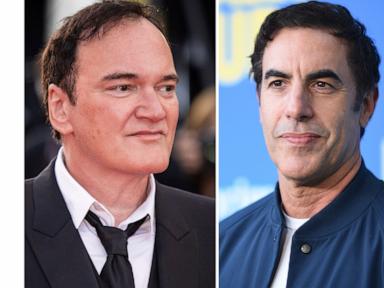
Pairing Sacha Baron Cohen with Quentin Tarantino on a West End stage tests whether screen-derived cultural capital can be converted into durable live-theatre unit economics without eroding either creator's signature value proposition. Because no verified public record confirms a West End production titled The Popinjay Cavalier starring Sacha Baron Cohen and written or directed by Quentin Tarantino, any analysis of that exact premise must separate unverified rumor from the underlying industrial mechanics. The blueprint below deconstructs how a screen-comedy disruptor and an auteur filmmaker interact with London commercial theatre, maps the cause-and-effect bottlenecks between cinema and live performance, and establishes an operational framework for evaluating high-concept stage announcements.
Separating Known Facts From Hypothetical Stage Premises
An analyst reading a headline about Sacha Baron Cohen starring in a Quentin Tarantino West End play called The Popinjay Cavalier first has to audit what is verifiable against what is speculative. Neither a confirmed West End booking nor an authenticated script or casting notice establishes that project as an existing production. Treating an unverified headline as settled fact distorts risk assessment from the start.
The known facts sit one layer deeper. Sacha Baron Cohen built his reputation on character-driven satire, guerrilla performance, and extreme tonal shifts across film and television, while Quentin Tarantino built his reputation on stylized dialogue, chaptered narrative structure, pop-culture revisionism, and cinema-first theatrical release strategies. Both creators command high recognition, yet neither operates inside the standard commercial rhythm of a long-running London West End play.
When a competitor article treats a headline premise as an accomplished reality, it skips the verification step that separates signal from noise. In commercial entertainment analysis, announcement arbitrage occurs when media outlets and audiences price in theatrical box-office potential before contracts, venue leases, rehearsal windows, and cast schedules are locked. Until a venue, producer, and run length are confirmed, The Popinjay Cavalier functions as a hypothetical case study in cross-medium translation rather than an active balance-sheet item.
The Four Pillars of Screen-to-Stage Translation
Evaluating a hypothetical pairing of Sacha Baron Cohen and Quentin Tarantino in London requires breaking live commercial theatre into four operational pillars rather than relying on star power alone.
- Script Lock Versus Improvisational Elasticity: Live theatre rewards repeatable blocking, vocal stamina, and disciplined pacing eight times a week. A Tarantino-style dialogue engine relies on rhythmic cadence and exact beats, whereas Baron Cohen's best-known screen work often thrives on friction, surprise, and reactive escalation. Reconciling tight textual precision with improvisational edge is a rehearsal-room design problem, not a slogan.
- Fixed Venue Overhead Versus Variable Ticket Yield: West End houses carry heavy fixed costs—rent, union crew minimums, lighting and sound upkeep, and front-of-house staffing—regardless of whether a row sits empty. High ticket prices boost gross potential only if occupancy holds across matinees and midweek slots.
- Star Draw Versus Repeat Word-of-Mouth: Name recognition from film and streaming drives opening-week urgency, especially among international visitors in central London. Sustaining a multi-month run requires organic peer recommendation once early-adopter demand is satisfied.
- Medium Fidelity and Audience Distance: Cinema magnifies micro-expressions through close-ups and editorial cutting. A West End auditorium projects a single live frame across hundreds of seats, forcing performers to carry subtext through posture, vocal projection, and spatial rhythm without a camera cut to rescue a flat beat.
The second limitation in most entertainment coverage is treating audience overlap as automatic. Fans who watch a filmmaker's movies on demand or stream a comedian's specials do not automatically buy £100-plus theatre tickets on a Tuesday night. Conversion depends on whether the live format offers something unavailable on a screen.
Cause-and-Effect Bottlenecks in London Commercial Theatre
Standard commentary often assumes that two recognizable names automatically solve marketing and ticket sales. In practice, placing screen auteurs inside a West End play triggers specific cause-and-effect chains that create friction if left unmanaged.
Schedule Compression and Opportunity Cost
Live stage runs demand consecutive weeks of rehearsal and performance with minimal calendar slack. For high-demand screen talent and directors, locking into a fixed London call sheet creates opportunity cost—foregone film development, commercial campaigns, or location shoots elsewhere. If a lead performer or creative voice has narrow availability, producers face a trade-off between a short, high-intensity limited run (which caps total seat inventory) and an extended run (which raises the risk of mid-run box-office softening or understudy reliance).
Consider a stylized example: suppose a producer books a 12-week West End run anchored by a major screen star. The first three weeks sell briskly on novelty and press coverage, while weeks seven through twelve depend on broader theatregoers and tourist foot traffic. Without a clear mid-run marketing engine or strong critical consensus, weekly gross receipts can step down even when top ticket prices remain high.
Tonal Friction Between Satire, Pastiche, and Live Pacing
Baron Cohen's comedic DNA frequently relies on deadpan escalation and social discomfort, while Tarantino's signature style blends pulp genre tropes, sharp banter, and sudden shifts in tension. A title like The Popinjay Cavalier points toward aristocratic foppery, swashbuckling parody, or historical pastiche—territory where theatricality is already baked into the concept.
Yet stage comedy and screen irony fail in different ways. On film, an awkward pause or abrupt cut lands with surgical timing; in a live room, a joke that takes too long to turn can lose momentum across a wide balcony. This creates a pacing bottleneck during previews, when writers and directors must trim exposition and sharpen entrances without stripping out the verbal texture that drew fans to the material in the first place.
Price Elasticity and Tourist Dependency
Central London theatre sits at the intersection of domestic subscribers, Londoners seeking a night out, and international leisure travel. Premium pricing works best when demand is inelastic—meaning buyers purchase despite high prices because perceived scarcity is high. Once scarcity fades or competing shows open across Shaftesbury Avenue and surrounding streets, price elasticity rises: casual buyers wait for discounts or pick alternative entertainment.
A second bottleneck emerges from cast and creative attribution. Audiences buying tickets to see a star performer or a famous director's work often scrutinize billing closely—whether a figure is acting on stage, writing the text, directing the staging, or serving as an executive creative force. Ambiguity in billing erodes trust faster than a modest marketing budget.
What Audiences Actually Look For When Screen Names Hit the West End
Search behavior around a headline like this clusters around four practical questions that cut straight to value and credibility. First, readers want to know whether the project is officially announced or merely rumored, because unconfirmed entertainment news circulates rapidly across social feeds. Second, they look for clarity on roles—who is performing on stage versus writing or directing—since screen auteurs wear multiple hats across their careers.
Third, prospective ticket buyers weigh format value: why see a comedy or genre play live in London rather than waiting for a filmed release or reading plot summaries. Live theatre delivers co-present liveness—shared room energy, unrepeatable timing, and physical proximity—that streaming cannot replicate. Fourth, readers assess reputational fit: whether Sacha Baron Cohen's subversive edge and Quentin Tarantino's stylized sensibility clash or reinforce one another on a traditional proscenium stage.
Step-by-Step Due Diligence for Evaluating High-Concept Stage News
Anyone tracking entertainment announcements—whether an industry analyst, a producer, or a theatregoer deciding whether to commit money and travel time—can apply a four-step verification workflow before acting on a headline.
- Audit Primary Confirmations: Check official theatre box-office releases, accredited trade reporting, and verifiable production disclosures for named venues, opening dates, and confirmed roles. Treat unnamed sources or aggregated social posts as unverified hypotheses.
- Map Role-to-Skill Alignment: Separate acting duties from writing, directing, and producing credits. Assess how each person's track record maps onto live stage mechanics such as eight-show-a-week vocal demands or multi-scene blocking.
- Inspect Run Length and Seat Capacity: Compare the proposed number of weeks and approximate auditorium size against realistic weekly demand. Short runs concentrate scarcity; long runs require sustained secondary demand beyond core fans.
- Stress-Test Downside Scenarios: Identify what happens if previews draw mixed word-of-mouth, travel demand softens, or scheduling conflicts force creative adjustments. A sound thesis accounts for downside friction rather than assuming a sell-out streak.
Analytical Limits and Strategic Reality Check
Even a disciplined framework has boundaries. Live entertainment operates under Knightian uncertainty—situations where novel creative combinations lack clean historical probability distributions because no prior production has tested that exact pairing, script, and room dynamic. Audience taste shifts quickly, and no analytical model can guarantee how a live crowd will react to a given punchline or scene transition on opening night.
Over-reliance on retrospective box-office comparisons is another trap. Past film grosses or past West End hits set expectations, but they do not lock in future ticket sales. Treating a framework as a crystal ball rather than a risk-filtering lens leads to false precision.
The most effective strategic play for any producer or analyst evaluating a high-concept West End project like The Popinjay Cavalier is to price the announcement on verified operational commitments rather than star proximity alone—waiting for confirmed venue, run dates, and role definitions before committing capital or travel plans, and judging any eventual staging by how tightly its live pacing holds from row one to the back circle.