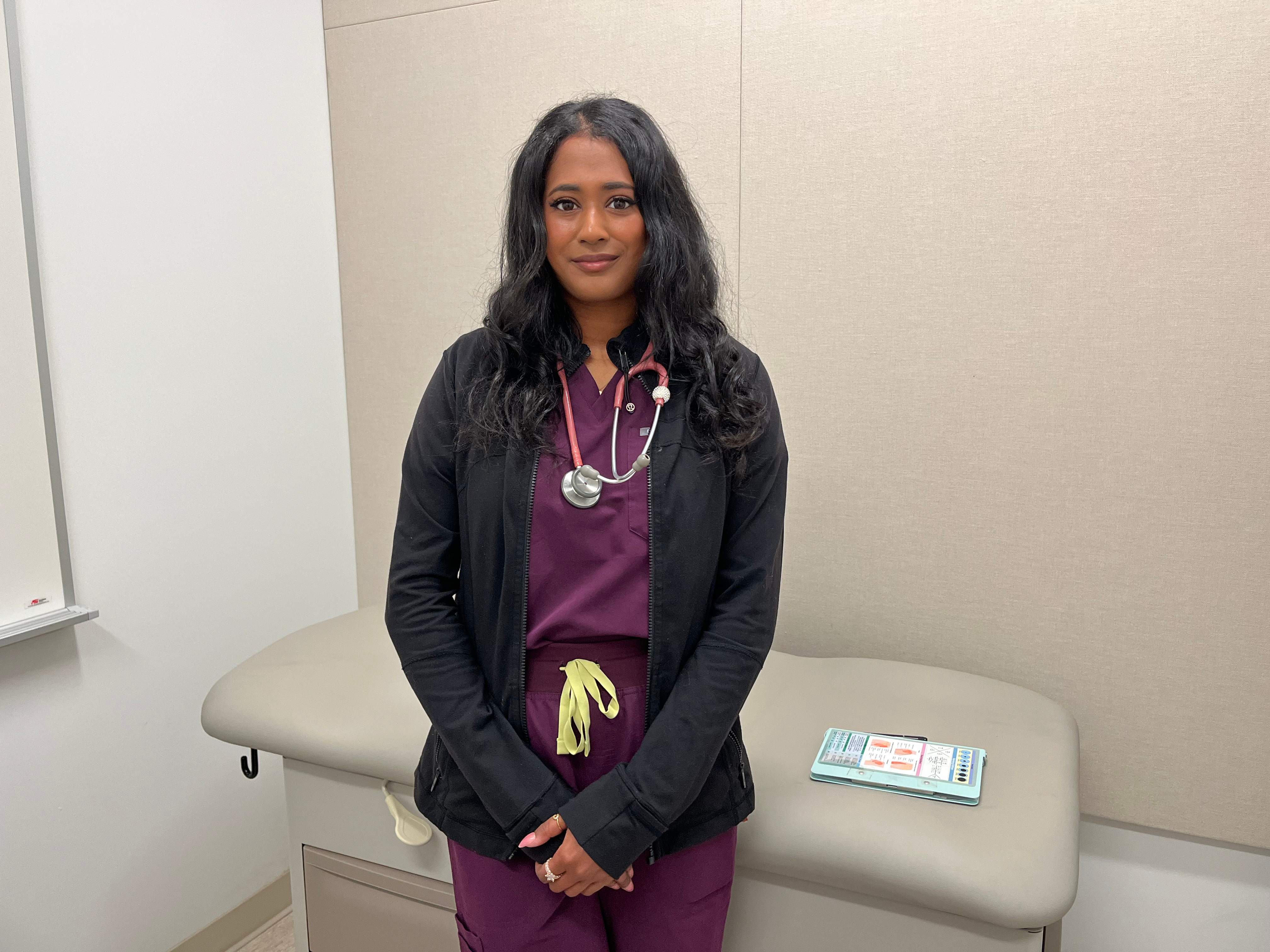
A $17 million medical malpractice lawsuit filed in Multnomah County Circuit Court against Oregon Health and Science University (OHSU) and pediatric cardiothoracic surgeon Dr. Ashok Muralidaran has exposed severe gaps in diagnostic escalation protocols. The litigation stems from a catastrophic operational error during an August 15, 2025, open-heart surgery on a 13-year-old girl, where a prosthetic heart valve was implanted upside down.
While public discourse online has weaponized the surgeon's country of origin to attack the validity of international medical qualifications, an objective, data-driven analysis reveals that xenophobic narratives miss the structural mechanics of medical validation. The failure was not one of baseline academic credentials, but rather a multi-layered breakdown in intraoperative quality control, diagnostic escalation, and institutional transparency.
The Core Operational Failure Mechanical and Diagnostic Bottlenecks
Prosthetic heart valves are directional mechanisms designed to facilitate unidirectional blood flow through precise pressure-gated responses. Implanting a valve inverted creates immediate, near-total mechanical obstruction. The heart cannot pump blood past the inverted mechanism, leading to immediate post-cardiopulmonary bypass myocardial failure.
The structural breakdown occurred in three distinct operational phases:
Phase 1: Intraoperative Quality Control and Verification
During a standard valve replacement, the surgical team stops the patient's heart and routes systemic circulation through a cardiopulmonary bypass machine. When seating a prosthetic valve, multiple redundancies exist to confirm orientation:
- Visual Markings: Manufacturers imprint distinct orientation markers (arrows or structural geometries) indicating the direction of flow.
- Tactile Verification: The seating of the valve cuff requires anatomical alignment that feels distinct depending on orientation.
- Intraoperative Echocardiography: Standard protocol dictates using Transesophageal Echocardiography (TEE) immediately after weaning the patient from bypass to verify valve leaflets are opening and closing in alignment with physiological flow.
The failure to catch an inverted valve during this phase indicates a systemic omission of verification checklists by the entire surgical suite, not merely the lead surgeon.
Phase 2: Diagnostic Blindness and Cognitive Anchoring
When the patient's heart failed to restart post-surgery, she was placed on Extracorporeal Membrane Oxygenation (ECMO)—a mechanical life-support system that oxygenates blood externally and circulates it back into the body.
[Surgical Error: Inverted Valve] ---> [Mechanical Obstruction] ---> [Myocardial Failure]
                                                                            |
[Diagnostic Delay: 3 Days] <--- [Cognitive Anchoring: "Surgical Shock"] <---+
For three days, the patient remained in the intensive care unit with an open chest incision. The OHSU medical team repeatedly attributed the cardiac non-function to "surgical shock," ordering multiple tests but failing to identify the mechanical block. This demonstrates cognitive anchoring: a psychological bias where clinicians fixate on a non-specific, expected complication (shock) and fail to reassess the primary structural intervention.
Phase 3: The Escalation Disconnect
The critical bottleneck was solved only when the parents demanded a transfer to Seattle Children's Hospital. Upon arrival, an immediate cardiac scan identified the structural inversion. The Seattle team removed the inverted valve, placed a new one correctly, and the patient's heart responded immediately. She was successfully weaned off ECMO and discharged after a 35-day recovery period.
The fact that a secondary institution identified the structural error via basic imaging within hours of transfer demonstrates a catastrophic diagnostic failure at the primary institution.
Deconstructing the International Medical Graduate Validation Framework
The public backlash following the lawsuit included claims that the surgeon's initial education at Madras Medical College in India meant he possessed a "fake degree" or met inferior passing standards. This narrative ignores the highly regulated, multi-tier validation architecture required for International Medical Graduates (IMGs) to practice in the United States.
Dr. Muralidaran did not simply migrate and begin practicing; he underwent a rigorous, decades-long domestic validation pipeline that rendered his initial degree country of origin irrelevant to his clinical clearance.
The Licensing Safeguard Matrix
To legally practice as a subspecialized surgeon in the United States, an IMG must clear the exact same evaluation metrics as domestic graduates, managed by the Educational Commission for Foreign Medical Graduates (ECFMG) and the American Board of Thoracic Surgery (ABTS).
[International MBBS Degree]
             |
             v
[ECFMG Certification via USMLE Steps 1, 2CK]
             |
             v
[ACGME-Accredited Residencies & Fellowships (Maimonides, Yale, Stanford)]
             |
             v
[American Board of Thoracic Surgery (ABTS) Certification]
             |
             v
[State Medical Board Licensure (Oregon Medical Board)]
- United States Medical Licensing Examination (USMLE): All IMGs must pass USMLE Step 1 and Step 2 Clinical Knowledge (CK). These standardized exams establish a uniform cognitive baseline across all practitioners, regardless of where they attended medical school. Passing scores are scaled globally; a 50% minimum passing grade in a domestic country is completely overwritten by the requirement to pass the USMLE.
- Domestic Residency and Fellowships: Passing the exams only permits entry into the competitive US residency match system. Dr. Muralidaran completed a general surgery residency at Maimonides Medical Center (serving as Chief Resident in 2009), a thoracic surgery fellowship at Yale University/Yale New-Haven Medical Center (2011), and a pediatric congenital cardiac surgery fellowship at Stanford University (2013). These are all institutions accredited by the Accreditation Council for Graduate Medical Education (ACGME).
- Board Certification: He obtained certification from the American Board of Thoracic Surgery in 2012, with a subspecialty certification in Congenital Cardiac Surgery in 2014.
The institutional reality is clear: the error occurred despite an elite domestic training pedigree. Attributing a mechanical surgical error to an international medical degree earned over two decades prior is a logical non-sequitur.
Quantifying the Economic Impact of the Systemic Failure
The financial dimensions of this malpractice suit are structured across direct healthcare delivery costs and compensatory damages. The lawsuit seeks $17 million in total damages, reflecting the compounding costs of diagnostic delay.
- The Cost of Diagnostic Failure: The family accrued over $1 million in medical bills during the six-day stay at OHSU. This reflects the hyper-expensive nature of prolonged ECMO support, open-chest ICU management, and multiple exploratory surgeries that failed to identify the root cause.
- The Cost of Corrective Intervention: The revision surgery and subsequent 35-day stabilization period at Seattle Children’s Hospital cost an additional $2.35 million.
- Compensatory Framework: Out of the $17 million sought, approximately $5 million accounts for alleged clinical negligence, with the remaining $3 million for documented economic losses, and the balance addressing non-economic damages associated with prolonged critical distress and end-of-life discussions forced upon the family.
Operational Imperatives for Cardiothoracic Units
The failure at OHSU demonstrates that individual expertise and elite credentials cannot overcome a systemic absence of objective verification protocols. To mitigate the risk of structural mis-implantation and subsequent diagnostic blindness, high-acuity surgical units must enforce two concrete operational policies.
First, implement an Independent Dual-Verification Protocol for all implantable directional hardware. Before any prosthetic valve is sutured into place, both the primary surgeon and the attending anesthesiologist managing the intraoperative transesophageal echocardiogram must independently log and sign off on a digital checklist confirming structural orientation. This breaks the cognitive chain where an entire room defers blindly to the lead surgeon's visual field.
Second, establish a Hard-Stop ECMO Escalation Timeline. If a patient cannot be weaned off cardiopulmonary bypass due to immediate myocardial failure, and is placed on ECMO, an independent diagnostic review team—completely separate from the primary operating team—must be activated if the heart fails to recover within 24 hours. This team must immediately conduct targeted structural imaging (CT angiogram or repeat echo evaluated by an outside reader) to explicitly rule out mechanical obstruction, completely eliminating the diagnostic delay caused by cognitive anchoring on "surgical shock."