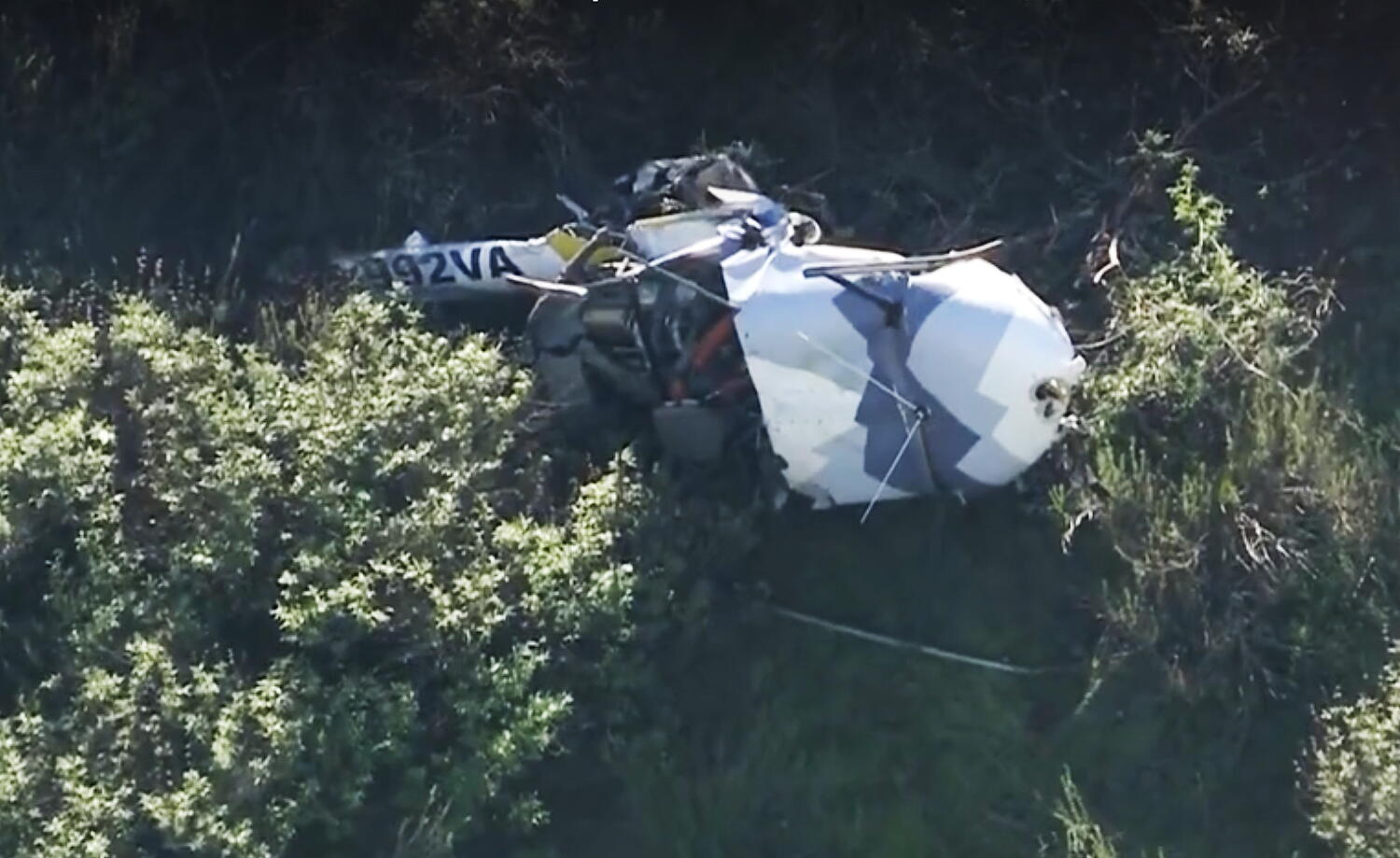
Fatal rotorcraft accidents rarely stem from a single catastrophic failure; they represent the terminal convergence of aerodynamic vulnerabilities, environmental stressors, and compressed human decision-making windows. When an aircraft goes down in a region like Temecula, California, initial news reports focus on immediate casualty counts and emergency response timelines while obscuring the operational mechanics that govern general aviation safety. Understanding what happens during a fatal helicopter crash requires stripping away surface-level incident reporting to examine the physics of low-altitude flight, the regulatory frameworks governing investigative agencies, and the systemic bottlenecks that delay definitive causal attribution.
The Structural Limits of Breaking Aviation Coverage
Standard incident reporting operates on an acute information deficit. In the immediate aftermath of a crash, local law enforcement and fire departments control the perimeter, releasing only verified baseline metrics: the geographic location of the wreckage, the number of occupants, the fatality count, and the transfer of jurisdiction to federal investigators. In related updates, we also covered: The Ghost Fleet in the Mediterranean (And the Night Ukraine Changed Naval Warfare Forever).
This creates a predictable analytical void. Readers seeking to understand why an aircraft fell out of the sky are fed repetitive descriptions of emergency staging areas and road closures. A rigorous assessment separates confirmed physical evidence from the investigative hypotheses that take months to validate.
Known Baseline Facts vs. Investigative Hypotheses
In any fatal rotorcraft event within the United States, the operational timeline divides cleanly into two distinct phases: Associated Press has provided coverage on this fascinating subject in great detail.
- The Emergency Response Phase (Hours 0–24): Local authorities—such as the Riverside County Sheriff's Office and Cal Fire in the Temecula jurisdiction—secure the crash site, manage hazardous material containment (primarily aviation fuel), and identify victims through the coroner's office. During this window, the exact flight path, aircraft registration, and pilot credentials often remain unconfirmed pending federal database cross-referencing.
- The Federal Investigation Phase (Months 1–18): Jurisdiction transfers to the National Transportation Safety Board (NTSB) and the Federal Aviation Administration (FAA). Neither agency speculates on root causes at the scene. Instead, investigators isolate physical wreckage to test competing failure hypotheses across three primary domains: mechanical integrity, environmental interference, and human factors.
The Three Failure Pillars of Rotorcraft Operations
To evaluate a crash in Southern California's Inland Empire without inventing unverified incident specifics, analysts map the event against the established taxonomy of rotorcraft failure modes. Helicopters operate under fundamentally different aerodynamic rules than fixed-wing aircraft, possessing narrower margins for error when systems degrade.
Pillar 1: Aerodynamic and Mechanical Degradation
Unlike fixed-wing planes, which generate lift through forward airspeed over static wings and can glide for miles upon engine failure, helicopters rely on continuous rotational energy in the main rotor system.
- Powerplant and Drivetrain Failure: A sudden loss of engine power or a transmission seizure requires the pilot to immediately enter autorotation—a maneuver where upward airflow through the rotor blades maintains rotational speed during descent, allowing a controlled landing. If the pilot fails to lower the collective pitch within seconds, rotor RPM decays below recoverable thresholds, resulting in a total loss of lift.
- Tail Rotor Malfunction: The tail rotor counteracts the torque generated by the main rotor. Loss of tail rotor effectiveness (LTE) or mechanical separation causes the fuselage to spin uncontrollably in the opposite direction of the main rotor blades. At low altitudes, recovery from an uncommanded yaw event is physically impossible.
- Airframe and Flight Control Integrity: Fatigue fractures in pitch links, swashplates, or hydraulic actuators sever the pilot's physical connection to the rotor disc. Because rotorcraft components endure high-frequency vibrational stress, microscopic material defects can propagate rapidly if maintenance intervals are missed or improperly executed.
Pillar 2: Microclimatic and Topographical Stressors
Temecula sits in a valley corridor flanked by coastal mountain ranges to the west and rugged terrain to the east, creating complex localized weather patterns that directly impact rotorcraft performance.
- Density Altitude Penalties: High ambient temperatures combined with elevation reduce air density. Thin air forces the rotor blades to operate at a higher angle of attack to generate the same lift, consuming excess engine power and pushing the aircraft closer to its aerodynamic ceiling.
- Mechanical Turbulence and Wind Shear: Air masses moving over the Santa Ana Mountains generate lee-side downdrafts and localized rotors—spinning horizontal columns of air. A helicopter flying at low altitude into a severe downdraft can experience a sink rate that exceeds the climb capability of its engine.
- Spatial Disorientation and Visibility: Marine layer intrusions from the Pacific coast frequently push low-level fog and haze through inland passes. When a pilot operating under Visual Flight Rules (VFR) inadvertently enters Instrument Meteorological Conditions (IMC), the loss of a natural horizon induces vestibular illusions. Without instrument-rated avionics and training, pilots routinely bank or pitch the aircraft into extreme attitudes while believing they are flying level.
Pillar 3: The Human Factors Bottleneck
Aviation safety frameworks, such as the Human Factors Analysis and Classification System (HFACS), demonstrate that mechanical failures account for a minority of fatal general aviation accidents. The primary driver is human decision-making under high cognitive load.
- Reaction Time Compression: Helicopters typically operate between 500 and 1,500 feet above ground level (AGL). At these altitudes, an emergency leaves between 10 and 30 seconds before ground impact. There is no altitude buffer to troubleshoot checklists or consult manuals.
- Task Saturation: During abnormal operations, a single pilot must simultaneously maintain aircraft control, navigate away from populated areas or obstacles, communicate on emergency frequencies, and diagnose system warnings. Cognitive tunneling—fixating on a single warning light while neglecting basic airspeed and altitude control—frequently precipitates controlled flight into terrain (CFIT).
- Wire and Obstacle Strikes: Low-altitude transit exposes helicopters to unmarked power lines, meteorological towers, and agricultural infrastructure. Because thin cables blend into complex terrain backgrounds, pilots often fail to detect them until milliseconds before impact.
The Forensic Reconstruction Pipeline
When the NTSB assumes control of a crash site, investigators execute a systematic forensic protocol to eliminate guesswork and establish a legally defensible probable cause.
- Wreckage Distribution Mapping: Investigators measure the exact GPS coordinates of every detached component. A tight debris field indicates a steep, low-airspeed impact, suggesting loss of lift or controlled flight into terrain. A debris field scattered over hundreds of yards points to an in-flight breakup, mid-air collision, or catastrophic rotor overspeed prior to ground contact.
- Powerplant and Rotor Tear-Down: Engines and transmissions are transported to secure facilities for metallurgical examination. Analysts inspect turbine blades or piston components for rotational scoring—physical scrape marks that prove whether the engine was producing power at the exact millisecond of impact.
- Avionics and Non-Volatile Memory Extraction: While small general aviation helicopters rarely carry hardened flight data recorders (black boxes), modern avionics, GPS units, and personal electronic devices contain non-volatile flash memory. Specialists extract track logs, altitude profiles, and groundspeed vectors to reconstruct the final seconds of flight.
- Radar and ADS-B Correlation: Automatic Dependent Surveillance-Broadcast (ADS-B) receivers and FAA radar facilities capture positional pings every second. Overlaying this telemetry against terrain elevation maps reveals abrupt changes in vertical speed or heading prior to signal loss.
- Medical and Toxicological Screening: The FAA Civil Aerospace Medical Institute conducts forensic toxicology and pathology evaluations to rule out sudden pilot incapacitation, cardiovascular events, or impairing substances.
Limitations of General Aviation Safety Metrics
Evaluating a single crash in isolation distorts risk perception. Aviation analysts rely on normalized metrics—specifically fatal accidents per 100,000 flight hours—rather than raw fatality counts.
However, general aviation data suffers from systemic measurement flaws. Unlike commercial airlines, which log every flight hour electronically through centralized dispatch systems, private rotorcraft hours are estimated through annual FAA owner surveys. Voluntary reporting introduces sampling bias, meaning the denominator in safety equations is an approximation rather than an audited figure. Furthermore, operational profiles vary wildly; an emergency medical services (EMS) helicopter flying night missions into unimproved landing zones faces exponentially higher risk exposure than a sightseeing flight operating in clear daytime conditions, yet both are frequently aggregated into broad civil rotorcraft statistics.
Operational Imperatives for Risk Mitigation
Preventing fatal outcomes in low-altitude rotorcraft operations requires shifting focus from post-crash regulatory compliance to pre-flight operational discipline.
- Enforce Hard Weather Minimums: Operators and private pilots must establish rigid, non-negotiable ceiling and visibility thresholds prior to engine start. Eliminating the option to "press on and take a look" into deteriorating inland visibility removes the primary trigger for VFR-into-IMC accidents.
- Deploy Lightweight Flight Data Monitoring: Owners of light helicopters should install commercial-off-the-shelf (COTS) cockpit cameras and attitude-heading reference loggers. Continuous self-auditing identifies subtle deviations in autorotation profiles and approach speeds before they compound into structural emergencies.
- Mandate Scenario-Based Autorotation Training: Annual flight reviews must prioritize unannounced simulated engine failures at varied airspeeds and altitudes over predictable, pre-briefed maneuvers at high-elevation airports, ensuring motor-memory execution within the critical two-second collective-lowering window.